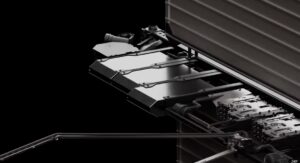


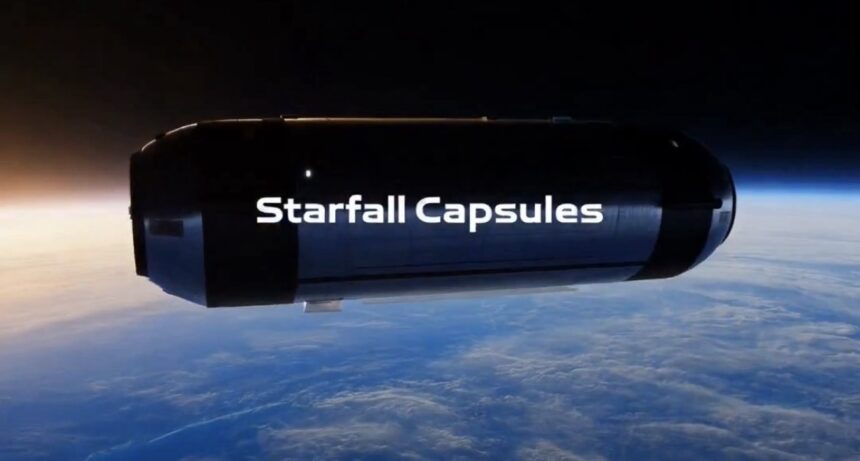
SpaceX has taken a significant step toward enabling routine commercial activities in orbit. The Federal Aviation Administration recently approved two test flights for the company’s new Starfall reentry capsules. These small, circular vehicles are designed to carry up to 1,000 kilograms of payload from space back to Earth, supporting in-space manufacturing and rapid cargo return.
The approval marks an important development in the emerging field of orbital manufacturing. It positions SpaceX to play a larger role in creating a self-sustaining space economy beyond satellite deployment and crewed missions.
What Are Starfall Capsules?
Starfall capsules are uncrewed, disc-shaped reentry vehicles. They can launch as payloads on Falcon 9 rockets or the larger Starship vehicle. Once in orbit, they provide access to microgravity and vacuum conditions ideal for producing materials that are difficult or impossible to manufacture on Earth.
After completing their orbital operations, the capsules reenter the atmosphere and splash down in the Pacific Ocean, approximately 1,300 kilometers off the coasts of California and Mexico. Recovery teams can then retrieve them quickly for payload delivery to customers.
The FAA issued an environmental assessment on May 15 and a record of decision approving the tests on the same day. The agency made the information public through an FAA Space Update on May 29. The approvals cover two demonstration reentries and do not yet authorize ongoing operations.11
More Read

SpaceX has not publicly detailed the project extensively. Bloomberg first reported on the internal Starfall initiative in July 2025, describing plans for microgravity research and product development using small capsules deployed from Starship.
Enabling New Manufacturing Paradigms
In-space manufacturing leverages unique orbital conditions. Microgravity eliminates sedimentation and convection currents that affect crystal growth, alloy mixing, and biological processes on Earth. Vacuum environments further support high-purity production.
Potential applications include:
More Read

- Pharmaceuticals with improved molecular structures
- Advanced semiconductors and optics
- Specialized alloys and composites
- Fiber optics with superior performance
- Biotechnology products
Starfall aims to make these processes scalable and commercially viable. The capsules offer “access to microgravity and vacuum, loiter on orbit, and safe return from orbit as a service at scale,” according to FAA documents.
This approach differs from traditional space stations like the International Space Station. Starfall could function as a “proliferated successor” to the ISS. Multiple capsules could operate independently, providing distributed capacity for private industry without reliance on government-operated facilities.
Technical and Operational Details
Each Starfall capsule can handle up to 1,000 kg (about 2,205 pounds) of payload. Launches may follow orbital trajectories or direct suborbital paths to the recovery zone. Splashdowns occur in international waters, minimizing ground impact risks.
The circular design likely aids stability during reentry and recovery. While specific dimensions remain limited in public documents, descriptions suggest a compact, hockey-puck-like form scaled up to roughly three meters wide in some conceptual outlines.
Recovery in the ocean allows rapid retrieval by SpaceX vessels, similar to Dragon capsule operations. This supports time-sensitive materials that require quick return to Earth-based laboratories or markets.
The two approved test flights will demonstrate reentry performance, heat shield effectiveness, and overall system reliability. Success could pave the way for additional licensing and operational missions.
More Read

Broader Context in Commercial Space
Starfall enters a growing ecosystem of in-space manufacturing efforts. Companies like Varda Space Industries have already conducted successful capsule returns using SpaceX launches. Varda’s W-Series capsules focus on pharmaceutical crystal growth and have received expanded reentry approvals.
By developing its own vehicles, SpaceX could offer integrated services. Customers might launch raw materials on Falcon 9 or Starship, process them in Starfall capsules, and receive finished products back on Earth. This vertical integration could reduce costs and timelines compared to relying on third-party providers.
The project aligns with SpaceX’s long-term vision. Starship’s massive payload capacity makes it suitable for deploying multiple capsules or larger manufacturing modules in the future. Rapid reusability of both launch vehicles and reentry systems is key to economic viability.
Military and government interest in point-to-point cargo delivery could also benefit. Starfall concepts include rapid transit of critical supplies through space, potentially delivering goods anywhere on Earth in under an hour.
Challenges and Considerations
Technical hurdles remain. Reentry heating, precise guidance, and payload protection during high-g forces must be validated. Ocean recovery introduces variables such as weather and sea conditions.
Regulatory pathways are still evolving. The current approvals are limited to two tests. Full operational licensing will require additional reviews, safety data, and possibly public consultations.
Environmental assessments concluded no significant impacts from the test reentries. However, as activity scales, questions around orbital congestion, debris, and ocean recovery operations may arise.
Competition in the sector is increasing. Several startups pursue similar capsule technologies. Success for Starfall could accelerate the entire industry while pressuring incumbents.
Implications for the Space Economy
If Starfall performs as planned, it could help transition space from a research domain to a robust manufacturing platform. High-value products made in orbit could command premium prices in terrestrial markets, justifying launch costs.
This shift supports broader commercialization. Reduced dependence on the ISS, which faces retirement timelines, ensures continuity for scientific and industrial users. Proliferated small capsules offer redundancy and flexibility that a single large station cannot match.
Economists and industry analysts see in-space manufacturing as a potential multi-billion-dollar market. Materials like ZBLAN optical fiber or protein crystals for drug development have demonstrated superior properties in microgravity tests.
SpaceX’s involvement could lower barriers for entry. Companies without aerospace expertise might contract end-to-end services: launch, processing time in orbit, and return.
Looking Ahead
The two approved Starfall test flights represent early validation steps. Timelines for these demonstrations have not been publicly released, but they could occur within months given SpaceX’s rapid development pace.
Positive results would likely lead to more ambitious plans. Integration with Starship could enable larger-scale operations, including dedicated manufacturing platforms or constellations of capsules.
This initiative underscores Elon Musk’s vision of making humanity multiplanetary. While Mars colonization remains the ultimate goal, practical steps like Starfall build the economic foundation needed for sustained human presence in space.
As the tests proceed, observers will watch closely. Success could mark a turning point where orbital manufacturing moves from experimental to operational, driving innovation across multiple industries on Earth.
The development arrives at a time of expanding space infrastructure. With Starlink providing global connectivity, reusable rockets reducing costs, and now dedicated return vehicles, the pieces for a true space economy are falling into place.
SpaceX has not commented extensively on Starfall beyond regulatory filings. The company’s track record suggests that once testing begins, updates and imagery will follow rapidly through official channels and social media.
For now, the FAA approvals signal confidence in the concept’s feasibility and minimal environmental footprint. The coming months will reveal how effectively Starfall translates ambitious plans into working hardware.
This project highlights the accelerating pace of commercial space innovation. What was once the domain of national space agencies is increasingly driven by private enterprise, with profound implications for technology, economics, and humanity’s future in space.