

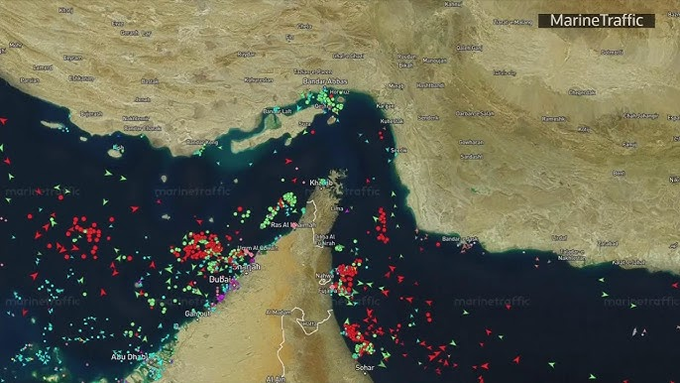
DUBAI — Nine weeks after the outbreak of open conflict between the United States, Israel, and Iran, the Strait of Hormuz once one of the world’s busiest shipping lanes has become nearly deserted. What was a vital artery carrying roughly 20% of global oil and significant volumes of liquefied natural gas now sees only a fraction of its former traffic.
Before the war began on February 28, 2026, approximately 3,000 vessels passed through the strait each month, with daily averages often exceeding 100 transits. By March, that number had plummeted to just 154 crossings for the entire month a decline of around 95%. Recent data shows daily transits frequently dropping into single digits on many days.
The Impact of Competing Blockades
The sharp drop stems from a dual blockade situation. Iran declared the strait effectively closed to vessels serving U.S., Israeli, and allied ports shortly after hostilities began. In response, the United States imposed its own naval blockade targeting Iranian ports and Iran-linked shipping. This has created a high-risk environment where most commercial operators have chosen to avoid the area entirely.
Most of the limited recent transits have followed Iran-designated northern routes close to the Iranian coast. Roughly half of these vessels loaded at Iranian ports, operating in defiance of the U.S. blockade. Ship-tracking firms report that many vessels turn off or spoof their Automatic Identification System (AIS) signals to reduce visibility, adding further uncertainty and risk for crews and insurers.
Saudi Arabia and UAE Forced to Adjust Production
Major Gulf exporters have not been spared. Saudi and UAE ports, traditionally among the busiest in the region, have been forced to cut production due to shipping disruptions and ongoing Iranian threats. Alternative export pipelines such as Saudi Arabia’s East-West pipeline to the Red Sea and the UAE’s Habshan-Fujairah line bypassing Hormuz are being used more intensively, but their combined capacity cannot fully offset the loss of tanker traffic through the strait.
These adjustments have helped somewhat, yet overall export volumes from the Gulf have still declined significantly, contributing to tighter global supplies.
Asia Bears the Brunt of the Energy and Commodity Crisis
The disruption is hitting Asia hardest. The region receives the vast majority of oil, liquefied natural gas, and other goods that normally flow through Hormuz. Fuel shortages are spreading across parts of South and Southeast Asia, affecting transportation, power generation, and industry.
The crisis is not limited to oil. Supplies of natural gas, fertilizer, and other essential commodities have also been disrupted simultaneously. Countries with high dependence on Gulf energy including India, Pakistan, Japan, South Korea, and parts of China face rising prices and, in some cases, emergency conservation measures. Some nations have already reported strain on domestic reserves and are scrambling for alternative sources, though few options can quickly replace the volume normally routed through the strait.
Global Economic Ripple Effects
The near-paralysis of Hormuz traffic represents one of the largest supply disruptions in modern history for energy markets. Insurance premiums for vessels willing to transit the area have surged, while many shipping companies have rerouted entirely or suspended services. Seafarers face heightened dangers, with reports of attacks and vessels being turned back by naval forces.
This situation tests the resilience of global supply chains that had grown accustomed to relatively stable energy flows from the Gulf. The simultaneous impact on multiple commodities oil for transport and industry, natural gas for power, and fertilizer for agriculture amplifies the risk of broader inflationary pressure and potential economic slowdowns in import-dependent economies.
As the conflict enters its tenth week, neither side shows clear signs of backing down on the waterway. The United States continues to enforce its blockade on Iranian shipping, while Iran maintains control over much of the northern passage and has warned of further measures if pressure intensifies.
For the global economy, the empty waters of the Strait of Hormuz serve as a stark reminder of how vulnerable critical chokepoints remain in an era of geopolitical tension. Restoring even partial normal traffic will likely require a sustained diplomatic breakthrough or significant de-escalation that both Washington and Tehran currently appear unwilling to offer without major concessions.
The coming weeks will determine whether this collapse remains temporary or evolves into a longer-term reconfiguration of global energy trade routes.