

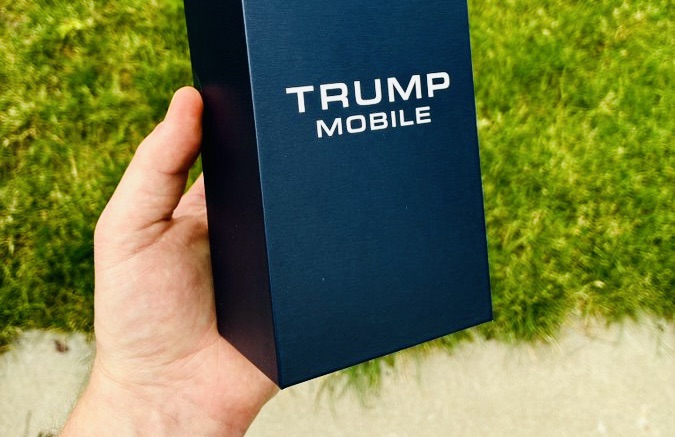
The Trump Phone is finally here. After nine months of delays, broken release date promises, quietly updated terms and conditions, and a level of pre-launch controversy rarely seen in consumer tech in 2026, Trump Mobile’s T1 smartphone began shipping to customers in mid-May 2026.
The phone was announced on June 16, 2025 at a glitzy event at Trump Tower by Donald Trump Jr. and Eric Trump. It was pitched as an “America First” smartphone: gold-colored, emblazoned with the American flag, priced at $499, and supposedly designed and built in the United States. Approximately 590,000 to 600,000 people paid $100 deposits to pre-order it.
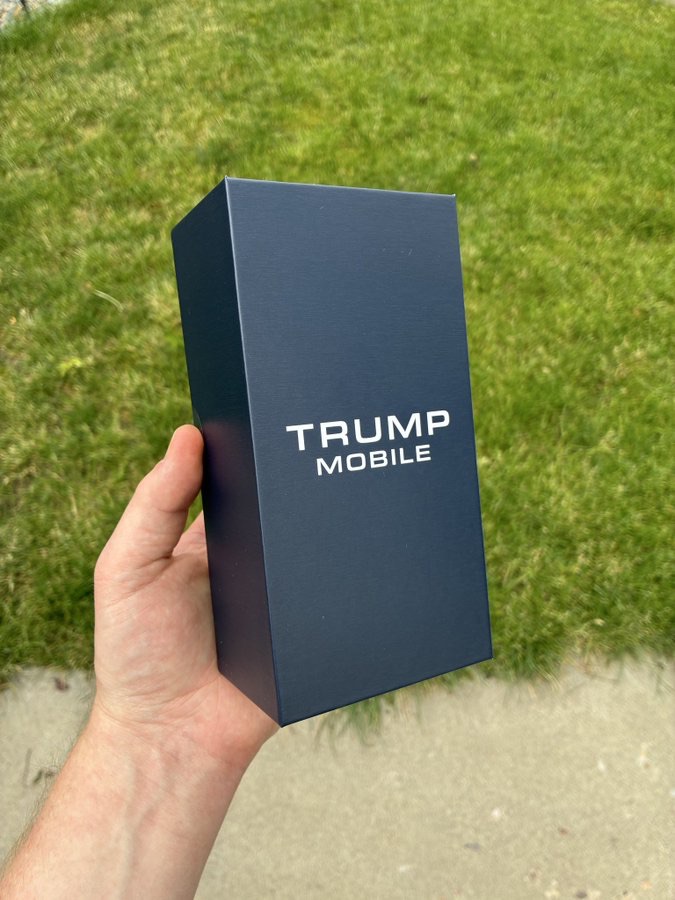
What arrived in boxes nearly a year later is a more complicated story.
Here is everything we now know about the Trump Mobile T1, the controversies surrounding it, and what buyers are actually getting for their money.
1. It Took Nine Months and Multiple Broken Deadlines to Ship
The original launch date for the T1 was August 2025. That came and went. Trump Mobile then pushed the date to November 2025, then December 2025, then mid-March 2026, and then quietly removed the release date from its website entirely.
More Read

On April 6, 2026, Trump Mobile updated its preorder deposit terms and conditions with language that raised significant alarm among people who had already paid deposits. The updated terms stated that a preorder deposit “provides only a conditional opportunity if Trump Mobile later elects, in its sole discretion, to offer the Device for sale.” The terms also clarified that a deposit “does not guarantee that a Device will be produced or made available for purchase.”
In other words, months after taking deposits from hundreds of thousands of people, the company updated its terms to say it was not obligated to deliver the phone at all. It sits alongside major Trump policy decisions in 2026 drawing scrutiny over consumer and governance practices.
On May 13, 2026, Trump Mobile CEO Pat O’Brien confirmed to Fortune that the company would begin shipping T1 devices that week to customers who had placed deposits. By May 19, 2026, the first units had begun arriving.
2. The Phone Looks Almost Identical to a Chinese Phone That Sells for Under $200
This is the detail that generated the most coverage in the week following the launch.
The Trump Mobile T1, pitched as an “America First” device, bears a striking resemblance to the HTC U24 Pro, a smartphone manufactured in Taiwan that retails for significantly less than the T1’s $499 price tag. Some reports and consumer comparisons have noted similarities to other mid-range devices available at Walmart for under $200.
The HTC U24 Pro, on which the Trump phone may be based, was manufactured in Taiwan.
Trump Mobile CEO Pat O’Brien told USA Today that the first T1 phones were assembled in the US and that future models would use components primarily manufactured in America. That claim has been met with skepticism. A company called Purism is thought to be the only domestically constructed cellphone at the current time, and their prices start at $799. Building a genuinely American-made smartphone for $499 is, to put it plainly, not currently possible at scale.
CNN noted that the phone strongly resembles a Chinese phone that retails for less than $200 at Walmart. Trump Mobile has not provided detailed supply chain documentation to support its “Made in USA” claims. In the same week, Anthropic raised $65 billion at a $965 billion valuation, a reminder of where the real momentum in tech currently sits.
3. The Flag on the Back Has the Wrong Number of Stripes
If the manufacturing questions were not enough, the launch also produced one of the more embarrassing product errors in recent memory.
More Read

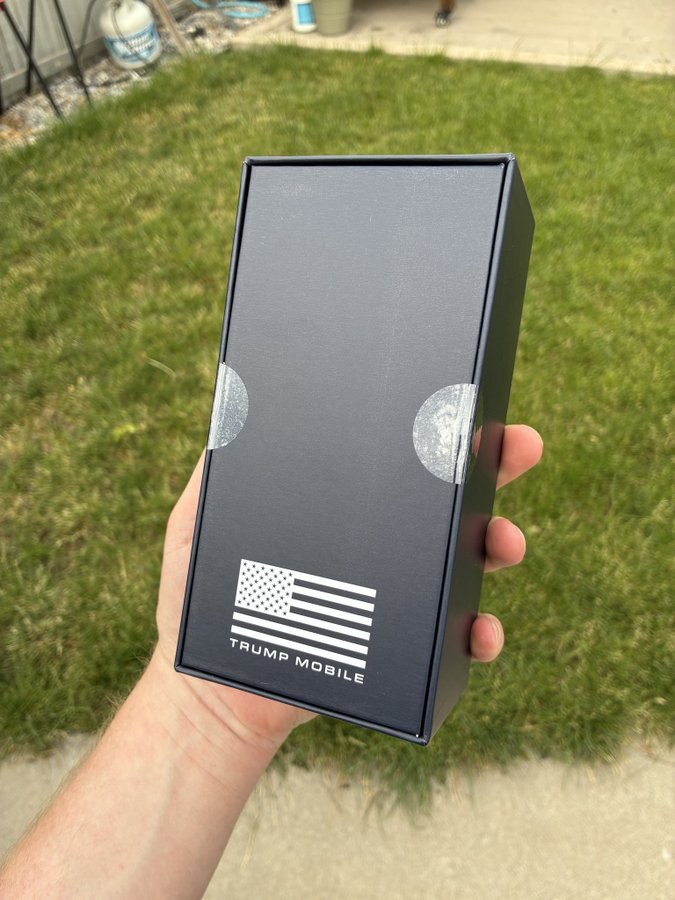
The flag logo on the back of the phone only features 11 stripes. The current iteration of the US flag has 13 stripes, representing the original 13 colonies that declared independence from Britain.
A phone sold explicitly as a patriotic “America First” product, with the American flag as its signature design feature, shipped with an American flag that has the wrong number of stripes. The error was widely noticed and shared on social media almost immediately after the first review units arrived.
Trump Mobile has not publicly addressed the stripe error or announced whether it will be corrected in subsequent production runs. It is the kind of oversight that would not survive in a week that also featured Blue Origin’s rocket exploding on the launch pad as a competing story for tech media attention.
4. The Specs Are Significantly Less Than Originally Promised
The T1 that shipped is not the T1 that was announced.
The smartphone has a smaller screen and less memory storage than originally promised, though the Trump brand and golden hue remain in place.
The original announcement positioned the T1 as a competitive smartphone at an accessible price point. What arrived is, by most technical reviews, a mid-range device with specifications that do not justify the $499 price tag relative to what competitors offer at the same price. CNET, which received an expedited review unit, tested it as a standard phone release and noted the gap between the marketing and the hardware.
Trump Mobile CEO O’Brien acknowledged that “the technology business is more difficult than some may realize, as parts must be tested for quality assurances,” which is a standard explanation for any consumer electronics product but an unusual one to offer nine months after a product’s originally promised ship date. For context on what serious tech ambition looks like in 2026, agentic AI systems are now completing multi-step tasks autonomously while the T1 is still catching up on basic specs.
5. It Comes Preloaded With Truth Social
The phone comes preloaded with President Donald Trump’s Truth Social app, according to NBC News.
This was expected given the brand alignment, but it confirms that the T1 is as much a branded ecosystem play as it is a standalone hardware product. The preinstalled Truth Social app puts Trump’s social media platform front and center for buyers from the moment the phone is powered on.
The T1 runs Android, so users can download and install any app available through the Google Play Store, including ChatGPT Agent Mode and other AI tools. The phone is not locked to a custom operating system or exclusive app store.
6. The Carrier Plan Is Priced as a Political Statement
Trump Mobile is not just selling a phone. It is selling a wireless carrier plan alongside it.
The flagship plan is called the Trump Mobile 5G “47” plan, priced at $47.45 per month. The number 47 is a reference to President Trump being the 47th President of the United States. The pricing is clearly designed as a branding element as much as a competitive rate.
For comparison, major US carriers including T-Mobile, Verizon, and AT&T offer unlimited 5G plans in the $35 to $65 per month range depending on the tier, making the Trump Mobile plan price-competitive on paper. What network Trump Mobile actually runs on, as an MVNO, or Mobile Virtual Network Operator, using another carrier’s infrastructure behind the scenes, has not been fully disclosed publicly. Meanwhile, startups like Meow are building AI agents that can open bank accounts from a single prompt, signaling where fintech ambition is actually headed in 2026.
7. The Conflict of Interest Questions Are Real and Unresolved
The Trump Phone launch has renewed scrutiny over the broader question of President Trump profiting from his name and office while serving as president.
The launch sparked questions about Trump using his name for profit while he is in office. The phone was created by the Trump Organization, which is the main holding company for President Trump’s private businesses, and is run by his eldest sons, Eric and Donald Trump Jr.
The emoluments and conflict of interest questions that surrounded Trump’s first term have returned with new products to point to in his second. Trump Mobile joins Trump Meme coins, Trump-branded Bibles, and other merchandise in a product ecosystem that critics argue blurs the line between the presidency and commercial brand licensing in unprecedented ways. These concerns sit alongside broader legislative questions raised by the One Big Beautiful Bill about the administration’s priorities and who benefits from its policy decisions.
Trump Mobile and the Trump Organization have not addressed these concerns directly.
What Buyers Are Actually Getting
For the approximately 590,000 to 600,000 people who paid $100 deposits, here is the honest summary of what the T1 delivers:
A gold-colored mid-range Android smartphone at $499, with specs that reviewers describe as below what the price suggests. A phone that resembles hardware available for significantly less under different branding. A wrong-stripe American flag on the back. Truth Social preinstalled. A carrier plan at $47.45 per month on an undisclosed network. And the ability to say you have a Trump phone.
Whether that is worth $499 to a given buyer is a personal decision. What the available evidence makes clear is that the T1 is not the technological showcase it was initially positioned as. It is a branded consumer product, and the brand is doing most of the work. For a sense of what actual tech innovation looks like this week, Grok Build 0.2.7 just shipped shared terminals across subagents, making multi-agent coding workflows a reality.
The Bottom Line
Trump Mobile’s T1 phone is real, it is shipping, and it took nine months longer than promised to get there. The controversies surrounding it, from the disputed “Made in USA” claim to the wrong number of flag stripes to the gap between announced and delivered specs, have dominated its launch coverage.
Whether the phone finds a loyal audience among Trump supporters who want a branded device is a separate question from whether it represents good value as a piece of consumer technology. On the latter, the reviews have been largely unkind. On the former, 600,000 deposits suggest the demand exists regardless of the specs. Readers following the broader Trump brand landscape may also want to check our coverage of Trump immigration policy changes in 2026 for the full picture of where the administration’s attention is directed.
In a week when Anthropic surpassed OpenAI in valuation at $965 billion, Blue Origin’s rocket exploded on the launch pad, and Grok Build 0.2.7 shipped multi-agent workflows, the Trump Phone managed to generate its own share of headlines. That, at least, is one thing it delivered on schedule.
Related reading: Anthropic Raises $65 Billion at $965 Billion Valuation | Blue Origin New Glenn Rocket Explodes on Launch Pad | Meow AI Startup Claims Its Agents Can Form Companies and Open Bank Accounts | What Is Agentic AI Explained Simply