

If you have been trying to keep up with US immigration policy in 2026, you are not alone in feeling overwhelmed. In a typical year, immigration law sees one or two significant changes. In 2026 alone, the Trump administration has signed dozens of executive orders, passed sweeping legislation, and issued internal agency memos that have collectively reshaped nearly every aspect of how immigration works in the United States.
This article covers the seven most significant Trump immigration policy changes in 2026, what each one means in plain English, and who is most affected.
Important: This article is for educational and news purposes only and does not constitute legal advice. Immigration law is changing rapidly. Consult an immigration attorney for guidance specific to your situation.
1. The One Big Beautiful Bill Act Became Law on July 4, 2025
The single biggest legislative change to US immigration in decades came when H.R. 1, formally called the One Big Beautiful Bill Act, was signed into law on July 4, 2025. The law injected roughly $170 billion into immigration and border enforcement and rewrote the rules for asylum, humanitarian protections, and immigrant access to public benefits.
For the immigration system, the key changes include:
More Read

Asylum now costs money. There is a mandatory, non-waivable $100 fee to file an asylum application, plus an additional $100 annual fee for every year the application remains pending. There are no fee waivers. An extra $550 is required to apply for initial work authorization, and $275 for each renewal. These fees are written directly into the statute, meaning USCIS cannot waive them.
Humanitarian parole applicants must pay $1,000 upfront to apply, with an additional $550 for initial work authorization and $275 for renewal. No fee waivers exist.
TPS registration now costs $500, up from $50, with no waiver option.
More Read

A $5,000 border crossing penalty applies to anyone apprehended between ports of entry without authorization, with no exception for asylum seekers.
Healthcare access is being cut. Beginning October 1, 2026, refugees, asylees without green cards, TPS holders, asylum applicants, and humanitarian parolees will lose eligibility for Medicaid and CHIP. ACA marketplace access ends January 1, 2027. Medicare access ends January 27, 2027. Only green card holders and a narrow set of categories remain eligible.
SNAP food assistance for most non-citizens has already been revoked. Current recipients may feel the impact at their next recertification.
2. Executive Orders Signed on Day One Revoked Biden-Era Protections
On January 20, 2025, the first day of his second term, President Trump signed Executive Order 14159, “Protecting the American People Against Invasion.” The order revoked multiple Biden-era immigration directives and instructed every federal agency to aggressively enforce immigration law against all inadmissible and removable noncitizens.
That was followed by Executive Order 14160 and several others, creating what immigration attorneys describe as the most sweeping day-one executive action on immigration in US history.
The practical effects included the termination of family reunification parole programs for people from Cuba, Colombia, Ecuador, El Salvador, Guatemala, Haiti, and Honduras, a move that federal courts have temporarily blocked. What happens to people with these parole statuses remains tied up in litigation.
More Read

As of March 31, 2026, the Trump administration had signed 253 executive orders, 59 memoranda, and 135 proclamations in its second term. A significant portion of these relate directly to immigration enforcement and benefits.
3. The Travel Ban Expanded to 14 Countries
An executive order that took effect January 1, 2026 added seven new countries to the US travel ban, which now covers 14 nations. The new additions are Burkina Faso, Mali, Niger, South Sudan, Syria, Laos, and Sierra Leone. Nationals of these countries face full restrictions on entering the United States under the ban.
Presidential Proclamation 10949 separately restricts visa issuance for nationals of additional countries, including Nigeria, adding to the complexity for immigrants and visa applicants from affected regions.
Anyone with family members in travel-ban countries or who holds nationality from a restricted country should consult an immigration attorney immediately, as the restrictions affect not only new applicants but in some cases people with pending petitions.
4. ICE Enforcement Has Reached Record Levels
Separate from legislation, the Trump administration has dramatically expanded ICE enforcement operations in 2026. The detained population has surpassed 68,000 people, up more than 70 percent compared to the first year of the Biden administration. ICE now employs more than 22,000 officers and agents.
Large-scale operations like Operation Metro Surge in Minneapolis deployed thousands of agents simultaneously into American cities. What to do if ICE comes to your door has become one of the most searched questions in the country.
An internal ICE memo signed by acting director Todd Lyons in May 2025 and made public in January 2026 instructed agents that they could enter homes using only an administrative warrant, a position that constitutional scholars and federal courts have challenged as a violation of the Fourth Amendment.
Detention facility deaths have also surged. At least 18 people have died in ICE custody in the first four months of 2026, following a record 31 to 33 deaths in 2025.
5. Biometric Collection Expanded to All Noncitizens
A rule that took effect December 26, 2025 allows US Customs and Border Protection to collect facial recognition data from all noncitizens entering and exiting the United States, including lawful permanent residents with green cards, at airports, land crossings, and seaports.
This is a significant expansion of biometric surveillance that previously applied more narrowly. Green card holders and visa holders who believed they had already provided sufficient documentation to CBP now face mandatory facial recognition at every border crossing.
6. Social Media Vetting Is Now Required for Visa Applicants
CBP plans to require five years of social media history for applicants using the Electronic System for Travel Authorization, the system used by citizens of 42 countries who travel to the US without a traditional visa.
The requirement is tied to a 2025 executive order citing national security concerns. Visa applicants should be aware that their social media history is now subject to government review as part of the vetting process and that posts that could be interpreted as critical of US government policy may attract additional scrutiny.
7. The Citizenship Application Process Has Become Harder
For those seeking to become US citizens through naturalization, the application process has changed. The new naturalization exam doubles the number of oral questions to 20 and requires correct answers to 12 of them, up from 10 of 20 previously.
At the same time, the Trump administration has dramatically escalated denaturalization efforts. A June 2025 DOJ memo directed the Civil Division to maximally pursue denaturalization cases across ten priority categories. USCIS guidance has reportedly set a target of 100 to 200 denaturalization referrals per month for fiscal year 2026, compared to roughly 15 cases per year filed between 2017 and 2025.
For naturalized citizens who obtained their citizenship lawfully, the legal risk of denaturalization remains low. But the scale of the escalation represents an unprecedented shift in how aggressively the government is pursuing these cases.
What Is Still Being Challenged in Court
Not every policy change has gone into effect without legal challenge. Several significant Trump administration immigration actions are currently blocked or partially suspended by federal court orders:
The termination of family reunification parole programs for people from Cuba, Colombia, Ecuador, El Salvador, Guatemala, Haiti, and Honduras has been temporarily blocked by federal courts. Those protections remain valid under the court order for now.
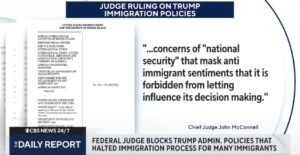
The ICE policy of entering homes using administrative warrants is the subject of multiple lawsuits and has been ruled unconstitutional by at least one federal court.
Multiple other executive orders have been challenged and are moving through the courts.
The situation is changing rapidly. What was true six months ago may not be true today, and what is blocked today may be enforced tomorrow depending on court rulings.
What This Means for People With Different Immigration Statuses
Undocumented individuals face the most immediate enforcement risk. Knowing your rights during any ICE encounter is more important in 2026 than at any point in recent history.
Asylum seekers face new mandatory fees, a harder evidentiary burden, and the loss of access to healthcare and public benefits.
TPS holders face significantly higher renewal fees and reduced access to public benefits beginning in late 2026.
Humanitarian parolees face the termination of their status in many cases, subject to ongoing court challenges.
Green card holders face expanded biometric collection at borders, new financial eligibility restrictions for some public benefits, and increased scrutiny on any past compliance issues.
Naturalized citizens face an unprecedented escalation in denaturalization investigations, though those who obtained citizenship lawfully have strong legal protections.
Visa applicants from newly restricted countries face the travel ban and expanded social media vetting requirements.
The Bottom Line
The Trump administration’s immigration changes in 2026 represent the most comprehensive reshaping of US immigration policy in decades. The combination of sweeping legislation through the One Big Beautiful Bill, dozens of executive orders, expanded enforcement, and new financial barriers to humanitarian protection has altered the rules for nearly every category of immigrant in the country.
Staying current on these changes is essential. For specific guidance on your situation, consult an immigration attorney who is actively tracking 2026 policy developments.
For more coverage of immigration news and policy in 2026, follow BrieflyUSA’s immigration section.
Related reading: What To Do If ICE Comes To Your Door | Can ICE Enter Your Home Without a Warrant? | Can a US Citizen Be Deported in 2026? | What Happens If ICE Detains You?