

Beijing, — In a quiet but ambitious move that could shape the future of human space exploration, China has become the first country to send stem cell-derived artificial embryo models to its Tiangong space station. The experiment, delivered aboard the Tianzhou-10 cargo spacecraft earlier this month, aims to explore how microgravity and cosmic radiation might affect the earliest stages of human development.
This is not about creating space babies anytime soon. The structures are lab-grown models, not real fertilized embryos, and they cannot develop into viable fetuses or babies. Still, the research marks a significant step toward understanding whether humans could one day live, work, and even reproduce during long-duration missions to the Moon, Mars, or beyond.
Background on the Tianzhou-10 Mission
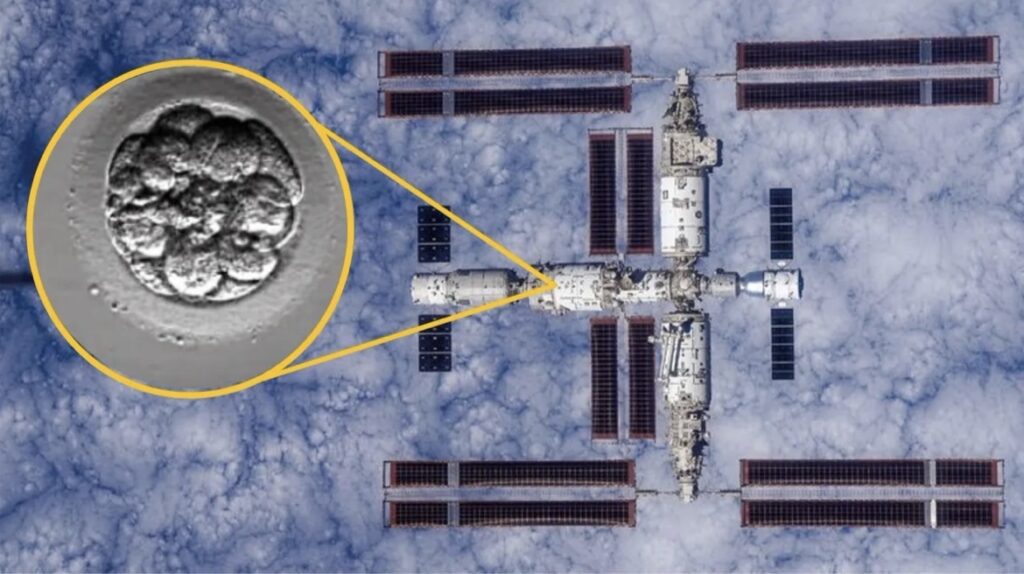
(Image credit: Main: CNSA; insert: Jim Dyson via Getty Images)
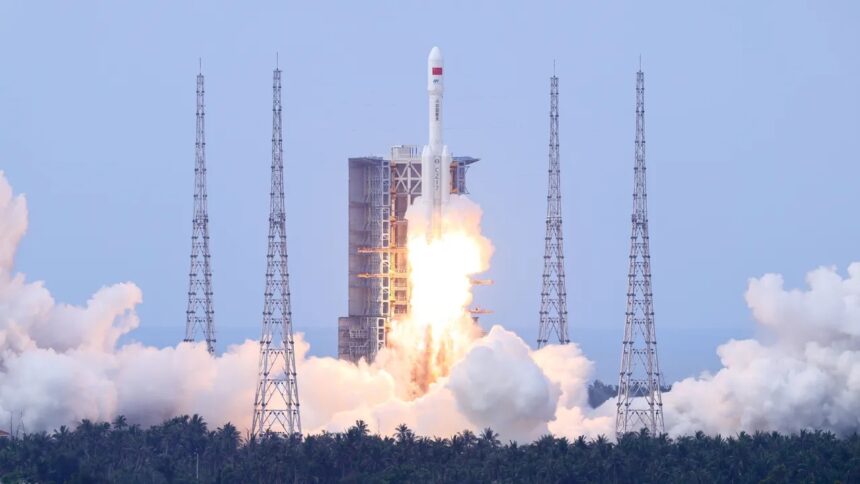
The Tianzhou-10 cargo spacecraft lifted off from the Wenchang Space Launch Site on Hainan Island on May 10, 2026, aboard a Long March-7 rocket. It docked with Tiangong the following day, delivering roughly 6.3 metric tons of supplies, including food, fuel, new spacesuits, and a variety of scientific payloads.
Among those payloads were the artificial embryo samples, carefully prepared and loaded just before launch. Once aboard the station, taikonauts installed them into dedicated experimental modules. The setup allowed the models to develop for about five days in the station’s microgravity environment before being frozen for a future return to Earth.
Identical control samples remained in a ground laboratory in China, providing a direct side-by-side comparison once the space samples come back. Researchers will analyze differences in cell growth, gene expression, and structural development to pinpoint any effects from the space environment.
More Read

What Exactly Are These Artificial Embryos?
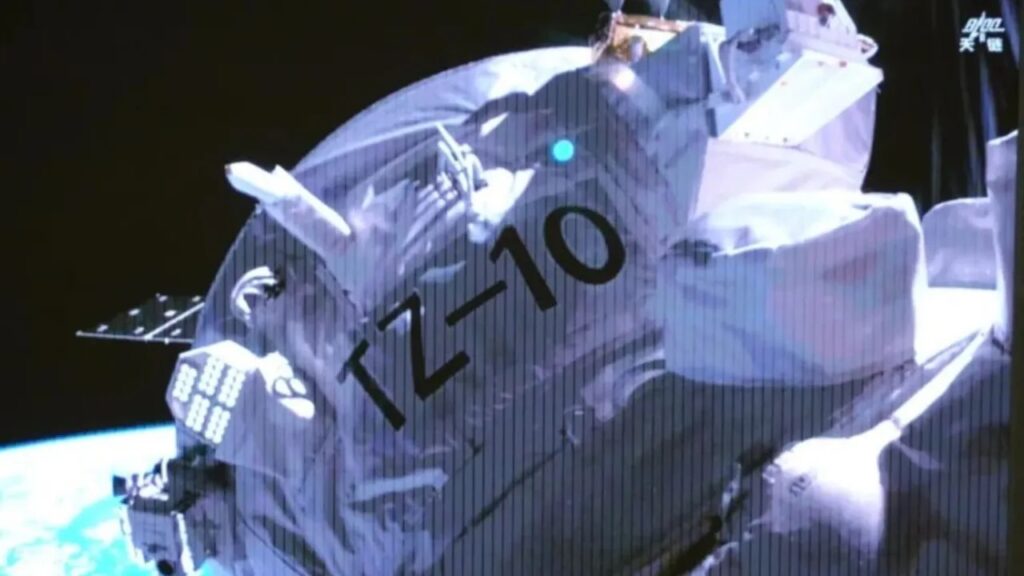
The Tianzhou-10 mission delivered more than 200 individual items to the Tiangong Space Station, according to Space.com.
(Image credit: CMSEO)
Project leader Yu Leqian, a professor at the Chinese Academy of Sciences’ Institute of Zoology, has been clear about the nature of the models. “The human artificial embryo is made of human stem cells as raw materials,” he explained. “This is not a real human embryo and does not have the ability to develop into an individual. However, it can serve as a model for studying early human development.”
These structures mimic key phases of early pregnancy, roughly between 14 and 21 days after fertilization. One set represents the implantation stage, when an embryo would attach to the uterine wall. Another focuses on gastrulation, a critical period when cells begin organizing into the basic body plan, setting the stage for future tissues and organs.
Because they are stem cell-based and not derived from fertilized eggs, they sidestep many ethical restrictions that limit research on actual human embryos beyond the traditional 14-day rule. This makes them valuable tools for pushing scientific boundaries safely.
Yu and his team hope the experiment will reveal how life forms that evolved under Earth’s gravity respond when that constant is suddenly removed, along with exposure to higher levels of cosmic radiation. Any disruptions at these early stages could have lasting impacts on development, something future spacefarers will need to understand.
Why This Matters for Long-Term Space Exploration
Humanity’s plans for space are getting bolder. NASA, China, and private companies all talk about sustained presence on the Moon and crewed trips to Mars. Those missions could last months or years, raising practical questions about biology in space.
Astronauts already face bone loss, muscle atrophy, fluid shifts, and radiation risks during shorter stays. Reproduction adds another layer of complexity. Could conception happen in microgravity? Would embryos implant and develop normally? What about radiation damage to genetic material?
Previous studies have looked at animal embryos in space. Mouse preimplantation embryos have been tested, and there has been work with zebrafish and other models. But human-relevant data has been limited until now. China’s experiment builds on that foundation by moving closer to our own species using advanced stem cell technology.
The results could inform everything from habitat design to medical protocols for deep-space crews. If significant problems emerge, scientists might need to develop artificial gravity systems, better shielding, or even new reproductive technologies for off-world colonies.
Broader Life Sciences Work on Tiangong
The artificial embryo project sits alongside other biological experiments delivered by Tianzhou-10. Tiangong has hosted research on everything from plant growth and protein crystallization to animal models. The station serves as a versatile orbiting laboratory, giving China a platform to conduct studies that complement work on the International Space Station.
More Read

Recent crew rotations have highlighted the station’s growing capabilities. Taikonauts routinely spend six months or more in orbit, returning with valuable data on human adaptation. The focus on reproduction research shows China is thinking beyond short-term stays toward self-sustaining human communities in space.
Ethical and Technical Considerations
Using artificial embryo models helps navigate ethical minefields. These structures lack the full potential of natural embryos, reducing concerns while still providing meaningful insights. International guidelines on embryo research vary, but the non-viable nature of these models has drawn relatively little controversy so far.28
Technically, the experiment faced challenges. The samples had to survive launch stresses, be installed by astronauts, and grow in automated chambers with daily culture medium changes. So far, reports indicate the process has gone smoothly, with pre-set systems handling the daily maintenance.
Once back on Earth, advanced sequencing and imaging will compare the space-exposed models with their Earth-bound twins. Scientists will look for changes in key developmental genes, cell organization, and any signs of stress or abnormality.
Looking Ahead
Results from this initial study are expected in the coming months. They will likely lead to follow-up experiments, perhaps with longer durations or more advanced models. China has signaled strong interest in expanding its space biology portfolio as it prepares for lunar missions in the 2030s.
For now, this experiment represents a careful, incremental step. It does not promise quick answers or dramatic breakthroughs, but it addresses fundamental questions that any multi-planetary species will eventually face.
As Yu Leqian put it, the goal is to “identify the factors affecting early human embryonic growth in the space environment, and address the risks and challenges humans may face during long-term space habitation.”
In the grand timeline of human exploration, sending a few stem cell clusters into orbit might seem small. Yet it could prove to be one of the most important biological experiments of our era, quietly laying groundwork for the day when children might be born among the stars.