


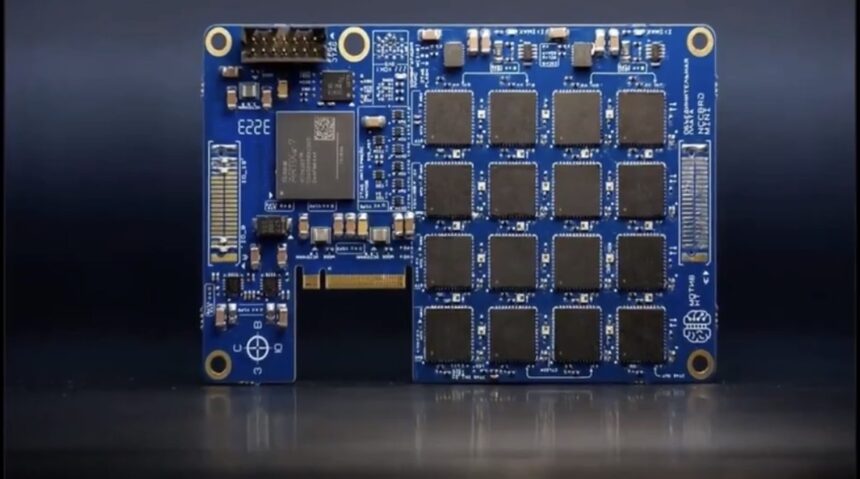
Moscow — Russia has highlighted its domestically developed Altai neuromorphic processor, a brain-inspired chip designed for ultra-low-power artificial intelligence tasks. The announcement positions the technology as a potential breakthrough in efficiency amid ongoing international sanctions.
Brain-Inspired Design and Efficiency Claims
The Altai chip uses spiking neural networks (SNNs), which mimic the human brain by firing short electrical impulses only when needed, rather than processing data continuously like traditional GPUs. Developers claim it offers more than 1,000 times better energy efficiency for certain workloads. For example, it can process video at up to 2,200 frames per second while consuming under 0.5 watts in a compact 9 by 9 millimeter package.
Technical Specifications and Applications
The 28-nanometer prototype features 256 asynchronous cores that simulate 131,072 neurons and approximately 67 million synapses. It targets applications in autonomous drones, sensor networks, robotics, and electronic warfare systems, where long battery life and real-time processing are critical. Proponents say it could enable low-cost drones to operate as long-endurance autonomous units or allow sensors to run for weeks on minimal power.
Development Background
Novosibirsk-based Motive NT led the development, with strategic investment and collaboration from cybersecurity firm Kaspersky Lab. Work on the project dates back to around 2017-2019, with Kaspersky joining formally in 2019 and becoming an investor in 2022. Prototypes were demonstrated as early as 2023.
Current Status and Challenges
While celebrated in some Russian circles as a sanction-busting achievement, the Altai remains a prototype. Full production scaling will likely require partnerships or adaptation to coarser domestic processes. Experts note that neuromorphic chips excel in specialized, low-power inference tasks but are not direct replacements for general-purpose GPUs used in large-scale AI training.
More Read

Global Context
Similar neuromorphic efforts exist globally, including Intel’s Loihi and IBM’s TrueNorth. Russian sources emphasize the Altai’s role in supporting technological sovereignty in AI hardware for military and industrial uses.
The development reflects Russia’s broader push into niche, energy-efficient computing to address limitations imposed by export controls on advanced semiconductors. Further details on commercialization timelines have not been publicly confirmed.
“`