

CARACAS, Venezuela — Venezuela’s government declared a state of emergency on Wednesday evening after two powerful earthquakes struck in rapid succession near the country’s northern coast, causing building collapses in the capital Caracas and widespread damage across multiple states.
The quakes, which occurred just 40 to 60 seconds apart on June 24, 2026, measured approximately 7.1–7.2 and 7.5 in magnitude according to the U.S. Geological Survey (USGS). They represent one of the strongest seismic events to hit Venezuela in more than a century and have triggered urgent rescue operations, power outages, and evacuations amid the country’s ongoing political and economic challenges.
A Doublet Earthquake Sequence
The first earthquake struck just after 6:04 p.m. ET (local time), with its epicenter near San Felipe in Yaracuy state or west of the coastal community of Morón. It was followed almost immediately by a larger mainshock centered roughly 23 kilometers (14 miles) southeast of Yumare or about 16 kilometers (10 miles) southwest of Morón, also in Yaracuy state. Both events were shallow, with depths reported between 8 and 13 kilometers (5–8 miles), which amplified the intensity of shaking felt across a wide area.
USGS data indicates the events formed a classic “doublet” sequence, where a foreshock is rapidly followed by a stronger mainshock. Approximately 8 million people experienced strong to very strong shaking. The tremors were felt not only throughout Venezuela but also in parts of neighboring Colombia hundreds of kilometers away.
The U.S. Pacific Tsunami Warning Center initially issued alerts for coastal areas, including Puerto Rico and the Virgin Islands, but these were quickly canceled as no significant tsunami threat materialized.
More Read
Scenes of Chaos in Caracas and Beyond
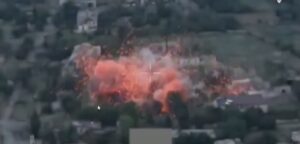
In Caracas, residents described violent, prolonged shaking that sent furniture crashing and forced thousands to flee swaying high-rises and apartment buildings into the streets. Videos and eyewitness accounts showed collapsed walls in neighborhoods like Altamira, where entire sections of buildings gave way, exposing interiors to the open air. Dust clouds rose from damaged structures in at least two districts.
Further west along the coast in areas like Catia La Mar, hillside buildings collapsed, adding to the visible destruction. Reports also mentioned damage at or near airports, including Simón Bolívar International Airport in Maiquetía and facilities in La Guaira.
The quakes struck on a public holiday (marking St. John the Baptist and related independence commemorations), meaning many people were at home or gathered in public spaces, potentially increasing exposure. Power outages affected multiple municipalities, including Chacao, and gas supplies were shut off in some buildings as a precaution.
More Read

No official casualty figures have been released as of early Thursday morning. Rescue teams are still assessing collapsed structures, and officials have warned that the toll could rise. The USGS PAGER system issued a red alert—the highest level—indicating that high casualties and extensive economic losses are probable and that the disaster is likely widespread, potentially requiring national or international response.33
Government Response and State of Emergency
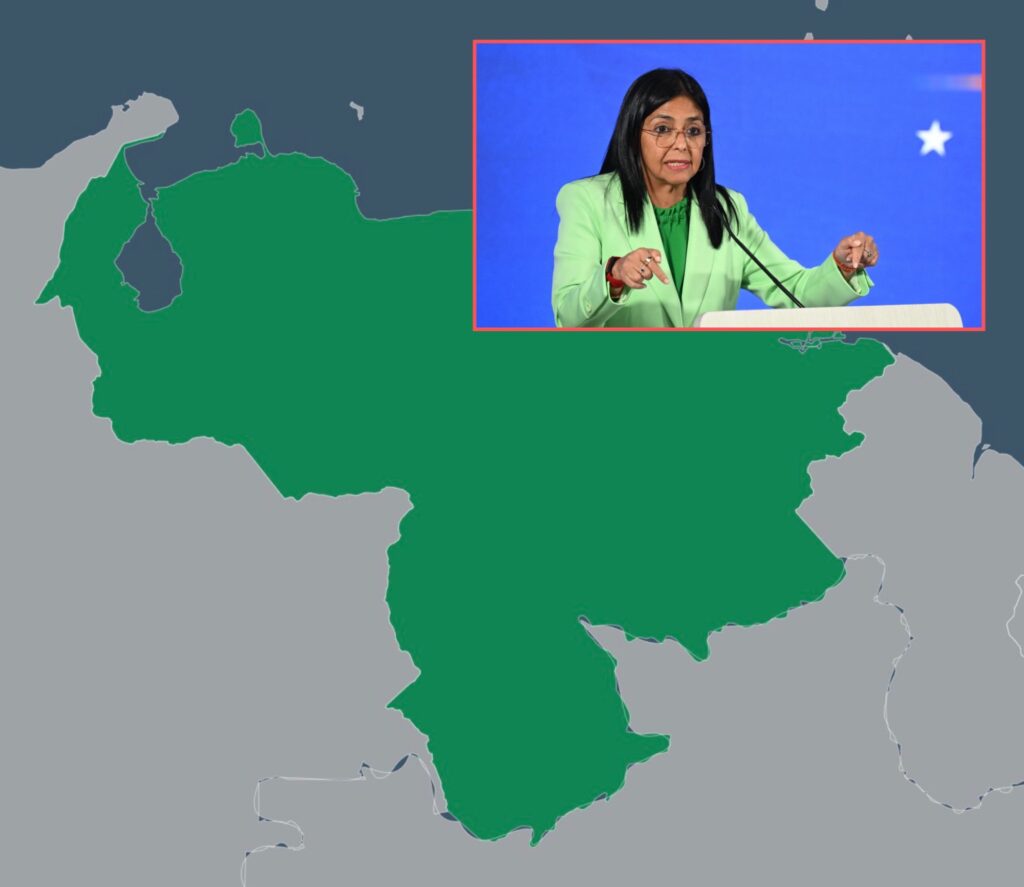
Following her presentation of oral arguments at the International Court of Justice (ICJ) in The Hague, Venezuelan Acting President Delcy Rodríguez reaffirmed that her administration does not recognize the court’s jurisdiction to arbitrate its long-standing territorial dispute with Guyana over the resource-rich Essequibo region. Rodríguez maintains that the 1966 Geneva Agreement remains the only valid legal framework to establish a negotiated, bilateral resolution between the two nations.
Source: International Court of Justice (ICJ) Media Registry / Telesur
Venezuelan authorities moved quickly. Interior Minister Diosdado Cabello appeared on state television, describing “alarming situations” in Altamira and urging motorists to yield to ambulances. He advised residents to remain outside due to risks of aftershocks and to check on children and the elderly. Security forces were deployed nationwide to support emergency efforts.
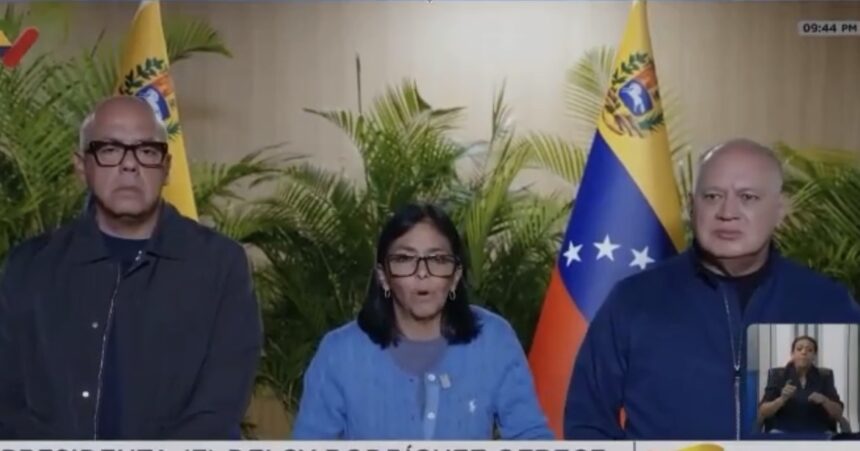
Acting President Delcy Rodríguez addressed the nation, confirming the declaration of a state of emergency. Over 500 personnel were reported working on rescues in affected Caracas districts. The government activated protocols for aid distribution and structural assessments.
The X post by journalist Mario Nawfal, which first brought widespread international attention to the emergency declaration, included official footage of Rodríguez speaking from a formal setting with Venezuelan flags, underscoring the government’s immediate focus on coordination and public reassurance.
Seismic Context and Venezuela’s Vulnerabilities
Venezuela lies in a tectonically active zone where the Caribbean Plate interacts with the South American Plate, producing frequent earthquakes along the northern coast and in the Andean region. While moderate quakes are not uncommon, events of this magnitude are rare. The 7.5 mainshock ranks among the strongest recorded in the country in modern history.
Many buildings, particularly in urban Caracas and coastal towns, were not constructed to modern seismic standards. Decades of economic strain have left infrastructure aging and maintenance inconsistent, raising concerns about the resilience of both residential and critical facilities. The shallow depth of these quakes increased ground acceleration, exacerbating damage to vulnerable structures.
More Read

Experts note that aftershocks are expected in the coming days and weeks, potentially causing additional collapses in already compromised buildings.
Broader Challenges Amid Crisis
The disaster unfolds against a backdrop of significant national difficulties. Venezuela has faced prolonged economic hardship, hyperinflation in prior years, and political transitions. Earlier in 2026, U.S. forces captured former President Nicolás Maduro, leading to Acting President Delcy Rodríguez assuming leadership responsibilities. These circumstances complicate large-scale disaster response, including coordination of resources, international aid acceptance, and long-term reconstruction.
Humanitarian organizations and neighboring countries are monitoring the situation closely. Past major disasters in the region have sometimes seen delayed or politicized aid flows, though early signals suggest a focus on immediate life-saving efforts.
Looking Ahead: Recovery and Resilience
As dawn broke on Thursday, June 25, search-and-rescue operations continued in rubble-strewn neighborhoods. Hospitals reported treating injuries, though exact numbers remain unclear. The government has appealed for calm and cooperation while promising transparent updates.
Longer term, the earthquakes highlight the urgent need for improved building codes, early-warning systems, and public education in one of Latin America’s most seismically exposed nations. International seismologists and disaster experts are likely to offer assistance in damage assessment and reconstruction planning.
For now, Venezuelans are focused on survival and solidarity. Social media is filled with messages of support, prayers, and offers of help from the diaspora. The coming days will reveal the full human and material cost of this doublet earthquake event one that has once again tested the resilience of a nation already navigating profound challenges.
This is a developing story. Updates will be provided as new information from USGS, Venezuelan authorities, and on-the-ground reports becomes available.
Sources: USGS earthquake data, CNN, Associated Press/NBC News reporting, official Venezuelan government statements via state media, and contemporaneous social media documentation including the referenced X post. All casualty and damage figures remain preliminary.