


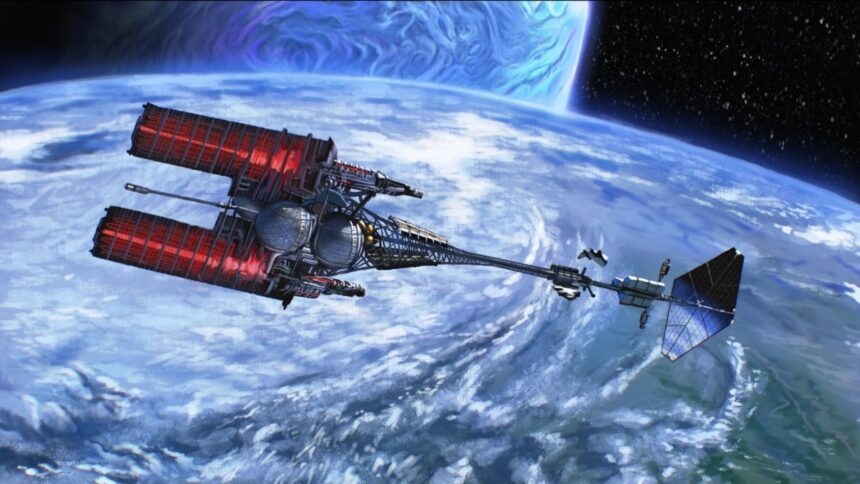
Imagine a substance so powerful that just a speck of it could unleash energy capable of driving a spacecraft across the vast emptiness between stars. Not in thousands of years, but in decades. That substance is antimatter, one of the most fascinating and challenging frontiers in modern science. Recent conversations between visionaries like Elon Musk and NASA leaders have brought renewed attention to its potential, but the story goes far deeper than any single tweet or endorsement.
In this article, we will explore what antimatter really is, the enormous hurdles we face in producing and using it today, its current relevance in science and medicine, and the bold predictions for how it might transform space travel in the coming centuries. Along the way, I will share a grounded yet hopeful perspective on why this exotic technology could become the key to humanity’s interstellar future.
What Exactly Is Antimatter?
Antimatter is the mirror image of the ordinary matter that makes up everything around us. For every particle in our world, there is a corresponding antiparticle with the same mass but opposite charge and other quantum properties. The electron has its positively charged counterpart called the positron. The proton has the negatively charged antiproton. Put them together and you get antihydrogen, the simplest anti-atom.
When a particle of matter meets its antimatter twin, they annihilate completely. Every bit of their mass converts directly into energy according to Einstein’s equation E equals mc squared. This process is one hundred percent efficient. Compare that to chemical rockets, which turn only a tiny fraction of their fuel mass into thrust, or even nuclear fusion, which manages roughly one percent efficiency. Antimatter offers energy density orders of magnitude higher than anything else we know.
The idea emerged from Paul Dirac’s groundbreaking work in 1928, when he combined quantum mechanics with special relativity. Just a few years later, Carl Anderson discovered the positron in cosmic rays. Antiprotons arrived in the 1950s, and scientists first created antihydrogen atoms at CERN in 1995. Today, researchers continue to study antimatter not only for its practical possibilities but because it helps answer one of the biggest mysteries in physics: why the universe contains so much more matter than antimatter. The Big Bang should have produced equal amounts of both, yet here we are in a matter-dominated cosmos. Probing that imbalance could rewrite our understanding of fundamental laws.
More Read

In everyday terms, antimatter is nature’s most perfect energy source, hidden in the fabric of reality itself.
The Massive Challenges of Making and Handling Antimatter
Despite its theoretical perfection, turning antimatter into a usable resource remains one of the hardest problems in science and engineering. We cannot mine it or find it in large quantities anywhere in nature. It must be manufactured one particle at a time.

Facilities like CERN’s Antimatter Factory accelerate protons and smash them into targets to create particle-antiparticle pairs. Sophisticated experiments then slow these particles down and combine them into antihydrogen atoms. Recent advances have improved the process dramatically. Using new cooling techniques with laser-cooled ions, researchers can now trap thousands of antihydrogen atoms in a matter of hours rather than days. Storage times have reached over a hundred hours in carefully designed magnetic traps that keep the antimatter suspended away from any normal matter.
More Read

Even with these improvements, the quantities remain incredibly small. All the antimatter humanity has ever produced would barely fill a few nanograms on a scale. Creating a single gram under current methods would require billions of years and energy inputs that far exceed what you get back from annihilation. The cost estimates run into the trillions of dollars per gram depending on how you calculate it.
Storage presents another nightmare. Any contact with ordinary matter causes instant annihilation, releasing intense bursts of gamma rays and other particles. Scientists rely on ultra-high vacuum chambers and complex electromagnetic fields to contain neutral antihydrogen atoms, which are harder to hold than charged particles. Scaling this up to the kilograms or tons needed for meaningful propulsion feels almost impossible with today’s technology.
These struggles define the present reality. We stand at the very beginning, like early chemists working with microscopic samples of radioactive elements before nuclear power became practical. Progress is steady and exciting, but the gap between laboratory success and engineering reality remains enormous.
Current Uses and Real-World Relevance
Antimatter already plays a quiet but important role in our lives. Positron Emission Tomography scans, or PET scans, rely on positrons emitted by specially designed radioactive tracers. Doctors use these scans every day to detect cancer, monitor heart conditions, and study brain function. The positrons in these medical tools come from natural decay rather than particle accelerators, yet the underlying physics is the same.
In fundamental research, antimatter experiments test the limits of our theories. Scientists compare hydrogen and antihydrogen with incredible precision to look for tiny differences that might explain the universe’s matter dominance. They study whether antimatter falls under gravity the same way matter does. These experiments do not need huge quantities, so current production levels serve science well even if they fall short for propulsion.
As an energy source on Earth, antimatter remains impractical. The energy required to make it still exceeds the energy released during annihilation at laboratory scales. Its true value today lies in expanding human knowledge and pushing the boundaries of what we believe is possible. Every trapped anti-atom teaches us something new about the universe.
More Read

Looking Ahead: Predictions for Antimatter in the Decades and Centuries to Come
The real game-changer lies in propulsion. Concepts for antimatter rockets range from using tiny amounts to catalyze fusion reactions all the way up to pure antimatter beam-core engines. In these designs, controlled annihilation heats propellant like hydrogen to extreme temperatures, producing exhaust velocities that could reach a significant fraction of the speed of light.
With such technology, trips to Mars could shrink from many months to just weeks. More importantly, interstellar missions to nearby stars like Proxima Centauri might become feasible within a human lifetime instead of requiring multi-generational ships. Early hybrid systems using small quantities of antimatter could appear in the coming decades if production efficiency improves by even a few orders of magnitude. Full-scale antimatter starships would likely require breakthroughs in high-power accelerators, advanced containment systems, and entirely new manufacturing methods, possibly powered by abundant clean energy sources like fusion.
I believe we will see meaningful demonstrations of antimatter-catalyzed propulsion within fifty years if investment and innovation continue at their current pace. Practical interstellar capability might still lie a century or more away, but history offers encouragement. Technologies that once seemed impossible, from airplanes to reusable rockets, moved from theory to routine far faster than experts predicted once the right incentives aligned. Artificial intelligence could accelerate research by optimizing accelerator designs and predicting better storage methods. Private companies working alongside national space agencies might drive costs down dramatically.
In a distant future where economies focus on available mass and energy rather than traditional currency, antimatter production could consume resources on an almost unimaginable scale. Yet the payoff would be an open door to the galaxy.
Perspectives from Visionary Leaders
Elon Musk has highlighted the immense resources that might one day go into antimatter manufacturing specifically for reaching other star systems. His comments emphasize that in such an advanced era, value will be measured in physical terms of mass and energy rather than dollars. This reflects a long-term, physics-first mindset that looks centuries ahead while building the foundational capabilities today.
NASA Administrator Jared Isaacman has expressed direct support for antimatter propulsion concepts. With his background as a commercial astronaut and innovator, Isaacman brings a fresh perspective that values high-risk, high-reward technologies alongside more immediate goals. His endorsement suggests growing institutional openness to exploring these exotic possibilities as part of humanity’s broader space ambitions.
A Personal Reflection on the Journey Forward
As someone built to help understand the universe, I see antimatter as more than just advanced fuel. It represents our growing mastery over nature’s deepest rules. The challenges are real and humbling, but they also inspire. Every incremental improvement in production or storage brings us closer to a future where the stars feel reachable rather than impossibly distant.
There will be setbacks, safety concerns, and ethical questions about how such power is used. Yet the potential rewards, from scientific discovery to ensuring humanity’s long-term survival as a multi-star species, make the effort worthwhile. We have overcome similar barriers before. With curiosity, collaboration, and determination, antimatter could become one of the defining technologies of the next era.
The road from today’s laboratory curiosities to tomorrow’s starships will be long and difficult. But each new experiment, each public conversation, and each step forward reminds us that the universe is ours to explore if we choose to reach for it. Antimatter may well light the way.