

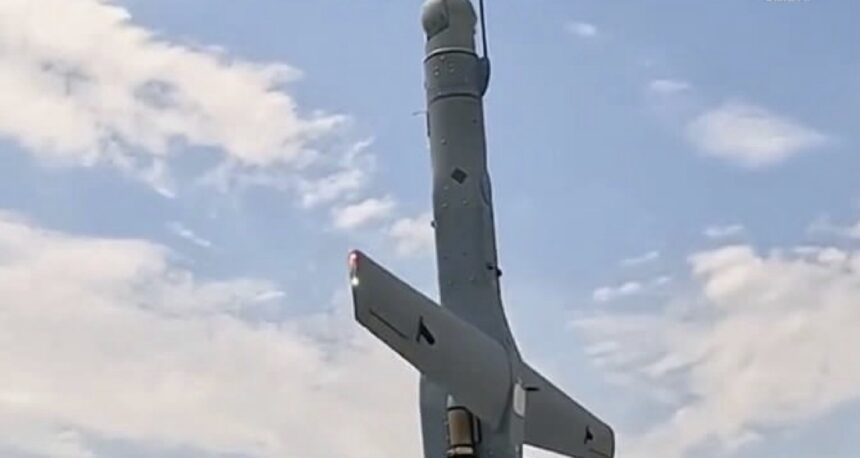
Shield AI has highlighted its innovative V-BAT unmanned aerial vehicle, a Group 3 vertical takeoff and landing drone engineered for high performance in challenging environments. The system combines advanced artificial intelligence with practical design features to support surveillance, reconnaissance, and defense operations.
Compact Design Meets Powerful Autonomy
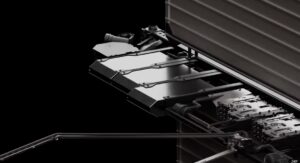
The V-BAT stands out with its single thrust vectored ducted fan propulsion. This setup enables vertical takeoff and landing even in tight spaces, making the drone highly suitable for expeditionary and naval deployments. Operators can transport the system via pickup truck or helicopter and prepare it for flight quickly.
Video footage shared on social media demonstrates the drone performing aerial maneuvers over varied terrain, efficient ground handling, and seamless shipboard operations. These capabilities underscore its flexibility for maritime and forward operating scenarios.
Shield AI equips the V-BAT with its proprietary Hivemind AI software. This technology allows the drone to navigate contested environments where GPS and communications face jamming. The system supports autonomous flight and team operations with multiple drones coordinating in real time.
Growing Role in Modern Defense
As militaries worldwide increase investment in autonomous systems, platforms like the V-BAT offer a cost effective alternative to larger Group 4 and Group 5 drones. The V-BAT delivers comparable intelligence, surveillance, and reconnaissance capabilities with a smaller logistical footprint.
More Read

The United States Coast Guard and other forces have already tested and deployed the platform successfully. Recent operational evaluations confirm its reliability for maritime missions.
Connection to Broader AI Advancements
The development of the V-BAT reflects the rapid evolution of agentic AI technologies that enable machines to act independently in complex situations. This progress connects to breakthroughs in dynamic reinforcement learning techniques that promise more adaptive artificial intelligence systems.
Defense contractors continue to integrate powerful onboard computing similar to innovations like NVIDIA’s RTX Spark, which brings high performance AI processing to compact platforms. These advancements support the growing demand for AI talent and robust computing resources in the defense sector.
More Read

Strategic Implications
The push for autonomous drones fits into larger global trends where nations race to secure critical technologies. Companies like Palantir are also applying AI systems to enhance drone operations in active conflict zones, highlighting the expanding role of intelligent platforms in modern warfare.
The V-BAT represents a significant step forward in tactical unmanned systems. Its combination of AI driven autonomy and logistical simplicity positions it as a key asset for future defense strategies. As AI technologies mature, expect further integration of such systems across military and commercial applications.