


Washington, DC – The White House has quietly approved nearly $9 billion in emergency chip acquisitions for United States intelligence agencies, highlighting the acute shortage of advanced artificial intelligence hardware that is now impacting national security operations. Sources indicate that agencies are overriding their own security protocols to maintain capabilities, including granting clearance to vendors previously flagged as potential supply chain risks.
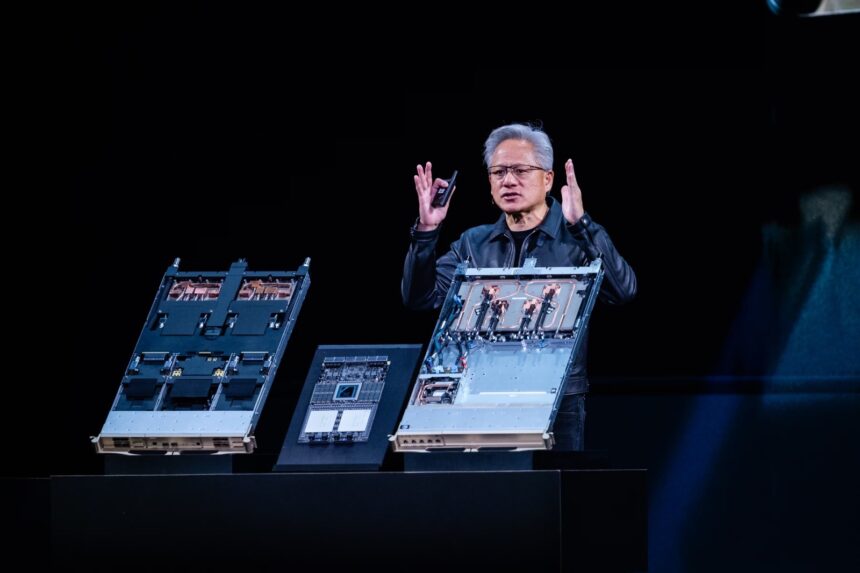
This development underscores the escalating demands of the AI race, where computing power has become a critical strategic asset. The purchases aim to sustain operations at agencies like the National Security Agency, which rely heavily on high-performance chips for data processing, threat analysis, and advanced modeling. NVIDIA’s Grace Blackwell series and similar accelerators require specialized infrastructure, including massive power supplies and liquid cooling systems, further complicating procurement.
The Scope of the Chip Crisis
Intelligence officials have described the situation as a pressing vulnerability. The surge in AI workloads has outpaced supply chains, leading to desperate measures. In one notable case, the Pentagon had flagged Anthropic as a potential supply chain threat, yet the NSA received approvals to utilize its AI technologies anyway. This waiver of standard security reviews illustrates the severity of the shortfall.
NVIDIA remains the dominant player in the high-end AI chip market, but global demand from data centers, defense applications, and commercial sectors has created bottlenecks. The company’s latest offerings demand significant resources to deploy effectively, straining everything from electrical grids to manufacturing capacity. For more on how these infrastructure challenges are unfolding, see NVIDIA Blackwell Demand Strains Global Data Center Power Supply.
The timing coincides with broader geopolitical tensions in the technology sector. China has accelerated efforts to develop domestic alternatives, unveiling GPUs positioned as competitors to NVIDIA and AMD products. These new chips, with performance levels comparable to mid-range RTX models and around 12GB of VRAM, signal Beijing’s push for technological self-reliance amid export restrictions and trade frictions. Related analysis covers China’s Push for Semiconductor Independence Amid US Export Controls.
More Read

National Security Implications
When agencies tasked with anticipating threats must bypass their own safeguards to secure hardware, it raises questions about preparedness. The $9 billion allocation, described as secret, reflects a shift where AI infrastructure is treated as essential military-grade equipment rather than purely commercial technology. This move comes as the United States navigates a delicate balance between innovation speed and risk management.
Experts warn that the chip shortage extends beyond convenience into strategic weakness. Adversaries could exploit delays in deployment or dependencies on foreign supply lines. Liquid cooling requirements and enormous energy consumption for clusters add layers of logistical complexity, especially as data centers compete with civilian power needs. For insights into the energy side of this equation, refer to AI Data Centers Drive Surge in US Electricity Demand Projections.
President Trump’s administration has prioritized American technological edge, with recent diplomatic engagements reportedly touching on chip access issues during high-level visits. The approval of these purchases aligns with efforts to bolster domestic capabilities while addressing immediate operational gaps.
Broader Context of the AI Arms Race
The global competition for AI supremacy has intensified. China’s latest GPU announcements come shortly after discussions involving NVIDIA leadership and potential sales approvals, suggesting a pattern of rapid domestic innovation in response to external pressures. This dynamic risks accelerating a full technological decoupling between major powers.
In the United States, demand from intelligence and defense sectors now rivals or exceeds commercial needs. Hyperscale providers and government buyers are scrambling for allocations, leading to extended lead times and premium pricing. Smaller players in the ecosystem, including those specializing in advanced cooling or power management, stand to gain significantly from this boom. Related coverage explores Emerging Winners in AI Hardware Supply Chain Beyond NVIDIA.
The situation also highlights vulnerabilities in critical minerals and components essential for semiconductor production. As governments treat computing resources as strategic assets, securing rare earth elements and fabrication materials becomes paramount.
Challenges and Future Outlook
Overriding internal security flags carries inherent risks. While necessary for continuity, such decisions could set precedents that complicate future oversight. Analysts emphasize the need for accelerated domestic manufacturing initiatives, such as those under the CHIPS Act, to reduce long-term dependencies.
The $9 billion infusion may provide short-term relief, but sustained investment in research, talent, and infrastructure is required. Power generation capacity, in particular, must scale rapidly to support projected AI growth without destabilizing grids. For a deeper dive into policy responses, see US Government Accelerates CHIPS Act Funding to Counter Shortages.
International dimensions add complexity. Export controls, while aimed at protecting sensitive technologies, have spurred parallel development tracks abroad. The result is a fragmented global market where innovation races ahead of regulatory frameworks.
More Read

Private sector involvement remains crucial. Companies like NVIDIA continue to push boundaries with new architectures, but scaling production to meet intelligence needs alongside commercial demand tests the limits of current ecosystems.
Economic and Market Ramifications
Markets have reacted to these signals with heightened interest in semiconductor stocks and related infrastructure plays. The acknowledgment of shortages at the highest levels validates bullish outlooks for firms positioned across the value chain, from chip designers to facility operators.
However, challenges persist. Lead times for specialized equipment remain extended, and energy costs could influence deployment decisions. Investors are closely monitoring how agencies balance urgent needs with fiscal responsibility.
This episode serves as a reminder that AI is no longer solely an economic driver but a core element of national power. The quiet approval of massive purchases reflects a recognition that staying ahead in this domain is non-negotiable for security and prosperity.
Path Forward
As details of the procurement emerge, lawmakers and oversight bodies are expected to review the waivers and spending. Calls for greater transparency in classified acquisitions may grow, balanced against operational necessities.
In the meantime, the focus remains on bridging the gap through a mix of emergency buys, accelerated production, and strategic partnerships. The coming months will test whether these measures suffice or if even bolder steps are required to secure America’s technological future.
This situation captures a pivotal moment in the intersection of artificial intelligence, national security, and global competition. Ongoing developments will continue to shape policy and investment landscapes for years ahead.