

In a filing that marks a watershed moment for private enterprise and public markets, Space Exploration Technologies Corp. (SpaceX) officially submitted its long-anticipated S-1 registration statement with the U.S. Securities and Exchange Commission on Wednesday. The move sets the stage for what is poised to become the largest initial public offering in history, potentially raising $75–80 billion or more at a valuation approaching or exceeding $1.75–2 trillion, under the ticker symbol SPCX on Nasdaq and Nasdaq Texas.
Trading could commence as early as mid-June, with reports pointing to a pricing date around June 11 and a debut on June 12. This dwarfs Saudi Aramco’s 2019 record of roughly $29 billion raised. The filing, now publicly available, provides the first detailed glimpse into the finances, governance, and audacious vision of Elon Musk’s space powerhouse, which has evolved far beyond rockets into a vertically integrated space-internet-AI conglomerate.
The $28.5 Trillion Total Addressable Market: Largest in History?
At the heart of the prospectus is SpaceX’s declaration that it has identified “the largest actionable total addressable market (TAM) in human history”: $28.5 trillion. This figure surpasses the current U.S. GDP of approximately $28 trillion and excludes China and Russia.
The breakdown is as follows:
- Space segment: $370 billion from space-enabled solutions, including orbital infrastructure, payload services, and future lunar/Mars industries.
- Connectivity: $1.6 trillion, driven by Starlink Broadband ($870 billion) and Starlink Mobile ($740 billion), plus enterprise and government opportunities.
- AI: $26.5 trillion (93% of the total), encompassing $2.4 trillion in infrastructure, $760 billion in consumer subscriptions, $600 billion in digital advertising, and a massive $22.7 trillion in enterprise applications.
SpaceX positions itself not merely as a launch provider but as the backbone for global intelligence, connectivity, and off-world expansion. The company argues that its reusable rocket technology, massive satellite constellation, and recent integrations with xAI and partners like Anthropic enable it to capture value across these domains. Even capturing 1% of this TAM would imply $285 billion in annual revenue a scale that would dwarf today’s largest corporations.
More Read

Critics will likely view the TAM as extraordinarily optimistic, a common feature in S-1 filings where projections aim to paint the broadest possible opportunity. Skeptics point to execution risks, regulatory hurdles, competition, and the unproven nature of space-based AI compute. Yet, for a company that has already disrupted global launch economics and built the world’s largest satellite internet network, the vision commands attention.
Financial Snapshot: Growth Amid Heavy Investment
The S-1 discloses that SpaceX generated $18.7 billion in consolidated revenue for 2025, up significantly from prior years, with Starlink Connectivity as the primary driver. Q1 2026 revenue reached $4.69 billion. Segment details highlight:
- Connectivity (primarily Starlink): Strong contribution, with millions of subscribers across 164 countries and territories.
- AI and Space segments: Emerging but already generating hundreds of millions.
The company reported an operating loss of about $2.6 billion in 2025, largely attributable to $3 billion in Starship R&D spending. Adjusted EBITDA stood at a healthier $6.6 billion, underscoring cash generation from core operations despite aggressive reinvestment. As of March 31, 2026, SpaceX held $15.8 billion in cash and 18,712 Bitcoin valued at roughly $1.293 billion.
More Read

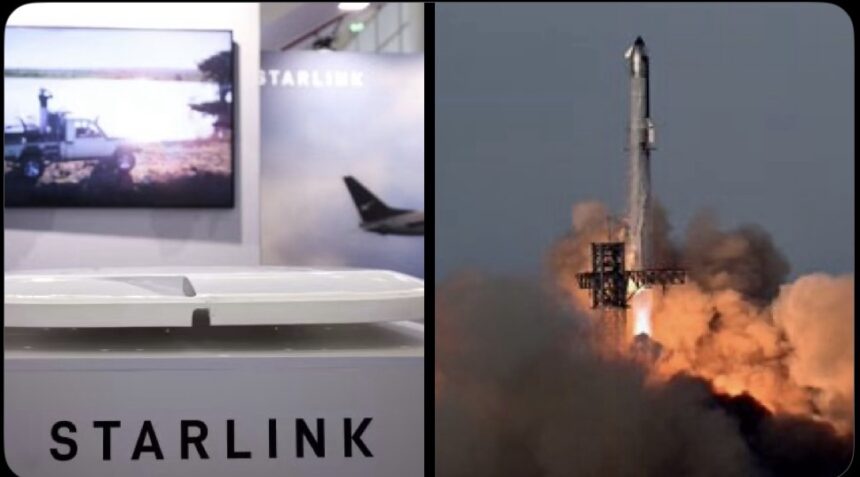
Starlink, with over 10 million subscribers and thousands of satellites in low-Earth orbit, has become a cash engine. The network has captured a dominant share of global orbital mass launches (over 80% in recent years) with near-perfect Falcon reliability. Starship, the fully reusable next-generation vehicle, is slated for operational payload deliveries in the second half of 2026.
Governance: Musk’s Ironclad Control
Elon Musk will retain approximately 85% of voting power through supervoting Class B shares (10 votes per share), with insiders and the board collectively holding around 86%. This structure makes it “nearly impossible” for public shareholders to remove him as CEO, and the company intends to operate as a “controlled company” under Nasdaq rules, availing itself of governance exemptions.
Musk also serves as Chief Executive Officer, Chief Technical Officer, and Chairman. The filing emphasizes long-term leadership stability as essential for executing multi-decade missions like Mars colonization. Major non-Musk stakeholders include Valor Equity’s Antonio Gracias, PayPal co-founder Luke Nosek, and Sequoia Capital.
Strategic Evolution: From Rockets to AI Empire
SpaceX is no longer just a rocket company. The filing details its merger with Musk’s xAI and a major orbital compute deal with Anthropic, involving substantial monthly payments for capacity through 2029. Plans include deploying AI data centers in space, leveraging solar power in optimal orbits, potentially beginning as early as 2028.
The mission statement is expansive: “to build the systems and technologies necessary to make life multiplanetary, to understand the true nature of the universe, and to extend the light of consciousness to the stars.” This aligns with Musk’s broader ecosystem—Starlink providing global connectivity, Starship enabling deep-space transport, and AI infrastructure powering intelligence at planetary scale.
Market Context and Investor Appetite
The IPO arrives amid a frenzy for AI and space tech. Reports suggest strong institutional interest, including potential multi-billion-dollar commitments from firms like BlackRock. The dual listing on Nasdaq and Nasdaq Texas underscores Texas’s rising prominence as a tech and space hub, with Starbase as the company’s operational heart.
More Read

At a $1.75+ trillion valuation, the implied multiple on 2025 revenue exceeds 90–100x—steep by traditional metrics but reflective of growth expectations in AI and space. Starship’s success could unlock orders-of-magnitude cost reductions for orbit and beyond, while Starlink expansion targets underserved markets and mobile connectivity.
Risks Highlighted in the Filing
As with any S-1, SpaceX outlines substantial risks: intense competition (e.g., AST SpaceMobile in mobile), regulatory scrutiny, technical failures, capital intensity, geopolitical tensions, and dependence on Musk’s leadership and multi-company commitments (Tesla, xAI, X). Execution on Starship and space AI remains unproven at commercial scale.
A New Chapter for American Innovation
SpaceX’s public debut represents more than a financial event. It symbolizes the maturation of the commercial space age and the convergence of space infrastructure with AI. From landing reusable rockets to beaming internet to remote corners of Earth and now eyeing orbital compute clusters, the company has repeatedly achieved what many deemed impossible.
Whether the $28.5 trillion TAM proves visionary or hyperbolic will be judged by execution over the coming decade. For now, investors, technologists, and space enthusiasts have a prospectus that invites them to bet on a future where humanity becomes multiplanetary and intelligence scales beyond Earth.
The roadshow begins soon. The countdown to SPCX trading has started and with it, a new era for public participation in humanity’s expansion into the cosmos.