

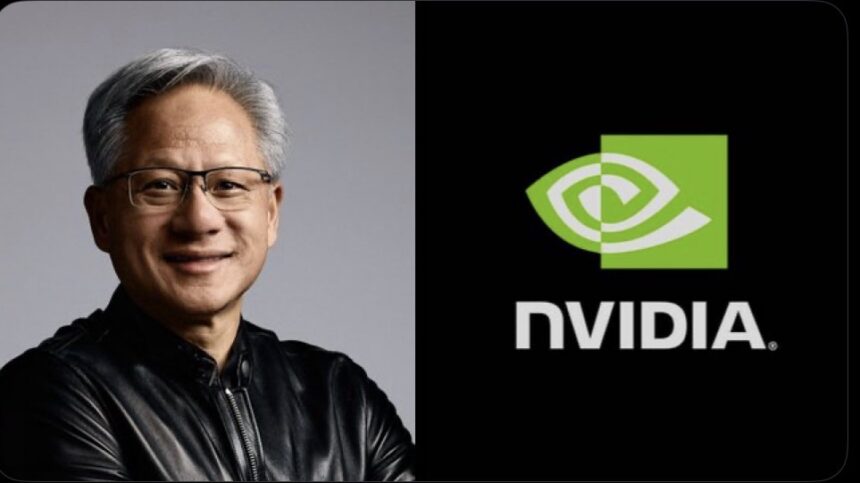
NVIDIA Corporation CEO Jensen Huang has accepted an invitation to join the advisory board of Tsinghua University’s School of Economics and Management in Beijing, according to a report first published by the Financial Times on Wednesday. The appointment, which has not yet been formally announced by either party, places Huang alongside some of the most recognizable names in global technology leadership, including Apple CEO Tim Cook, who currently chairs the board, as well as Tesla’s Elon Musk, Microsoft’s Satya Nadella, Meta’s Mark Zuckerberg, and Dell Technologies founder Michael Dell. The board was established in 2000 as a bridge between Western corporate leadership and Chinese academic institutions, and has long drawn participation from major global tech figures.
But the timing and context of Huang’s appointment have turned what might otherwise be a routine advisory role into a flashpoint in the escalating debate over US-China tech competition and the boundaries of permissible corporate engagement with Chinese institutions.
A Dual Role Under the Microscope
At the heart of the controversy is the fact that Huang does not hold this advisory role in a vacuum. According to his official NVIDIA biography, he was appointed in 2026 to serve on President Donald Trump’s President’s Council of Advisors on Science and Technology, known as PCAST. The body provides high-level guidance on emerging technologies, artificial intelligence, and national security-related innovation directly to the White House.
Critics argue that simultaneously advising the US government on sensitive technology policy while holding a formal position at one of China’s most strategically significant universities creates an untenable conflict. Tsinghua University is not a conventional academic institution in the Western sense. Its governance is deeply intertwined with the Chinese Communist Party. The university’s CCP committee holds authority over major institutional decisions, and Tsinghua is co-supervised by bodies that include the State Administration for Science, Technology, and Industry for National Defense. It hosts research laboratories working in areas spanning military AI, guided missiles, and aerospace technology, all aligned with Beijing’s military-civil fusion strategy.
More Read
Tsinghua is also the alma mater of Chinese President Xi Jinping, and the university has formally established an Institute for Xi Jinping Thought on Socialism with Chinese Characteristics for a New Era. The institution plays a central role in cultivating China’s next generation of political and technical leadership.
The Context Behind the Appointment
The announcement did not arrive without a trail. Huang’s appointment follows his participation just weeks earlier in President Trump’s high-profile trade delegation to Beijing in mid-May, where Trump met with President Xi Jinping. Huang initially appeared to have been left off the delegation, but after Trump personally called him, Huang flew to Alaska to board Air Force One and joined the trip midway. NVIDIA described his participation as being “at the invitation of President Trump to support America and the administration’s goals.”
More Read

The Beijing trip itself was a significant moment in US-China relations, representing a cautious thaw after months of escalating export controls and trade friction. For Huang, China is not a peripheral market. The country once accounted for roughly one-fifth of NVIDIA’s total revenue before Washington tightened restrictions on AI chip exports. NVIDIA has already disclosed a $5.5 billion charge tied to export restrictions on its H20 chip, a China-focused processor that was designed specifically to comply with earlier regulatory requirements. Huang has been public about his frustrations with the restrictions, telling investors they have cost American companies billions in lost sales and have largely benefited domestic Chinese rivals, most notably Huawei.
Against that backdrop, the Tsinghua advisory board seat fits a clear pattern. NVIDIA wants continued influence and market access in China. The advisory role is a formal signal that the relationship is still being actively managed.
Context That Critics Are Leaving Out
Reaction to the appointment has been polarized along predictably political lines. Some commentators and political figures have called for Huang’s immediate removal from PCAST, framing his dual role as a national security threat. Far-right activist Laura Loomer published a lengthy post on X labeling the appointment “completely insane” and calling on Trump administration officials, the FBI director, and multiple senators to take action.
However, significant context has been conspicuously absent from many of the more heated reactions. The Tsinghua School of Economics and Management advisory board that Huang is joining is not a governance body. It is an international business advisory council that has included Western executives since 2000. Its chair is Apple’s Tim Cook, a figure who has maintained deep operational ties with China for decades, as Apple’s entire manufacturing supply chain runs through the country. Elon Musk, who advises the Trump administration through the Department of Government Efficiency, also sits on the same board. Neither man has faced equivalent calls for removal from their respective advisory roles.
The board functions primarily as a soft diplomacy and talent recruitment platform. It does not grant members access to classified research or a formal role in the university’s defense laboratory activities. Critics conflating board membership with operational involvement in CCP governance are overstating the case.
More Read

That said, the symbolic and reputational dimensions of the role are real. NVIDIA is the single most strategically important company in the global AI chip supply chain. Its technology underpins the training infrastructure for virtually every major large language model and autonomous system currently in development. Washington has spent years trying to restrict Beijing’s access to precisely the kind of advanced computing hardware NVIDIA produces. Having the CEO of that company hold a formal role at an institution whose defense laboratories actively pursue the same technologies raises legitimate questions about optics, access, and influence, even if the specific role is advisory and not operational.
A Geopolitical Balancing Act
What Huang’s Tsinghua appointment really illustrates is the impossible position that American technology executives now occupy. China’s tech sector is simultaneously NVIDIA’s largest potential growth market and its most heavily regulated one. Export controls have handed Huawei and domestic Chinese chipmakers a window to build competitive alternatives without facing NVIDIA in the open market. Every quarter that Huang is locked out of China is a quarter in which local competitors like Huawei’s Ascend chips consolidate their position in one of the world’s most important AI markets.
At the same time, US intelligence agencies are spending billions to secure AI chip supply chains precisely because they understand that semiconductor superiority is a core pillar of national security. The idea of NVIDIA’s CEO holding any formal role at a CCP-linked institution while simultaneously sitting on a White House science advisory council is, at minimum, a communications problem. At most, it is a structural conflict that lawmakers on both sides of the aisle have legitimate reason to examine.
Bipartisan concern over technology transfer to China is one of the few areas of genuine consensus in Washington at the moment. Republicans and Democrats alike have supported tightening export controls on advanced semiconductors. That consensus does not disappear because the executive in question was invited to China by Trump himself.
What Comes Next
NVIDIA has not commented publicly on the Tsinghua appointment, and the university has also remained silent. The appointment has not been formally announced, meaning there is still a possibility it does not proceed as reported. But the Financial Times report, citing multiple people familiar with the matter, has been widely picked up and not disputed by either party.
Congressional scrutiny is likely. Several senators have already flagged concern about the dual role. Whether that translates into formal hearings, calls for Huang to step down from PCAST, or demands for conflict-of-interest disclosures remains to be seen. The Trump administration, which brought Huang to Beijing in the first place, is unlikely to rush to condemn a figure it has publicly embraced as a symbol of American technological leadership.
What is clear is that the rules governing how American technology executives engage with Chinese institutions have not kept pace with the strategic realities of the US-China tech rivalry. Huang’s Tsinghua appointment is the latest example of a growing gray zone where corporate diplomacy, national security, and political accountability have not yet found their boundaries.
Jensen Huang is arguably the most consequential technology executive in the world right now. The chips NVIDIA makes do not just power consumer products. They shape the trajectory of military AI, surveillance infrastructure, and autonomous weapons development globally. That reality makes every board seat, every advisory role, and every diplomatic trip a matter of public interest. The conversation that has erupted around his Tsinghua appointment is uncomfortable. It is also overdue.