

What looked like one of the most consequential long-term compute partnerships in the history of artificial intelligence infrastructure turned out to be something considerably more modest on paper. Elon Musk took to X on Thursday to clarify the nature of the recently announced deal between SpaceX and AI startup Anthropic, confirming that the arrangement is a 180-day lease with a mutual 90-day cancellation notice attached, not the sweeping multi-year compute commitment that headlines had implied.
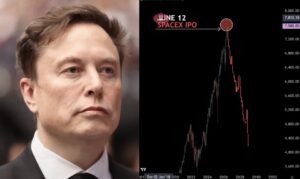
“SpaceX has not committed to leasing Colossus for years, although it’s possible that may be what happens,” Musk wrote. The clarification landed just days after SpaceX filed its S-1 prospectus with the SEC ahead of a blockbuster IPO expected on June 12, and it immediately reshaped how investors and analysts are reading the deal.
How the Deal Was First Reported
The original announcement, made in early May, sent shockwaves through the AI industry. Anthropic confirmed it had signed an agreement with SpaceX to secure the entire compute output of Colossus 1, an AI supercomputer campus in Memphis, Tennessee. The facility features over 220,000 NVIDIA GPUs, including dense deployments of H100, H200, and next-generation GB200 accelerators, and delivers more than 300 megawatts of compute capacity. Anthropic’s co-founder and chief compute officer Tom Brown subsequently announced on X that the company was also expanding the partnership to include Colossus 2, a second facility SpaceX brought online in January 2026, with GB200 capacity scaling up throughout June.
The financial terms that emerged from SpaceX’s IPO filing were staggering. Anthropic agreed to pay $1.25 billion per month for access to both campuses, with slightly reduced fees during a ramp-up period in May and June as the infrastructure came fully online. Run that rate to its full extent and the deal represents roughly $15 billion in annual revenue for SpaceX, or as much as $45 billion over three years if it runs to May 2029 as outlined in the filing. For a company whose AI segment posted $818 million in revenue and a $2.5 billion operating loss in the March quarter alone, the Anthropic contract looked like a transformative lifeline.
More Read

The IPO document noted that either party could terminate the agreements with 90 days’ written notice but made no mention of a six-month term. That omission is at the center of the current confusion.
Musk’s Clarification and What It Changes
On Thursday, Musk filled in the gap the filing had left open. The 180-day lease structure was SpaceX’s idea, not Anthropic’s. “The short term was our request, not Anthropic’s,” he wrote. The reason, Musk explained, is that SpaceX wants flexibility. As AI compute demand continues to tighten globally, SpaceX may need the Colossus capacity back for its own operations. “We won’t leave them hanging and will provide a reasonable off-ramp, but if compute gets super tight I said we might need it back at some point,” he added.
That statement rewrites the investment narrative considerably. The $45 billion headline figure assumed a contract running through May 2029 in its entirety. What Musk is describing is structurally a rolling six-month arrangement with a 90-day out clause, renewable at SpaceX’s discretion but by no means locked in. The deal could still run for years. It could also end within six months if SpaceX decides it needs the compute for its own AI models and products. Musk’s clarification does not change the current terms, but it fundamentally reframes the risk profile.
SpaceX’s Emerging Neocloud Strategy
The Anthropic deal sits at the center of a broader strategic pivot for SpaceX. The company’s IPO filing revealed that xAI, which merged with SpaceX earlier this year, spent $12.7 billion on AI infrastructure in 2025 and has already invested $7.7 billion in the first quarter of 2026 alone. That level of capital expenditure has left SpaceX in a position that its filing describes diplomatically as having “sufficient capacity to provide compute for our own AI models and to satisfy the obligations under these agreements.” The more direct reading is that SpaceX overbuilt and needed to find a way to monetize the excess capacity before going public.
The Anthropic agreement gave SpaceX exactly that opening. By leasing unused compute infrastructure to a third party at $1.25 billion per month, SpaceX transforms a potential liability into a revenue line, allowing it to present investors with a “dual monetization strategy” rather than a story of overcapitalized infrastructure sitting underutilized. The filing explicitly stated that SpaceX expects to sign similar computing resource agreements with other companies in the future. Musk reinforced this ambition last week, saying the company is “in discussions with other companies to do the same” and envisioning a future in which SpaceX serves AI at extremely high scale, including from orbital data centers.
The orbital compute angle is not speculative theater. As part of the original Anthropic agreement, the company also expressed interest in partnering with SpaceX to develop multiple gigawatts of compute capacity in space, a concept SpaceX has been positioning as the logical next frontier once terrestrial power, land, and cooling constraints become binding limitations on AI training infrastructure. The pitch is that Starship’s launch economics eventually make it feasible to place GPU clusters in orbit, where solar power is abundant and heat dissipation is easier. That remains years away from commercial reality, but the Anthropic partnership gave SpaceX a narrative hook to start selling the vision to IPO investors.
Anthropic’s Side of the Equation
More Read
For Anthropic, the arrangement answers a different kind of pressure entirely. The company has faced an acute AI chip shortage problem for months, with demand from Claude Pro and Claude Max subscribers consistently outpacing available inference capacity. The Colossus 1 deal gave Anthropic immediate access to one of the largest GPU clusters on the planet, without requiring the company to build or own data center infrastructure itself.
Anthropic has pursued compute aggressively across multiple fronts. In April, it expanded a major partnership with Google and Broadcom for multiple gigawatts of next-generation TPU capacity expected to come online starting in 2027. That arrangement, announced alongside a $3.5 gigawatt compute commitment from Broadcom, reflects Anthropic’s longer-term infrastructure strategy. The SpaceX deal, by contrast, addresses immediate near-term demand, buying capacity that is available now while the Google-Broadcom TPU infrastructure finishes its buildout.
The 180-day structure does create operational risk for Anthropic. If SpaceX reclaims the capacity at the end of the initial lease, Anthropic would need to absorb the disruption and redirect workloads to other infrastructure. Brown’s announcement that the company is already scaling up on Colossus 2 capacity throughout June suggests Anthropic is moving quickly to make full use of the arrangement while it holds.
A Partnership Built on Competitive Tension
The irony running through the entire deal is hard to miss. Musk’s xAI, which merged with SpaceX, develops the Grok family of AI models that compete directly with Anthropic’s Claude. Musk has been publicly critical of Anthropic in the past, and the Defense Department has been moving toward Grok-based deployments while Anthropic continues its legal dispute with the Pentagon over a national security blacklisting. Yet here is SpaceX leasing its flagship compute infrastructure to Claude’s developer for $1.25 billion a month.
The explanation is straightforward. The AI industry’s infrastructure demands are now so extreme that commercial logic is overriding competitive allegiance. Building and operating frontier AI compute at scale requires capital investment that very few organizations can sustain, and the fastest way for SpaceX to justify the billions it has poured into Colossus is to keep those GPUs running at full capacity regardless of who is using them.
Musk’s Thursday clarification was careful in its framing. He did not say the deal would end after six months. He said SpaceX had not committed to keeping it running for years. That distinction, subtle as it sounds, matters a great deal to investors trying to price the Anthropic revenue stream into SpaceX’s upcoming IPO valuation. The $75 billion target SpaceX is reportedly seeking looks more defensible with a locked-in $15 billion annual revenue contract than with a rolling short-term lease. Musk’s post did not change the deal. It changed how confidently anyone can assume it will last.