

Discover how Microsoft integrates Anthropic’s Claude (including Opus 4.7) with Microsoft Foundry and 1,400+ MCP tools. This free hands-on workshop shows developers how to build, connect, and ship real AI agents in under 35 minutes. Perfect for enterprise AI adoption in 2026.
Introduction
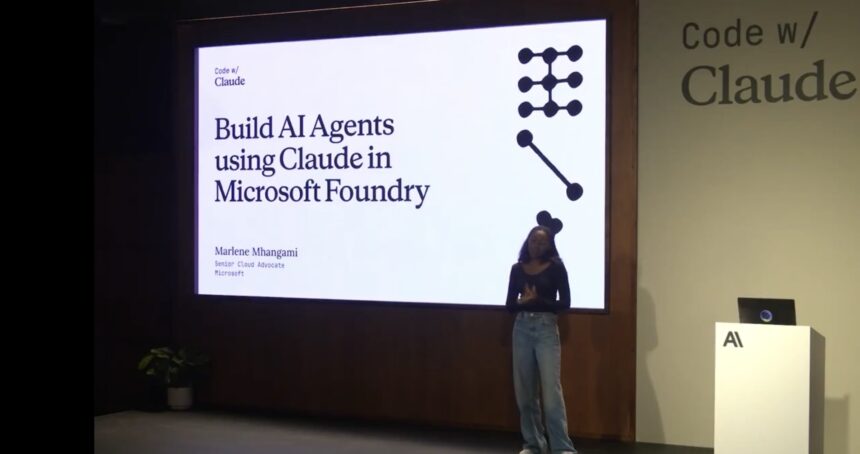
In the fast-evolving world of agentic AI, practical guidance often separates hype from real deployment. Microsoft has stepped up with a free 34-minute hands-on workshop that demonstrates exactly how to build production AI agents using Anthropic’s powerful Claude models inside Microsoft Foundry.
Presented by Senior Developer Advocate Marlene Mhangami and her colleagues, the session cuts through the noise. It shows developers how to provision Claude, wire it up with tools via the Model Context Protocol (MCP), and move quickly toward production environments.
This workshop arrives at a pivotal moment. As organizations race to implement autonomous agents, resources that bridge theory and execution are invaluable. Whether you’re exploring agentic AI or scaling enterprise workflows, this free session delivers immediate value.
What Is Microsoft Foundry and Why Claude Matters
Microsoft Foundry (formerly Azure AI Studio) serves as a comprehensive AI app and agent factory. It offers a unified platform for building, deploying, and governing AI solutions at scale. With native support for frontier models from multiple providers, Foundry gives Azure users unmatched flexibility.
More Read

The deep integration with Anthropic’s Claude family including Opus 4.7, Sonnet, and Haiku variants brings exceptional reasoning, coding, and tool-use capabilities to Microsoft’s enterprise ecosystem. Claude excels in complex, multi-step tasks while maintaining strong safety and reliability standards.
Key advantages include:
- Enterprise-grade security, compliance, and observability
- Serverless deployment options for seamless scaling
- Built-in governance and cost controls
- Access to the widest selection of frontier models on a single platform
This partnership positions Microsoft as a leader in making advanced agent development accessible without sacrificing production readiness.
Workshop Breakdown: Hands-On Agent Building
The session follows a clear, practical workflow that any developer can replicate:
- Provision Claude in Microsoft Foundry — Set up models quickly in the portal.
- Connect via MCP — Leverage Anthropic’s open Model Context Protocol for standardized tool integration.
- Build the Agent — Participants create a fully functional “Sparkles Cupcake Shop” agent that handles customer orders, inventory checks, vouchers, and more.
- Local Development & Testing — Run everything in VS Code with Claude Code integration.
- Production Insights — Understand monitoring, scaling, and enterprise deployment patterns.
One standout feature is the 1,400+ pre-built MCP tools and connectors. These include ready-made integrations with systems like SAP, ServiceNow, Microsoft 365, and more — eliminating the need for custom wrappers in many cases.
The demo emphasizes moving beyond basic chat interfaces to reliable, tool-equipped agents capable of real business impact.
Why MCP Changes the Agent Game
The Model Context Protocol (MCP) represents a significant advancement in agent tooling. Developed by Anthropic as an open standard, MCP standardizes how models discover, access, and use external resources, tools, and prompts.
In the workshop, participants connect their agent to a real MCP server for cupcake shop data. This approach demonstrates:
- Reusable prompts and personas
- Secure data access without exposing raw APIs
- Faster iteration cycles
- Better maintainability for production systems
MCP’s growing adoption could become the de facto standard for connecting frontier models to enterprise systems, much like REST APIs did for web services.
More Read

Real-World Context: The Rise of Agentic AI
This workshop aligns perfectly with the broader shift toward agentic AI — systems that don’t just respond but act autonomously to complete complex goals.0
Related reading on Briefly USA:
- What Is Agentic AI? A Simple Explanation for 2026
- ChatGPT Workspace Agents Explained: What They Are and Why They Matter
- What Can ChatGPT Agent Do On Its Own? 15 Real Tasks It Handles
Microsoft’s approach with Claude complements other agent platforms while leveraging Azure’s mature infrastructure for security-conscious organizations.
Benefits for Developers and Enterprises
For individual developers and small teams:
- Free, high-quality training from Microsoft experts
- Hands-on experience with cutting-edge tools
- Starter environments (including Skillable labs) for immediate practice
- Potential swag — participants have received virtual and physical cupcakes!
For enterprises:
- Accelerated path to production agents
- Reduced custom development effort through MCP
- Strong governance and compliance features
- Seamless integration with existing Microsoft 365 and Azure investments
In an era where many “AI courses” focus on vibes rather than shipping, this workshop stands out for its engineering depth and practicality.
How to Get Started Today
The full workshop is available free on YouTube:
Watch here: Build AI agents using Claude in Microsoft Foundry (34 minutes)
Additional resources mentioned in the video:
- Workshop starter: aka.ms/claudeworkshop
- Microsoft Learn documentation for Claude in Foundry
- Claude Code configuration guides
No Azure subscription is strictly required to watch and learn, though one helps with following along in your own environment.
The Bigger Picture: Microsoft-Anthropic Partnership
This workshop reflects the deepening collaboration between Microsoft and Anthropic. Claude models are now natively available across Microsoft Foundry and even Microsoft 365 Copilot scenarios. The combination gives organizations access to both GPT and Claude frontier capabilities on one secure platform.
As AI agents become central to business operations — from customer service automation to complex workflow orchestration — resources like this lower the barrier to meaningful adoption.
Conclusion: A Must-Watch for 2026 AI Builders
Microsoft’s free Claude workshop delivers exactly what the AI community needs: clear, actionable instruction on building production agents without the fluff.
Whether you’re a seasoned Azure developer, exploring agentic systems for the first time, or evaluating tools for your organization, the 34-minute investment will pay dividends.
In the competitive landscape of AI development platforms, practical education wins. This session exemplifies Microsoft’s commitment to making advanced AI accessible while maintaining enterprise standards.
Don’t miss it. Watch the workshop, explore the linked resources, and start building agents that actually ship.
More AI Coverage on Briefly USA:
Stay tuned for more practical AI guides, tool breakdowns, and industry analysis.