

May 21, 2026 — The semiconductor memory market, which has been riding high on AI-driven demand, could face a significant shift as early as the second half of 2027, according to Kye-hyun Kyung, former head of Samsung Electronics’ Device Solutions (DS) group and current advisor to the company.
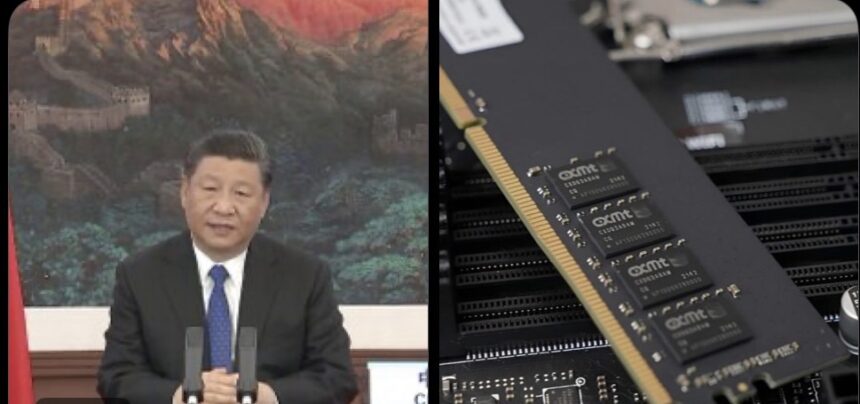
Speaking at the National Academy of Engineering of Korea (NAEK) Forum, Kyung highlighted aggressive investments by Chinese manufacturers—led by ChangXin Memory Technologies (CXMT) and others like Jiahe Jinwei—as a key risk factor. He predicted that a surge in DRAM supply could drive down prices, potentially reversing the sharp gains seen in recent quarters.
The Current “RAMageddon” Boom
AI data center demand has created severe shortages, particularly for DDR5 and high-bandwidth memory (HBM). Spot prices for 16Gb DDR5 modules reportedly surged from around $6.84 in September 2025 to $27.20 by December 2025 a roughly 400% increase in a short period.23 Analysts, including those at Goldman Sachs, have dubbed the phenomenon “RAMageddon,” with contract prices continuing to climb into 2026 amid tight supply.
Samsung, SK Hynix, and Micron currently dominate the global DRAM market, holding the vast majority of production capacity (historically around 90-95% combined, with recent shares showing Samsung, SK Hynix, and Micron as the top three).19 Their focus has increasingly shifted toward advanced HBM for AI GPUs, leaving standard DDR5 more exposed to new entrants.
China’s Push and Market Implications
Chinese firms have already captured over 20% of the NAND flash market and are targeting 10-13% in DRAM, with CXMT leading expansions. Plans call for adding substantial wafer capacity (hundreds of thousands of wafers) over the next few years, potentially pushing global DRAM output toward 6 million wafers per month by late 2027.
More Read

Kyung noted that this ramp-up primarily targets commodity DDR5 for servers and consumer applications, rather than cutting-edge HBM used in AI training clusters. While Chinese DRAM remains a generation behind in advanced stacking and yields, success in volume production could ease shortages for non-AI uses.
Key Caveats:
- Geopolitical tensions, export controls, and security concerns could limit adoption of Chinese memory in Western data centers and devices.
- Big Tech capex trends and sustained HBM demand may keep overall memory pricing elevated beyond 2028.
- Historical precedents (e.g., China’s impact on solar panels and displays) suggest oversupply risks, but technology gaps and yields remain hurdles.
Kyung advised South Korea to diversify beyond memory dominance (where it holds ~70% share) toward fabless design and deeper AI integration to maintain competitiveness.
This outlook arrives as memory stocks and related sectors continue to benefit from the AI supercycle, but it introduces a note of caution for investors betting on prolonged shortages. The memory market’s cyclical nature suggests volatility ahead, with potential relief for PC builders, server operators, and consumers if Chinese supply materializes as forecasted.