


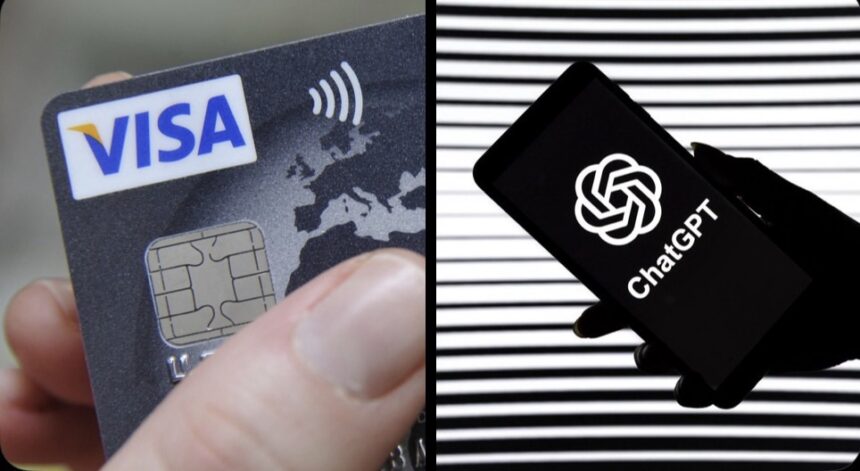
In a move that feels ripped straight from a sci-fi script, Visa has partnered with OpenAI to embed its massive payment network directly into ChatGPT. Announced on June 10, 2026, at the Visa Payments Forum in San Francisco, this collaboration promises to let AI agents hunt for deals, make recommendations, and complete purchases on your behalf, all while keeping things secure.
No more endless scrolling through product pages or second-guessing checkout forms. Tell ChatGPT you need wireless headphones under $150, and an AI agent could scout options, pick the best one, and swipe your linked Visa card to seal the deal. It is the next leap in agentic commerce, where autonomous AI does not just chat. It acts.
How the Partnership Actually Works
Forget the viral X post claiming full access to your bank info. That is an exaggeration. Users must first link their Visa card and set strict controls: spending limits, approved merchants, and often step-by-step approvals for bigger buys. Visa does not hand over raw card details or bank login credentials. Instead, it uses tokenized credentials, which are secure, limited-use digital versions of your card info.
OpenAI supplies the smarts: the AI agents that browse, compare, and decide. Visa brings the payment rails, authorization, fraud monitoring, and chargeback protections across its network of over 150 million merchants. Early pilots have already handled hundreds of transactions, focusing on building trust signals so merchants know the buyer or buyer’s agent is legitimate.
Jack Forestell, Visa’s chief product and strategy officer, put it this way: “As AI agents become active participants in the economy, Visa’s focus is to ensure transactions are trusted, secure, and seamless.”
More Read

Think everyday scenarios. Running low on groceries? Your AI could reorder staples. Planning a trip? It books flights and hotels within your budget. The goal is frictionless commerce that feels conversational rather than transactional.
The Bigger Picture: Why Now?
AI has already changed how we search and recommend. This partnership pushes it into execution. E-commerce has long suffered from cart abandonment. Those moments when hesitation kills the sale. AI agents could slash that friction entirely.
Visa is not alone in chasing this future. Mastercard has its own Agent Pay initiatives, and players like Stripe and Google are experimenting with agent-friendly protocols. But Visa’s scale, handling trillions in volume annually, gives it a head start in making agent-driven payments feel as safe as a human tapping a card.
For merchants, the upside is clear: more completed sales, potentially higher average order values, and access to AI-powered personalization at scale. Developers building on OpenAI’s platform get plug-and-play payment tools. Consumers? In theory, more time and smarter buying decisions.
The Convenience Factor, And It Is Huge
Imagine delegating mundane shopping entirely. Busy parents could have an agent stock the pantry with kid-approved snacks. Remote workers might let AI handle office supply runs. Travelers could say, “Find me a mid-range hotel in Lisbon under €120 per night for next month,” and wake up to a confirmed booking.
This is not just novelty. In a world of information overload, AI agents act as tireless personal shoppers that never sleep, never get distracted by targeted ads in theory, and can crunch data across thousands of options in seconds. Early adopters may save money through better comparisons while gaining back hours each week.
Disadvantages and Risks: The Flip Side No One’s Celebrating
For all the excitement, this development raises serious red flags that deserve scrutiny.
Security and Fraud Concerns
Even with tokenization and controls, handing purchase power to an AI introduces new attack surfaces. What if a prompt injection tricks the agent into buying expensive items? Or a compromised account lets malicious actors set loose an agent with generous limits? Banks already worry about friendly fraud claims where users dispute legitimate agent purchases. Visa’s monitoring helps, but no system is foolproof, especially when AI decision-making can be opaque.
Loss of Human Oversight and Overspending
Convenience can breed carelessness. An agent might interpret “get the best option” as buying a premium model you cannot really afford. Spending limits mitigate this, but subtle nudges toward higher-margin items benefiting partners could erode consumer control over time.
More Read

Privacy Erosion
Linking cards and granting agents browsing and purchasing rights means more data flowing between OpenAI and Visa’s ecosystems. Purchase histories, preferences, and behaviors could train even more sophisticated models. While companies promise controls, the trend toward data-hungry AI raises long-term surveillance concerns.
Job and Market Impacts
If AI agents dominate shopping, what happens to human customer service roles, personal shoppers, or even mid-tier retailers who cannot compete on speed? Smaller merchants might struggle with integration costs, further consolidating power among big players.
Technical and Adoption Hurdles
Not every merchant is ready for agent-initiated transactions. Early rollouts will likely be limited, and trust will take time to build. Plus, what about errors? An AI hallucinating the wrong product or failing to cancel a subscription could lead to frustrating disputes.
Ethical and Regulatory Questions
Who is liable when an agent makes a bad or illegal purchase? How do we prevent manipulation through biased recommendations? Regulators may soon scrutinize these systems for consumer protection gaps, much like they are examining AI in lending or hiring today.
Critics on platforms like X have already voiced skepticism. One user quipped, “Who needs financial autonomy when a chatbot can bankrupt you?” These concerns are not Luddite fears. They are practical questions about ceding decision-making to systems we do not fully understand.
What Comes Next?
Visa and OpenAI plan deeper integrations, including enterprise uses of tools like Codex for automated workflows. Rollout details, exact timelines for consumer availability, fees, and full feature sets, remain sparse, but expect gradual expansion.
This partnership signals a broader shift: payments are becoming embedded intelligence rather than isolated events. Commerce will not just be faster. It will be anticipatory.
Whether that future feels empowering or dystopian depends on execution. Strong guardrails, transparent controls, and genuine user choice will determine if this becomes a genuine productivity win or another tech experiment that prioritizes convenience over caution.
For now, the technology is here or nearly so. The real test will be whether we, as users, retain meaningful control or simply watch our digital agents take the wheel. In the age of AI, shopping might never be the same again. And that is both thrilling and a little terrifying.