

WASHINGTON — U.S. Treasury Secretary Scott Bessent has publicly called on China to use its economic leverage over Iran to help reopen the Strait of Hormuz and ease the ongoing energy crisis affecting global markets.
Bessent pointed out that China purchases approximately 90% of Iran’s oil exports, making Beijing the single largest buyer and a critical source of revenue for Tehran. He argued that China has significant influence and should apply diplomatic pressure on Iran to end its role in blocking or restricting shipping through the vital waterway.
The comments come as American drivers face sharply higher fuel prices. National average gasoline prices have climbed to $4.46 per gallon, up roughly 50% from $2.98 before the conflict with Iran began. Analysts warn that if the strait remains effectively closed or heavily restricted, prices could reach $5 per gallon within weeks, approaching the record high set after Russia’s invasion of Ukraine in 2022.
Diesel prices have risen even more dramatically, now averaging $5.64 per gallon nationally. In some states, such as Michigan and Illinois, diesel has hit $6 or higher, putting additional pressure on supply chains, farmers, and transportation costs.
Why China Holds Key Leverage
China’s dominant role in purchasing Iranian crude has become a central issue in the standoff. While the U.S. has maintained a naval blockade targeting Iranian-linked shipping, Iran has continued limited exports, primarily to Chinese buyers using various evasion tactics.
More Read

Bessent’s message is clear: Beijing benefits from stable global energy markets and has the financial relationship necessary to influence Iranian decision-making. By continuing to buy large volumes of Iranian oil, China is indirectly helping sustain Iran’s economy and its ability to prolong the conflict.
The Trump administration appears to be testing whether economic diplomacy through China can achieve what military pressure alone has not yet fully accomplished a reliable reopening of the strait for international shipping.
Mixed Market Reaction
Oil markets have shown limited reaction so far to diplomatic efforts, including the so-called “Project Freedom” initiative. Traders appear skeptical that short-term talks will quickly resolve the disruption in one of the world’s most critical energy chokepoints, through which roughly 20% of global oil normally passes.
More Read

The sustained closure or severe restriction of the strait has already created ripple effects. Asian countries dependent on Gulf energy are facing tightening supplies, while American consumers are seeing the impact at the pump. The combination of higher gasoline and record diesel prices is raising concerns about broader inflationary pressure in the U.S. economy.
Broader Strategic Context
Bessent’s comments also reflect the complex triangular relationship between the United States, China, and Iran. China has strategic reasons for maintaining ties with Iran, including diversifying its energy sources and maintaining influence in the Middle East. At the same time, Beijing does not want prolonged instability that could drive oil prices excessively high and damage its own economy.
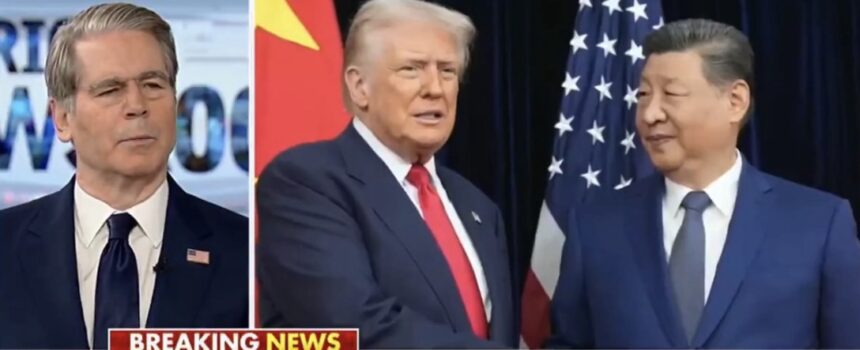
The upcoming summit between President Trump and Chinese President Xi Jinping adds another layer of importance. Washington is likely hoping to use the meeting to encourage China to play a constructive role in de-escalating the Hormuz situation.
For its part, Iran has shown no immediate signs of backing down, continuing to warn of further “practical and unprecedented action” if the U.S. blockade persists.
What It Means for Americans
Every additional day the strait remains restricted translates into higher costs for American families and businesses. Higher fuel prices feed directly into transportation, food, and goods costs across the economy.
The administration’s strategy appears to combine continued military pressure with diplomatic outreach to third parties like China. Whether this dual-track approach produces faster results than military action alone remains to be seen.
More Read

As gas prices climb toward the psychologically important $5 mark, the pressure is mounting on both Washington and Beijing to find a workable solution. For now, Scott Bessent’s blunt public message to China underscores how intertwined global energy security, great-power competition, and the Iran conflict have become.