

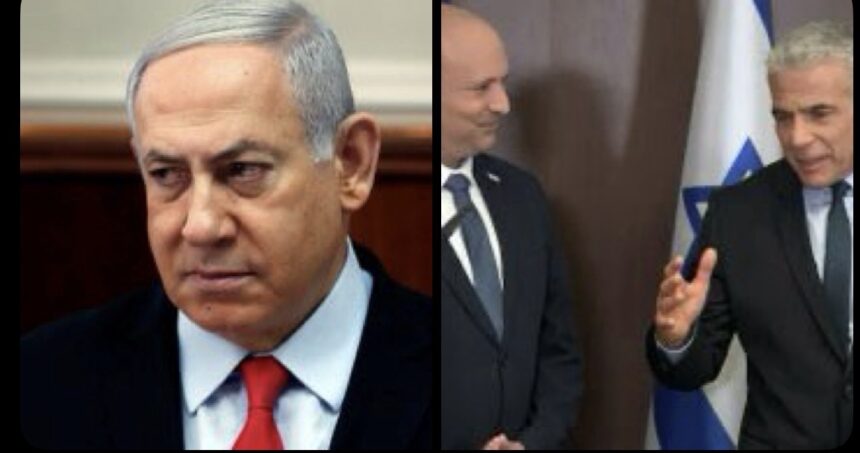
JERUSALEM — Israeli Prime Minister Benjamin Netanyahu is fighting for political survival as the country prepares for general elections scheduled by late October 2026. After nearly three years of continuous war and deep domestic divisions, recent polls suggest Netanyahu’s long dominance may be coming to an end.
Netanyahu, Israel’s longest-serving prime minister, is seeking another term at the head of the right-wing Likud party. His current coalition, which includes far-right and ultra-Orthodox parties, has governed through multiple conflicts, including the ongoing war with Hamas, Hezbollah, and the recent direct confrontation with Iran. However, public frustration over the length of the wars, heavy casualties, and ongoing corruption trials has weakened his position.
Netanyahu’s Record and Challenges
Netanyahu has built his campaign around security and experience. He argues that only he can navigate Israel through its complex threats, particularly from Iran and its regional proxies. Supporters credit him with strengthening Israel’s economy in the past and forging important international agreements, including the Abraham Accords.
However, his opponents point to significant failures. Many Israelis still blame his government for intelligence and preparedness lapses that led to the October 7, 2023 Hamas attack. His corruption trial, in which he faces charges of bribery, fraud, and breach of trust, continues to cast a shadow over his leadership. Netanyahu denies all wrongdoing and calls the cases politically motivated.
Recent polls show his personal approval rating trailing behind several opposition figures. His coalition is struggling to maintain the 61 seats needed for a stable majority in the 120-seat Knesset.
More Read

The Opposition: A New Alliance Led by Bennett and Lapid
The main challenge to Netanyahu comes from a newly formed alliance between former Prime Ministers Naftali Bennett and Yair Lapid. In late April 2026, the two leaders announced they would run together on a joint list called “Beyachad” (Together), with Bennett positioned as the leading candidate.
Naftali Bennett, a former special forces officer and tech entrepreneur, appeals to right-leaning voters who want strong security policies but are tired of Netanyahu’s leadership style and legal troubles. Yair Lapid, a centrist and former television anchor, brings support from secular and middle-class voters who favor reducing the political power of ultra-Orthodox parties and focusing more on economic and social issues.
The Bennett-Lapid partnership aims to attract voters from the center-right to the moderate left who want change without swinging too far left. Other opposition figures, including Benny Gantz, are also expected to play important roles in the campaign.
More Read

Current Polling and Likely Outcome
As of early May 2026, polls show a close race. The combined opposition bloc appears to hold a slight edge over Netanyahu’s right-wing and religious coalition. However, Israeli elections are often decided in the final weeks through coalition negotiations rather than raw vote counts.
Many analysts believe Netanyahu will struggle to form a government even if his Likud party remains the largest single faction. The key question is whether the opposition can stay united long enough to build a viable alternative coalition. In Israel’s fragmented political system, small parties and personal rivalries can quickly shift the balance.
What Voters Need to Know
For Israeli voters, the election represents a clear choice between continuity and change. Netanyahu’s supporters see him as the only leader tough enough to handle existential threats. His critics argue that after 16 years in power across multiple terms, it is time for new leadership to heal national divisions and restore public trust.
Key issues likely to dominate the campaign include:
- The future of the wars in Gaza and against Hezbollah
- Handling the Iranian threat
- Economic recovery and cost of living
- The balance between security needs and democratic institutions
- The role of religion and the ultra-Orthodox community in state affairs
The outcome could significantly affect Israel’s domestic policies as well as its relations with the United States, Europe, and Arab neighbors. A victory for the opposition might lead to a more centrist government focused on governance reform and de-escalation, while a Netanyahu win would likely mean continued hardline security policies and expansion of West Bank settlements.
With months still remaining before the vote, both sides are expected to intensify their campaigns. Netanyahu will lean heavily on his security credentials, while the opposition will emphasize the need for accountability and national renewal after years of crisis.
The 2026 election will likely determine not only who leads Israel next, but also the direction the country takes after one of the most turbulent periods in its modern history.