

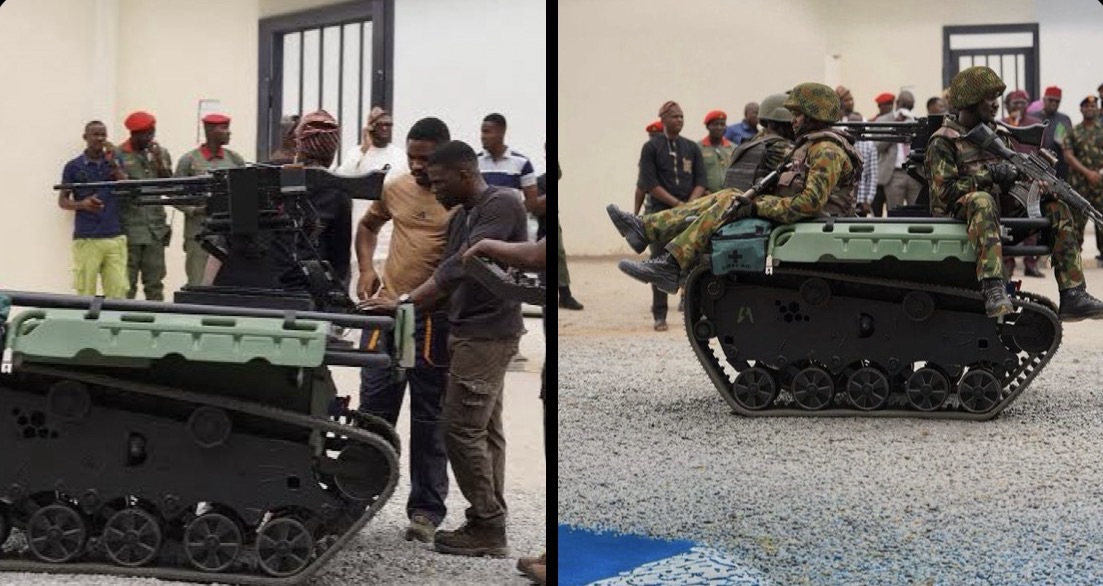
ABUJA — On April 27, 2026, Nigerian defense technology startup Terra Industries demonstrated a new range of locally developed autonomous systems to senior military officials. The company showcased interceptor drones, tracked unmanned ground vehicles for mine and IED detection, and battlefield intelligence software. This event marks a significant step in Nigeria’s efforts to develop homegrown solutions for ongoing security challenges.
Terra Industries began operations in 2024 with a focus on protecting critical civilian infrastructure such as power plants, mines, and oil facilities. It has now expanded into tactical military applications through a strategic partnership with the Defence Industries Corporation of Nigeria (DICON). The shift aims to reduce soldier casualties from improvised explosive devices, which remain a major threat in the northeast and northwest regions after more than 17 years of insurgency.
Inside the Abuja Demonstration and New Defense Tools
The April 27 event took place at Terra Industries’ facility in the capital. Attendees watched live demonstrations of the systems navigating simulated operational scenarios. The interceptor drones are designed to counter low-cost threats such as enemy FPV drones, while the ground vehicles use sensors to detect buried IEDs in rough terrain. The accompanying AI software supports real-time battlefield awareness and planning.
These tools stand out for their emphasis on practicality. Designers appear to have prioritized durability in dusty, high-temperature environments and ease of maintenance by troops with limited external support. This focus addresses common issues with imported equipment that often requires specialized technicians and consistent supply chains.
How Terra’s Systems Target Nigeria’s IED Problem
Improvised explosive devices continue to cause significant casualties in Nigerian counter-insurgency operations. Insurgent groups have increasingly relied on roadside bombs and basic drones, making traditional clearance methods both dangerous and time-consuming.
More Read

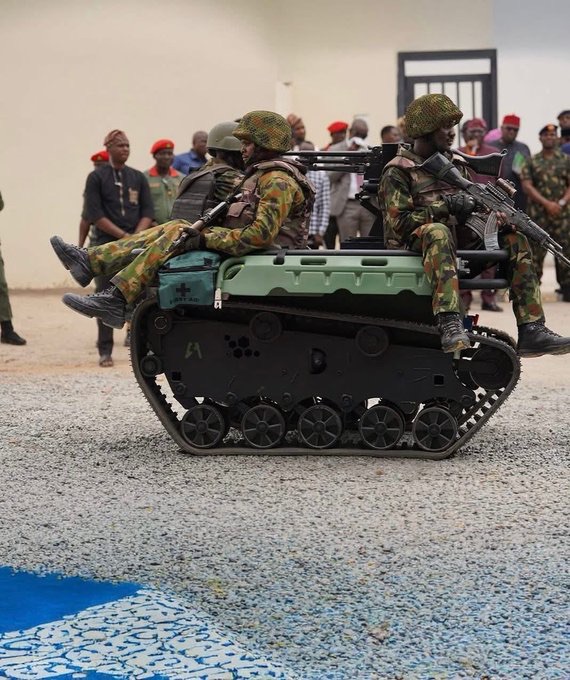
Terra’s mine-detection vehicles and battlefield AI offer a potential way to lower these risks. By automating detection and providing faster intelligence, the systems could help troops clear routes more efficiently and reduce the number of personnel exposed to hidden threats. The DICON partnership further strengthens this effort by enabling local assembly and gradual technology transfer, which could improve long-term sustainability.
Unlike many imported platforms that excel in controlled tests but struggle in extended field use, these systems are being developed with Nigerian operational realities in mind. Early feedback from military observers suggests interest in how well the equipment integrates with existing forces and holds up under harsh conditions.
Terra’s Local Tech Compared to US and Global Military Systems
Advanced militaries such as the United States deploy highly sophisticated unmanned ground vehicles and drones for IED detection. American programs often feature advanced sensors, satellite integration, and complex electronic warfare protections. These systems deliver excellent performance but come with very high costs, extensive training requirements, and dependence on robust logistics networks.
Many leading global forces follow a similar high-end approach. They invest heavily in precision technology and layered defenses that can counter jamming and other disruptions. While effective, such platforms can prove difficult to maintain in prolonged conflicts with limited infrastructure.
Terra Industries takes a different path. Instead of attempting to match the technical complexity of US or European systems, the company concentrates on affordable, rugged solutions that local teams can repair and sustain. This model prioritizes cost-effectiveness and operational availability over peak performance specifications. For African militaries facing budget constraints and asymmetric threats, this practical focus could deliver greater real-world impact than more advanced but harder-to-support alternatives.
Building Sovereign Defense Capacity Across Africa
The collaboration with DICON represents more than a single demonstration. It forms part of a broader push toward localized defense manufacturing and reduced reliance on imports. The joint venture supports research, development, and production within Nigeria, which could create skilled engineering jobs and ease pressure on foreign exchange reserves.
Terra is also expanding regionally. Its Pax-2 facility in Accra, Ghana, is scheduled to become operational by the end of June 2026. Once running at full capacity, the plant is expected to significantly increase production of drones and related systems, positioning Terra to serve multiple African countries facing similar security threats.
This development carries important implications. Greater local manufacturing can strengthen operational independence, speed up equipment repairs, and foster innovation tailored to regional needs. Challenges remain, however. Successful integration will require thorough operator training, compatibility with legacy systems, and ongoing improvements to counter evolving insurgent tactics. Protecting sensitive technology within a public-private framework will also demand careful oversight.
The April 2026 unveiling of Terra Industries’ new systems highlights growing momentum in African defense technology. By focusing on practical, maintainable solutions rather than replicating the most expensive global platforms, Nigeria is exploring a route toward greater self-reliance. If these tools prove effective in frontline conditions, they could influence security operations across the region and encourage further investment in homegrown innovation.
The coming months will reveal how quickly the systems move from demonstration to deployment. Their performance in real operational environments will ultimately determine their contribution to reducing casualties and enhancing military effectiveness in Nigeria and beyond.