


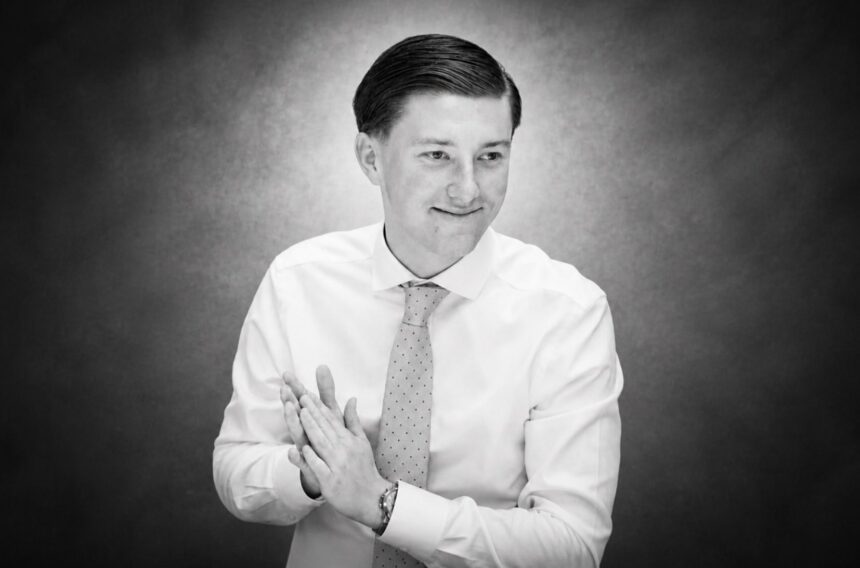
Henry Nowak, an 18-year-old first-year university student from Chafford Hundred in Essex, was fatally stabbed in the early hours of December 3, 2025, while walking home from a night out in Southampton. His death has become a focal point in ongoing discussions about youth knife crime in the UK, police response protocols, and the circumstances surrounding street altercations involving weapons. As the murder trial of Vickrum Digwa, 23, continues at Southampton Crown Court in May 2026, details emerging from the proceedings paint a harrowing picture of a brief encounter that ended in tragedy.5
Nowak was a bright, ambitious young man in the prime of his university life. Born to a family with Polish-British roots, he had excelled in his A-levels and enrolled at the University of Southampton to study Accountancy and Finance. He quickly immersed himself in campus life, joining two football teams, Southampton University Football Club and another local side, while balancing a part-time job at Morrisons supermarket. Friends and teammates described him as outgoing, kind, and full of potential, the type of student who made friends easily and embraced every opportunity university offered.43
His family’s tribute, released shortly after his death, captured the depth of their loss: “Our kind, intelligent, and talented son was in his first year at Southampton University studying Accountancy and Finance. He’d smashed his A-levels and was fully embracing university life, joining not one but two football teams, making new friends as well as working part-time at the local Morrisons. Henry was loved by all those that knew him. He was an incredible son, brother, cousin, grandson, nephew, friend and teammate. He was an all-round top lad and everyone who was lucky enough to share his company thought the same.” They spoke of a “bright future” filled with “opportunity and adventures” that was cruelly cut short.
The Night of the Incident
On the evening of December 2 into December 3, Nowak had been celebrating the end of his first semester with teammates from one of his football sides. He had consumed alcohol but was below the drink-drive limit, according to court testimony. As he walked home along Belmont Road in the Portswood area of Southampton, a busy student neighbourhood, he began sending Snapchat videos to friends.
More Read

Prosecutors allege that in one of these videos, Nowak encountered Vickrum Digwa, who was walking in the opposite direction openly carrying a large shastar, a traditional Punjabi ceremonial blade with a 21cm (approximately 8-inch) blade- in a sheath over his clothing. The footage reportedly captures Digwa saying words to the effect of “I am a bad man” moments before the confrontation escalated. Nowak is said to have filmed the knife and made a comment perceived by Digwa as provocative.
What followed was a rapid and violent altercation. Digwa, according to the prosecution, drew the weapon and stabbed Nowak multiple times, four stab wounds in total, including a deep 8cm puncture to the chest that penetrated a lung, plus wounds to the back of his leg and a cut to his jaw. Nowak attempted to flee but collapsed from blood loss in the street. Neighbours reportedly heard him crying out that he had been stabbed and felt he was dying.
When police arrived, bodycam footage shown in court allegedly depicts officers initially handcuffing the injured Nowak on the ground, based on Digwa’s immediate claim that he had been racially abused and attacked by Nowak. Nowak reportedly pleaded with officers as he lay bleeding. Paramedics later performed CPR, but he was pronounced dead at the scene. Digwa’s phone was said to have been found in his possession, and his mother, Kiran Kaur, 53, is accused of assisting an offender by allegedly removing the knife from the scene and taking it to their home in nearby St Denys Road.
More Read

The Trial and Defences
Vickrum Digwa denies murder and possession of a bladed article in a public place. His mother denies assisting an offender. The defence argues self-defence, claiming Digwa acted in the “heat of the moment” after a racist verbal attack by a drunken Nowak. However, prosecutors maintain there is no independent evidence of racial abuse witnessed by others, and the jury has been urged to consider the video evidence carefully. The trial, expected to last around ten days, was ongoing as of mid-May 2026.
The case has highlighted broader issues. The open carrying of a large ceremonial knife in a public street late at night, the speed with which a verbal exchange turned fatal, and the initial police focus on the victim based on the attacker’s account have all drawn scrutiny. A charity football match was later held in Henry’s honour to raise funds for bereavement support charity 2wish, which has assisted his family.
Community and National Impact
Henry’s death resonated far beyond Southampton. In Essex, where he grew up, and in university circles, tributes poured in emphasising his character and lost potential. Posts on social media and local media kept his name alive, with many questioning why such incidents continue despite repeated government pledges to tackle knife crime. Portswood, a vibrant area popular with students, saw increased concern over safety after dark.
Nowak’s family has faced unimaginable grief in the months since. They have cooperated with the investigation while grieving privately. The University of Southampton offered support to students and staff, acknowledging the shock within the close-knit community.
More Read

This case arrives amid ongoing national debates about knife crime statistics, particularly among young people, stop-and-search policies, and the handling of incidents involving claims of racism or self-defence. While every case is unique, the Nowak tragedy underscores vulnerabilities: young people out enjoying life, the presence of weapons on streets, and split-second decisions by both individuals and first responders that can have irreversible consequences.
As the jury deliberates the evidence, CCTV, phone footage, witness statements, and forensic details- the focus remains on establishing exactly what happened in those fateful moments on Belmont Road. For Henry Nowak’s loved ones, no verdict can restore what was lost: a son, brother, and friend whose life was just beginning.
Henry Nowak represented the hopes of countless families sending children off to university, full of excitement, ambition, and promise. His story is a stark reminder of the fragility of life and the urgent need for safer streets, clearer policing guidelines, and societal efforts to prevent such needless losses. As the trial concludes, his name will endure not only in legal records but in the memories of those who knew him as a “top lad” taken far too soon.