

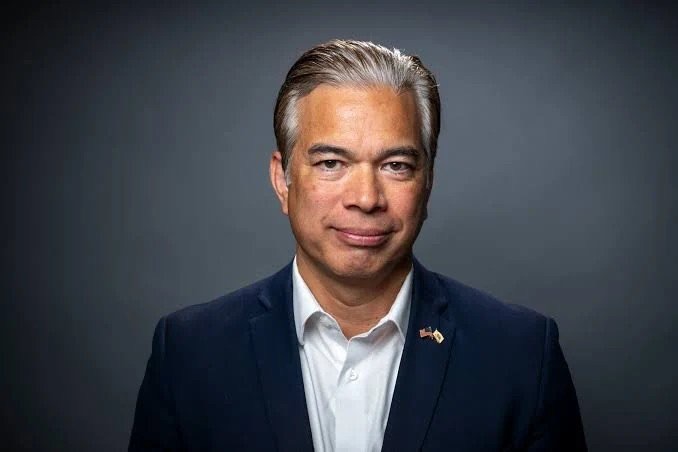
California Attorney General Rob Bonta’s office has revised the official ballot title and summary for Proposition 39, a voter-approved initiative requiring government-issued identification and citizenship verification for voting. The change, finalized around July 21, 2026, has sparked sharp criticism from Republican supporters who call it an attempt to sway voters against the measure in the November 3, 2026, general election.
The original circulating title, issued by Bonta’s office on September 19, 2025, for signature gathering read: “ESTABLISHES ADDITIONAL VOTER IDENTIFICATION AND CITIZENSHIP VERIFICATION REQUIREMENTS.” Supporters collected more than 1 million signatures under that language, qualifying the constitutional amendment for the ballot.
The updated title now states: “PROHIBITS CITIZENS FROM VOTING UNLESS THEY PRESENT GOVERNMENT-ISSUED IDENTIFICATION.” The revised summary emphasizes restrictions, including that it prohibits voting by mail unless a government-issued identification number is designated on the registration, invalidates mail ballots lacking matching last-four digits of that ID, and requires government-issued ID for in-person voting.
What Proposition 39 Would Do
Proposition 39 would amend the California Constitution to require voters to present government-issued identification when voting in person or provide the last four digits of a designated government-issued ID number (such as a driver’s license or Social Security number) for mail ballots. The state would issue free voter ID cards upon request. Elections officials would also need to annually report the percentage of voters in each county whose citizenship status has been verified.
More Read
Proponents argue the measure strengthens election integrity. Opponents, including the ACLU of California, contend it creates unnecessary barriers and amounts to voter suppression, noting existing safeguards like signature verification already secure elections.
Republican Backlash and Legal Threats
Supporters, led by figures such as Assembly member Carl DeMaio (R-San Diego), have accused Bonta of deliberately using negative framing to “rig” the election after the measure qualified. DeMaio described the revision as a “blatant attempt to rig the November election” with “biased” and “dishonest” language. Other Republicans, including Assemblymember David Tangipa and Rep. Ken Calvert, echoed claims of cheating and election interference. The campaign has indicated it is exploring legal options to restore the original wording.
More Read
The controversy gained widespread attention through posts and videos highlighting the language shift, including coverage noting the contrast between the neutral original phrasing and the new emphasis on prohibition.
Bonta’s Defense
Bonta and his office maintain the update is routine, legal, and necessary. California Elections Code requires the Attorney General to prepare a title and summary that is “true and impartial” and sets forth the chief purpose and points of the measure for the ballot. Officials noted that titles often change between the circulating and ballot stages this year, all nine voter-proposed initiatives saw revisions and that additional details or clarity can be incorporated.
In response to the accusations, Bonta stated his office fulfilled its duty to provide accurate, fair, descriptive, and informative language for voters. He dismissed claims of rigging as “inappropriate, unfortunate, [and] false,” adding that courts traditionally defer to the Attorney General’s titles and that challengers lack a legal basis.
Broader Context
Voter ID requirements remain popular in national polling but face strong Democratic opposition in California, where no statewide photo ID mandate currently exists for voting. Proposition 39 is one of several measures on the November 2026 ballot. As of late July 2026, the revised language stands, with potential litigation possible in the coming weeks. Supporters say they remain confident the initiative can pass regardless of the title.
More Read

The dispute highlights ongoing partisan tensions over election administration in the nation’s most populous state, with both sides framing the issue as central to democratic fairness.