


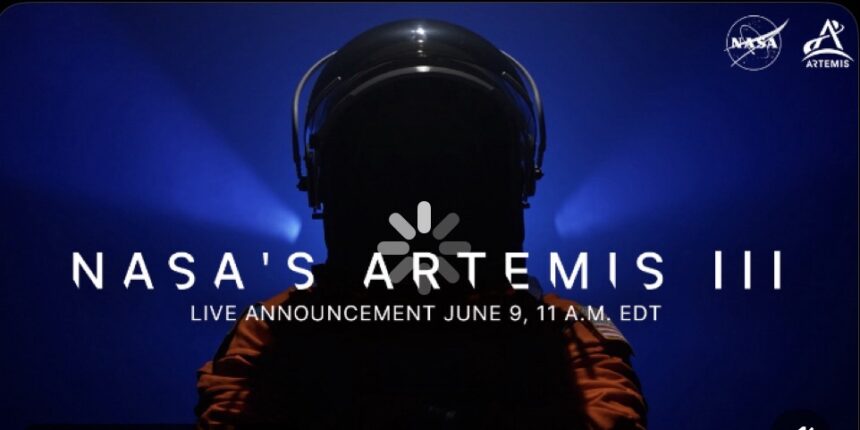
NASA is on the cusp of a major milestone in its Artemis program. Tomorrow, June 9, at 11 a.m. ET from Johnson Space Center in Houston, the agency will reveal the four astronauts who will fly Artemis III. This mission, now reconfigured as a crewed test in low Earth orbit, marks an essential step toward putting humans back on the Moon.
The change reflects pragmatic adjustments in a complex program. Originally envisioned as the first crewed lunar landing since Apollo 17 in 1972, Artemis III has evolved into a robust demonstration of rendezvous and docking capabilities. This shift helps reduce risks for the actual landing planned for Artemis IV around 2028.
Why the Mission Profile Changed
Delays with the commercial human landing systems from SpaceX and Blue Origin prompted the rethink. Both companies are developing vehicles to ferry astronauts from Orion in lunar orbit down to the surface. Testing those interfaces safely in Earth orbit makes good sense before committing to a full lunar mission.
NASA Administrator Jared Isaacman and the team announced the revised architecture earlier this year. Artemis III will now launch no earlier than late 2027 on the powerful Space Launch System rocket from Kennedy Space Center in Florida. Four astronauts will ride inside the Orion spacecraft. Once in orbit, they will practice meeting up with one or both of the commercial landers.
More Read

This approach echoes the Apollo 9 mission from 1969. That flight tested the lunar module in Earth orbit before the first Moon landing. Artemis III serves a similar purpose in the modern era. It allows engineers to iron out integration issues between Orion, built by Lockheed Martin with a European service module, and the landers from private industry.
What Will Happen During the Mission
After the Space Launch System boosts Orion into space, the spacecraft will use its service module to reach a stable low Earth orbit, around 460 kilometers or about 290 miles up. From there, the crew will conduct a series of maneuvers. They will rendezvous and dock with pathfinder versions of SpaceX’s Starship-based lander or Blue Origin’s Blue Moon Mark 2, or possibly both if schedules align.
More Read

These operations involve precise navigation, automated and manual docking systems, and thorough checks of life support, communications, and thermal control. The crew may also test next-generation spacesuits from Axiom Space, including interfaces for future surface work. Mission duration will likely exceed that of Artemis II, giving more time to gather data on long-duration systems performance.
Engineers see this as a high-value risk reduction flight. “We are integrating more partners and interrelated operations into this mission by design,” NASA officials noted. It builds confidence before attempting the complex choreography needed for a south polar landing.
The Road So Far in the Artemis Program
Artemis I flew uncrewed in 2022, successfully testing Orion and the Space Launch System beyond the Moon and back. Artemis II, completed earlier this year in April 2026, sent four astronauts on a lunar flyby. Reid Wiseman commanded that mission, joined by Victor Glover, Christina Koch, and Jeremy Hansen. Their flight validated deep-space operations and returned valuable data.
Now Artemis III takes the next logical step. It keeps momentum going while commercial partners catch up on lander development. SpaceX continues rapid Starship testing, while Blue Origin advances its Blue Moon design. Both benefit from this early orbital dress rehearsal.
The program also emphasizes international and commercial collaboration. The European Space Agency provides Orion’s service module. Canada and Japan contribute key elements. Private companies handle much of the innovation, reflecting a new model for exploration.
More Read

Scientific and Exploration Goals
Beyond the technical demonstration, Artemis III will carry opportunities for science. Crews may perform observations or experiments during their time in orbit. Future lunar missions target the south pole, where water ice in shadowed craters could support sustained presence. Testing hardware now ensures crews can work effectively there later.
Longer term, Artemis aims to establish a lunar gateway and surface bases. These will prepare humans for Mars. Each mission adds knowledge about living and working in deep space. Radiation exposure, microgravity effects, and psychological factors all come under scrutiny.
Public excitement runs high. Tomorrow’s crew announcement will spotlight the next generation of explorers. Speculation swirls around veteran astronauts and newer faces from recent classes. Whoever they are, they will train intensely for the complexities ahead.
Challenges and Broader Context
Spaceflight is never easy. Technical hurdles, budget realities, and tight schedules test everyone involved. Yet NASA has shown resilience. The pivot to an Earth orbit test demonstrates flexibility without sacrificing ambition.
Critics sometimes question the pace, but supporters point to tangible progress. The Space Launch System and Orion have flown. Commercial landers are in active development. International partners remain committed. The Artemis Accords have brought more nations into the fold.
Economically, the program drives innovation. Jobs at contractors and suppliers span the country. Technology spin-offs benefit life on Earth, from advanced materials to medical applications.
Looking Ahead to Artemis IV and Beyond
Success with Artemis III sets the stage for the first crewed landing since the Apollo era. Artemis IV would follow, targeting a sustainable presence. Plans include more frequent flights, cargo deliveries, and eventual habitats.
The Moon serves as a proving ground. Lessons learned there will shape the journey to Mars. In the process, humanity expands its reach and deepens its understanding of the solar system.
As NASA readies the crew announcement, anticipation builds. This is more than one mission. It represents a renewed commitment to exploration in an era of rapid technological change. Private companies push boundaries. Governments coordinate efforts. The result could be a permanent human foothold beyond Earth.
Tune in tomorrow to meet the crew. Their flight will test systems that could one day enable weeks or months on the lunar surface. For now, the focus stays on getting the fundamentals right in the relative safety of Earth orbit. That careful approach increases the chances of success when the real adventure to the Moon begins.