

Scientists have developed a stretchable skin patch using laser-induced graphene and copper oxide nanoparticles that reduced melanoma tumors by 97 percent in mice. Explore this early-stage innovation in cancer therapy, its mechanism, benefits, limitations, and future potential.
A Breakthrough Wearable Patch Offers Hope for Noninvasive Melanoma Treatment
Skin cancer remains one of the most common and deadly forms of cancer worldwide, with melanoma standing out as particularly aggressive. Accounting for over 80 percent of skin cancer deaths despite being less common than other types, melanoma demands effective and less invasive solutions. Traditional treatments like surgery often come with risks of scarring, infection, and recurrence. A new development from researchers in China could change how doctors approach superficial skin tumors. A soft, stretchable patch activated by gentle heat has shown remarkable results in preclinical tests, reducing melanoma lesions by 97 percent in mice without damaging healthy tissue.
This article explores the science behind this innovative patch, its development, how it works, the study findings, potential benefits, challenges, and what the future might hold.
The Growing Burden of Melanoma and Limitations of Current Treatments
Melanoma arises from melanocytes, the pigment-producing cells in the skin. It frequently develops in the epidermis and dermis layers, making it accessible but challenging to treat without affecting surrounding healthy skin. Conventional approaches include surgical excision, chemotherapy, radiation, and immunotherapy. Surgery remains the standard for early-stage cases, yet it can lead to incomplete removal, high recurrence rates, and prolonged recovery. Systemic therapies often cause significant side effects due to their impact on the entire body.
Patients and clinicians seek options that are targeted, minimally invasive, and reusable. Nanotechnology has emerged as a promising field for such solutions. Materials like graphene offer unique properties, including high surface area, conductivity, and biocompatibility when engineered correctly. The new patch builds on these advances to create a bandage-like device that patients could potentially apply at home or in a clinical setting under controlled conditions.
More Read

Designing the Stretchable Laser-Induced Graphene Patch
Researchers from Wuhan University and City University of Hong Kong developed the patch, detailed in a March 2026 paper published in ACS Nano. The device combines laser-induced graphene (LIG) embedded with copper(II) oxide (CuO) nanoparticles within a polydimethylsiloxane (PDMS) silicone matrix.
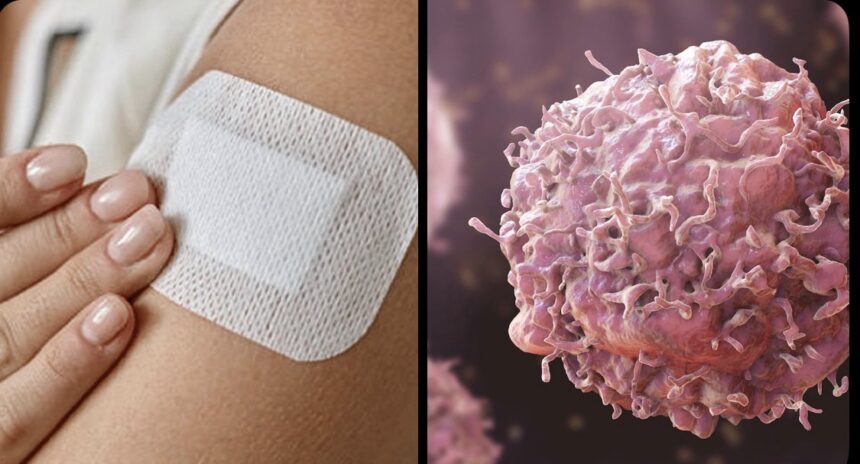
Laser-induced graphene forms when a laser etches carbon precursors, creating a porous, three-dimensional structure with excellent thermal and electrical properties. This LIG serves as the scaffold. Scientists filled its pores with CuO nanoparticles, which act as the therapeutic agent. They then embedded the composite in flexible, breathable PDMS, resulting in a transparent, stretchable, and skin-conformable patch that feels like a regular adhesive bandage.
Key advantages of this design include:
More Read

- Flexibility and comfort: It adheres well to skin and moves with the body.
- Transparency: Allows light penetration for activation.
- Chemical inertness: Safe for prolonged skin contact until activated.
- Reusability: The patch maintains performance over multiple uses, supporting sustainability.
The fabrication uses a cold-transfer method, making it relatively straightforward and potentially scalable compared to more complex microneedle or hydrogel systems.
How the Patch Works: Mild Heat Triggers Targeted Copper Release
The patch remains inactive on the skin. Activation occurs through photothermal stimulation using a low-power laser or even simulated sunlight. The LIG efficiently converts light into heat, raising the local temperature to approximately 42 degrees Celsius (108 degrees Fahrenheit). This mild hyperthermia is safe for healthy tissues while triggering the release of copper ions (Cu²⁺) from the CuO nanoparticles directly into the underlying tumor tissue.
Copper ions accumulate preferentially in melanoma cells, inducing oxidative stress through reactive oxygen species (ROS) production. This stress activates multiple cell death pathways simultaneously:
- Apoptosis: Programmed cell death.
- Cuproptosis: Copper-dependent mitochondrial dysfunction.
- Ferroptosis: Iron- and lipid peroxidation-mediated death.
The synergy enhances tumor cell killing while inhibiting migration and metastasis. The mild heat also promotes the release of tumor-associated antigens, potentially boosting the body’s immune response against remaining cancer cells. Importantly, copper does not significantly enter the bloodstream or major organs, minimizing systemic toxicity.37
In laboratory tests on cultured melanoma cells, the activated patch killed most cancer cells and slowed their movement, demonstrating strong in vitro efficacy.
Impressive Results in Mouse Studies
The most compelling data comes from in vivo experiments with melanoma-bearing mice. Researchers applied the patch and activated it with a laser for one hour on day 1 and again on day 5. Over 10 days, tumors in the treated group shrank by 97 percent compared to controls. All untreated mice succumbed to disease progression by day 18, while 80 percent of treated mice survived to day 30. No significant recurrence appeared even after 60 days in some cases.
More Read

Tissue analysis confirmed cancer cells did not spread beyond tumor borders. Healthy skin remained undamaged, and no notable copper accumulation occurred in blood or organs. Immunohistochemistry showed reduced expression of proliferation markers like Ki67 and melanoma-associated proteins like S100B.
These outcomes highlight the patch’s ability to achieve substantial tumor suppression with only two short treatment sessions. The low-temperature approach (mild PTT) avoids the risks of high-heat therapies that can inflame or scar nearby tissues.
Potential Advantages Over Traditional Therapies
This technology addresses several pain points in current melanoma care. It is noninvasive, avoiding surgical scars and infection risks. Localized action reduces side effects common in chemotherapy or immunotherapy. The patch’s reusability and simple activation could lower treatment costs and improve accessibility, especially in outpatient or resource-limited settings.
Transparency and stretchability make it practical for irregular skin surfaces. Because it targets superficial tumors, it suits early-stage or accessible melanomas. Combined with immune-stimulating effects, it might complement other therapies in advanced cases.
During Skin Cancer Awareness Month, organizations like the American Chemical Society highlighted this work as a promising step toward surgery-free options.
Challenges and Path to Clinical Use
Despite the excitement, important limitations exist. The research is preclinical, involving only cell cultures and mice. Human skin differs in thickness, immune response, and tumor behavior. Safety, optimal dosing, and long-term effects in people remain untested. No clinical trials have begun as of mid-2026.
Melanoma varies widely. Deeper or metastatic tumors may not respond as well since the patch targets surface-accessible lesions. Regulatory approval for medical devices involving nanomaterials requires extensive data on biocompatibility, manufacturing consistency, and efficacy.
Scalability poses another hurdle. While fabrication seems efficient, producing patches under Good Manufacturing Practices for widespread use will take time and investment. Patient factors like skin sensitivity, allergies to components, or concurrent medications need evaluation.
Skeptics note that many promising cancer technologies fail to translate from animals to humans. Rigorous Phase I, II, and III trials will be essential to confirm safety and benefits.
Broader Implications for Nanotechnology in Cancer Care
This patch exemplifies how graphene-based materials can advance medicine. Laser-induced graphene’s versatility supports applications beyond cancer, including wearable sensors and drug delivery. Combining nanomaterials with controlled external stimuli (light, heat) enables precise, on-demand therapy.
Future directions might include patches for other skin cancers, integration with imaging for real-time monitoring, or smart versions that adjust release based on sensors. Researchers could explore different metal ions or combinations for broader tumor types.
The work also underscores the value of interdisciplinary collaboration among materials scientists, chemists, and clinicians. As nanotechnology matures, such innovations could shift cancer treatment from aggressive interventions toward personalized, minimally disruptive approaches.
Conclusion: Cautious Optimism for a Patch That Could Transform Skin Cancer Care
The stretchable laser-induced graphene patch represents an exciting advance in melanoma research. By harnessing mild heat to release copper ions locally, it achieved dramatic tumor reduction in mice while preserving healthy tissue and limiting side effects. If successful in humans, it could offer a convenient, reusable, noninvasive alternative or complement to surgery for certain skin cancers.
However, patients and doctors must temper enthusiasm with realism. This remains early-stage science. Years of further testing lie ahead before any clinical availability. Continued research, funding, and transparent communication will determine whether this bandage-like device fulfills its potential.
In the meantime, prevention through sun protection, regular skin checks, and awareness stay crucial. Innovations like this patch remind us that steady scientific progress brings new tools against one of humanity’s persistent health challenges. With rigorous development, such technologies may one day make invasive surgeries for superficial tumors a thing of the past.
References and Further Reading
- Xu, X., et al. (2026). ACS Nano. DOI: 10.1021/acsnano.5c21102
- American Chemical Society press materials and related coverage.