

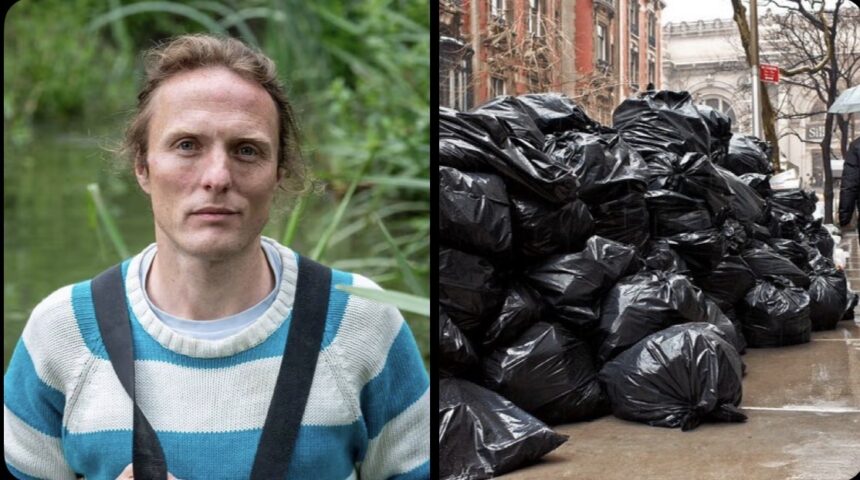
Paul Powlesland lives on a narrowboat on the River Roding in East London. For years he has watched the waterway struggle under layers of neglect. Rubbish piles up along its banks. Silt chokes the flow. Pollution from distant sources seeps in. As a barrister and founder of the River Roding Trust, he has spent much of his time pushing authorities to act. When help did not come for one particular stretch, he and a group of volunteers decided to step in themselves.
In late February this year they tackled Alders Brook, a small tributary that flows into the Roding. Over ten days they removed more than two hundred bags of waste. That included plastic litter, branches, invasive weeds and thick silt. They hired a digger for the heavier work at a cost of around a thousand pounds to the group. The section they restored runs about two hundred and fifty metres through an area bordered by roads and railways, a forgotten piece of an ancient waterway.
Before the effort the brook looked more like a stagnant ditch in places. Water barely moved. Vegetation had taken over. After the clean up the channel opened again. Water began to flow properly. Within weeks locals noticed clear signs of recovery. Fish returned to the pools. Dragonflies appeared above the surface. Irises and reed beds started to flourish. Even herons began visiting once more. Powlesland shared photographs showing the transformation. The stretch looked alive in a way it had not for a long time.
The satisfaction did not last. In mid March Powlesland received a letter from the Environment Agency. Investigators had visited the site shortly after the work finished. The agency told him they were looking into possible offences under environmental permitting regulations. Specifically they cited unpermitted flood risk activities and waste operations. The rules in question date back to 2016. If the case proceeds to prosecution and a conviction follows, penalties could include fines or even up to two years in prison. Powlesland could also face professional consequences as a practising barrister.
The agency has stated publicly that it welcomes community efforts to improve local environments. At the same time it insists that work of this kind requires proper permissions to avoid unintended harm. Dredging and moving material within a floodplain can affect drainage or flood management if not done carefully. Officials argue the permits exist to protect the wider system. In this instance they say the necessary approvals were not obtained.
More Read

Powlesland sees the situation differently. He points out that he and the trust had contacted the agency repeatedly over the years asking for help with the Alders Brook. They received no action. The same stretch had become a magnet for illegal dumping. He mentions nearby sewage outlets that continue to cause problems. One lies only a short distance upstream and has been the source of complaints for some time. In his view the authorities focus enforcement in the wrong direction. They pursue volunteers who remove rubbish while larger polluters face less immediate pressure.
This is not the first time Powlesland has drawn attention to the Roding. He has campaigned for years on water quality, illegal discharges and habitat loss. Living on the river gives him a daily view of the challenges. He helped form the trust to bring together boaters and local people who care about the waterway. Their previous efforts included litter picks, tree planting and path clearing. The recent project on the Alders Brook represented their most ambitious restoration to date.
The story has sparked wider discussion about regulation and grassroots action. Supporters argue that ordinary people should not need complex licences simply to pick up litter or clear blocked streams. Critics of the agency say bureaucracy can stand in the way of obvious environmental gains. Others caution that unregulated work on rivers carries genuine risks. A poorly executed clean up might spread contaminants or alter flows in ways that harm downstream areas. Finding the right balance remains difficult.
More Read

Powlesland has made clear he intends to continue the restoration. He has invited the Environment Agency to work alongside the trust rather than against it. In his words the river needs practical help more than paperwork. He believes volunteers can achieve a great deal if regulators shift from enforcement to partnership. The choice, as he puts it, is between fighting community efforts or joining them to restore the waterway.
The Alders Brook forms part of a larger network that eventually reaches the Thames. Its health matters not only for wildlife but for the people who live nearby. East London has seen rapid change in recent decades. Green spaces and natural corridors offer breathing room amid the urban density. When small streams like this one recover, the benefits ripple outward. Birds return. Insects support the food chain. Communities gain places worth visiting and protecting.
At the same time rivers exist within a regulated system for good reason. Flood defence, water quality standards and habitat protection all require oversight. The Environment Agency carries heavy responsibilities across the country. Resources are stretched. Priorities must be set. Yet cases like this one raise questions about whether the current framework encourages or discourages local initiative.
Powlesland continues to document conditions on the Roding. He monitors outflows and shares updates with supporters. The trust keeps working within the limits it can manage. For now the restored section of the Alders Brook stands as visible proof of what determined volunteers can achieve. Whether that work leads to collaboration or court proceedings remains to be seen. The outcome will say something about how Britain handles its rivers in an age when public frustration with pollution runs high.
In the end this story is about more than one stretch of water. It touches on trust between citizens and institutions. It highlights the tension between rules meant to protect nature and the urge to act when nature is clearly suffering. Powlesland and his fellow volunteers wanted a cleaner river. They got results on the ground. Now they wait to see how the authorities respond. The brook flows on, clearer than before, while the debate around it continues.