

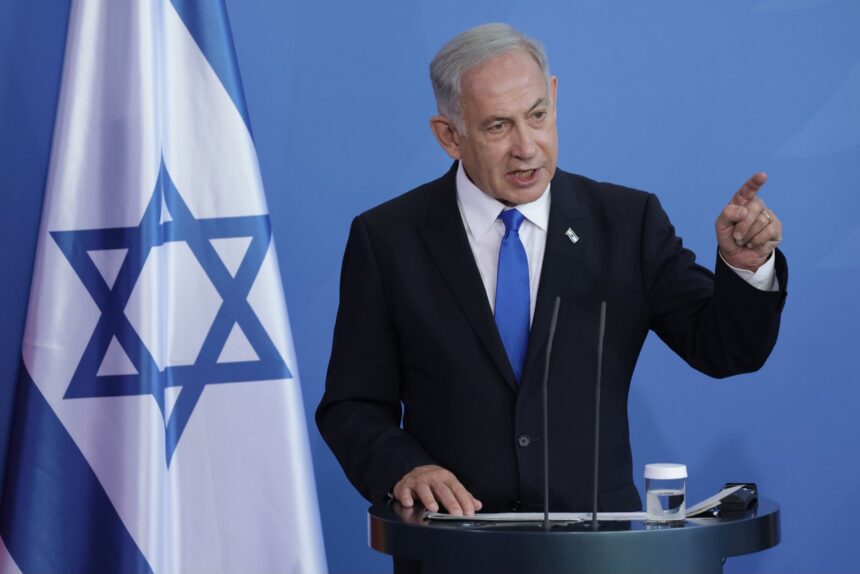
Jerusalem — Israeli Prime Minister Benjamin Netanyahu has ordered a significant intensification of military operations against Hezbollah in Lebanon, with reports indicating approval of a campaign referred to as Operation Arrows of Fire. This development marks a sharp return toward full-scale engagement following repeated breaches of a fragile ceasefire established earlier this year.
The move comes after what Israeli officials describe as persistent aggression from Hezbollah, including hundreds of drone and rocket attacks on northern Israeli communities despite warnings to desist. A senior United States official expressed support for Israel’s right to defend itself, noting that Hezbollah had ignored multiple calls to halt its activities.
According to accounts circulating on social media and in Israeli media, the operation involves expanded strikes on Hezbollah targets across Lebanon, potentially including sites in Beirut’s southern suburbs. Reports emerged Monday evening of explosions in various Lebanese areas, with the Israel Defense Forces confirming operations against infrastructure linked to the Iran-backed group. Eyewitnesses and local sources described evacuations in parts of Beirut, while Israeli authorities instructed schools in northern regions to close on Tuesday as a precautionary measure.
This escalation builds on a long history of tension. Hezbollah began firing rockets into Israel on October 8, 2023, one day after the Hamas-led attack on southern Israel. That initial barrage displaced tens of thousands of Israelis from their homes in the north. Israel responded with Operation Northern Arrows in September 2024, a major campaign that significantly degraded Hezbollah’s capabilities through airstrikes, ground incursions, and targeted assassinations, including that of longtime leader Hassan Nasrallah.
A ceasefire took effect in late November 2024, brokered with United States involvement. Under its terms, Hezbollah was to withdraw fighters north of the Litani River, while the Lebanese Armed Forces deployed to secure the border area. Israel withdrew most forces from southern Lebanon by early 2025. However, implementation proved incomplete. Hezbollah retained significant presence and weaponry, and sporadic violations continued on both sides.
More Read

Tensions reignited sharply in March 2026. Hezbollah joined a broader regional conflict after Israel and the United States struck Iranian targets, including the assassination of Supreme Leader Ali Khamenei on February 28. Hezbollah launched projectiles into Israel in solidarity with Iran, prompting renewed Israeli airstrikes. A short truce in mid-April was extended multiple times, most recently for 45 days in mid-May, but compliance remained shaky.
Israeli officials say Hezbollah has launched over 1,000 drones and numerous rockets since early April, targeting civilian areas and military positions. One recent strike hit a home in Metula, a northern border town that had been evacuated. Netanyahu stated that Israeli forces had eliminated more than 600 Hezbollah fighters in recent actions and vowed to increase pressure. “We will press the pedal even harder,” he reportedly told security officials.
The IDF has conducted hundreds of strikes since March, hitting command centers, rocket launch sites, and supply lines. Estimates suggest thousands of Hezbollah operatives have been killed or wounded in the broader 2024-2026 fighting. Hezbollah, meanwhile, claims its forces continue to resist effectively, using drones and missiles despite losses. Lebanese authorities report significant civilian casualties and displacement from Israeli operations.
More Read
Operation Arrows of Fire, if fully implemented, appears designed to target remaining Hezbollah infrastructure, including in urban strongholds like Beirut’s Dahiyeh district. Israeli sources emphasize precision strikes to minimize civilian harm, though Lebanese reports often highlight residential damage and emergency responder casualties. Schools closing in northern Israel reflect heightened alert levels for possible retaliatory fire.
International reactions have been swift but divided. The United States has reiterated support for Israel’s security needs while urging restraint to avoid wider war. European nations and the United Nations have called for de-escalation and respect for the ceasefire framework. Iran, Hezbollah’s primary patron, has condemned the moves and signaled potential further involvement, though its own capabilities remain strained after recent setbacks.
Lebanese Prime Minister Nawaf Salam and President Joseph Aoun face immense pressure. Their government has struggled to assert control over Hezbollah, a powerful political and military actor within Lebanon. Critics argue that failure to disarm the group as per UN Resolution 1701 has enabled the cycle of violence. Hezbollah maintains it acts in defense of Lebanese sovereignty and in response to Israeli incursions.
Analysts warn that renewed full-scale war could have devastating consequences. Lebanon already grapples with economic collapse, while Israel’s northern communities have endured years of disruption. A prolonged campaign risks drawing in other actors, including potential Iranian proxies or direct responses from Tehran. Humanitarian concerns loom large, with aid organizations preparing for increased displacement and civilian suffering on both sides of the border.
For residents in affected areas, the situation feels all too familiar. In northern Israel, families monitor alerts and prepare shelters. In southern Lebanon, communities brace for strikes and weigh evacuation. Social media fills with unverified videos of explosions and calls for action from both sides. Official confirmation from the IDF remains measured, focusing on ongoing defensive and offensive measures against immediate threats.
This latest chapter underscores the fragility of regional ceasefires when core issues, such as Hezbollah’s armament and Iran’s influence, remain unresolved. Israeli leaders insist the goal is not occupation but the creation of conditions for lasting security, allowing displaced citizens to return home safely. Hezbollah and its allies frame the fight as resistance against aggression.
More Read

As night falls over the region on May 25, developments continue rapidly. Diplomats work behind the scenes to contain the fallout, while military forces on both sides stand ready. The coming days will determine whether Operation Arrows of Fire leads to decisive degradation of Hezbollah’s threat or spirals into a wider confrontation with unpredictable outcomes for the Middle East.