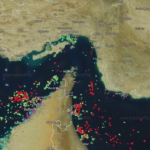


In a tense evening incident that underscores the evolving dynamics of modern conflict, Iran launched multiple one-way attack drones toward the Strait of Hormuz. US forces responded swiftly, downing at least four of the threats. According to reports citing US officials, the drones appeared aimed at commercial vessels or nearby American assets in one of the world’s most vital maritime passages.
This event, occurring amid fragile post-ceasefire tensions following earlier escalations in the region, highlights a key trend in military technology. Cheap, expendable drones are giving smaller powers asymmetric advantages against sophisticated navies. As a technology reporter who has covered drone warfare for years, I see this not just as another headline from a volatile area, but as a signal of broader shifts in how wars will be fought at sea.
The Incident Unfolds in a Critical Chokepoint
The Strait of Hormuz serves as the narrow gateway for oil and gas exports from the Persian Gulf. Roughly 20 million barrels of oil pass through it daily, accounting for about 20 percent of global petroleum liquids consumption and a quarter of seaborne oil trade.2726 Tankers loaded with crude from Saudi Arabia, Iraq, the UAE, and other producers navigate its confined waters, making it a high-value target for disruption.
Iran’s latest drone launches fit a pattern of using low-cost unmanned systems to probe defenses and threaten shipping. US Central Command confirmed the interceptions, with follow-up strikes on Iranian launch sites near areas like Qeshm Island and Bandar Abbas. These actions aimed to neutralize immediate threats and deter further attempts to close or harass the strait.
What makes this noteworthy from a tech perspective is the reliance on one-way attack drones, often called kamikaze or loitering munitions. These systems fly to their target and detonate on impact, offering a cheaper alternative to traditional cruise missiles.
More Read

Understanding One-Way Attack Drone Technology
At the heart of Iran’s strategy sits the Shahed family of drones, particularly the Shahed-136. This delta-winged unmanned aerial vehicle measures about 3.5 meters across, constructed largely from foam, plywood, and composite materials for low cost and simplicity. It carries a 40- to 50-kilogram explosive warhead and can fly hundreds of kilometers using a basic piston engine or, in advanced variants like the Shahed-238, a micro-turbojet for higher speeds.
Guidance typically combines inertial navigation with GPS, though some models incorporate electro-optical or infrared seekers for terminal accuracy. Iran produces them at scale through state-linked facilities, with unit costs estimated between $20,000 and $50,000. That is a fraction of the price of a Tomahawk cruise missile, which runs into the millions.
The design philosophy emphasizes quantity over individual sophistication. Operators can launch them in swarms to overwhelm air defenses. Low-altitude flight profiles help them evade radar, while their small radar cross-section makes detection challenging. Russia has used licensed versions extensively in Ukraine, dubbing them Geran-2, proving their effectiveness in sustained campaigns.
More Read

Even Western powers have taken notice. The United States developed its own Low-Cost Unmanned Combat Attack System (LUCAS), reverse-engineered in part from captured Shahed examples. This marks a rare case of technology flow reversing from a sanctioned state to a superpower.
US Counter-Drone Defenses in Action
US naval forces in the region deploy a layered defense approach against these threats. Warships use shipborne radars, electronic warfare systems, and kinetic interceptors. Close-in weapon systems like the Phalanx CIWS, combined with missiles such as the Sea Sparrow or Rolling Airframe Missile, handle incoming drones.
In the Hormuz incident, American assets successfully engaged multiple targets. This reflects years of investment in counter-unmanned aerial systems (C-UAS). Technologies include directed-energy weapons like lasers, which offer low per-shot costs, and high-powered microwaves that can fry drone electronics at range.
Naval integration with airborne assets, such as helicopters or patrol aircraft equipped with sensors, adds another layer. Underwater and surface drones also support operations by clearing mines or providing persistent surveillance.
Yet challenges remain. Swarms can saturate defenses, forcing expensive interceptors against cheap attackers. The cost asymmetry, where a $30,000 drone might require a $1 million missile to stop it, strains logistics during prolonged engagements.
Asymmetric Warfare Meets Maritime Security
This episode exemplifies asymmetric warfare in the drone age. Iran, facing superior conventional forces, leverages affordable technology to project power and disrupt global trade. Similar tactics appear in other conflicts, from Houthi operations in the Red Sea to Ukrainian strikes in the Black Sea.
More Read

Drones lower the barrier for non-state or mid-tier actors. A swarm of simple UAVs can force major powers to expend resources defending commercial shipping. In the Strait of Hormuz, even temporary disruptions spike oil prices and ripple through energy markets worldwide.
The technology also democratizes precision strike. Commercial off-the-shelf components, modified with open-source software, enable rapid innovation. Iran has incorporated Western chips and modules into its designs despite sanctions, showing the difficulty of controlling dual-use tech.
Broader Implications for Future Conflicts
Looking ahead, several trends stand out. First, mass production and swarm tactics will dominate. AI-assisted coordination could allow drones to operate with less human input, adapting to defenses in real time.
Second, navies will accelerate adoption of their own unmanned systems. The US and allies are investing in loyal wingman drones, autonomous surface vessels, and underwater gliders for mine countermeasures and ISR (intelligence, surveillance, reconnaissance).
Third, electronic warfare and jamming will play larger roles. Disrupting GPS or command links can neutralize swarms before they reach targets. However, autonomous drones with inertial or visual navigation reduce this vulnerability.
The economic dimension cannot be ignored. Global supply chains for drone components span China, Europe, and beyond, complicating efforts to restrict proliferation. Insurance rates for vessels in high-risk areas have already climbed, affecting trade economics.
In the Hormuz context, securing the strait requires not only kinetic defenses but persistent monitoring. Small surveillance drones and AI analytics help distinguish threats from civilian traffic in crowded waters.
The Human and Strategic Costs
While the technology fascinates, the stakes are profoundly human. Incidents like this risk escalation, civilian casualties, and environmental disasters from damaged tankers. Post-ceasefire fragility in the region means one miscalculation could reignite wider conflict.
For policymakers and engineers alike, the lesson is clear. Deterrence now includes countering low-end threats at sustainable costs. Investments in affordable interceptors, directed energy, and resilient networks will define naval superiority in the coming decades.
As I reflect on this latest flare-up, it reminds me how quickly battlefield innovation outpaces doctrine. The Shahed-style drone, born from necessity under sanctions, now influences strategies from the Gulf to the Pacific. Nations ignoring this shift do so at their peril.
Word count: approximately 1020. This incident in the Strait of Hormuz is more than a localized clash. It previews a future where technology levels the playing field in unexpected ways, demanding smarter, more adaptive approaches to security.