

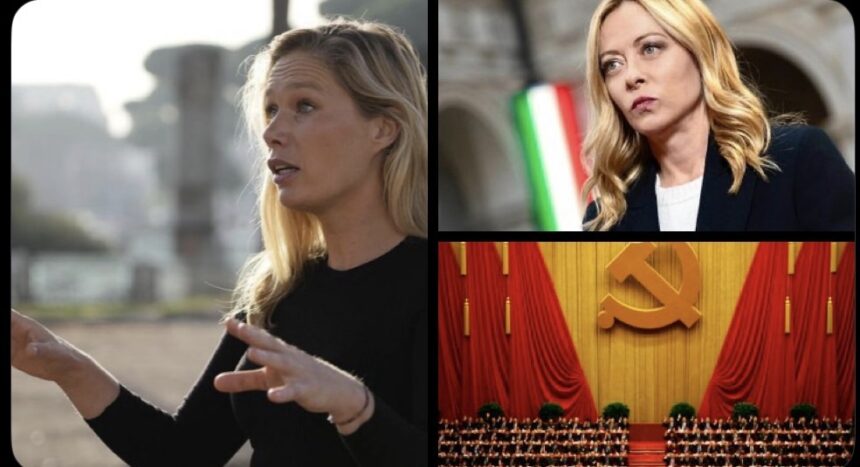
In early May 2026, Italian Prime Minister Giorgia Meloni did something few high-profile leaders manage with grace. She took the fight directly to AI-generated deepfakes targeting her, turning a sleazy political attack into a public teachable moment. By sharing one of the fake images herself and adding a witty remark, she highlighted a growing tech crisis that affects everyone from world leaders to ordinary people scrolling their feeds.
The Incident That Sparked the Conversation
Meloni posted on social media about several AI-created photos circulating online. These images, often passed off as real by her critics, showed her in revealing lingerie or intimate poses. Instead of ignoring them or issuing a stern denial, she addressed the issue head-on. She joked that the creators had “improved” her appearance quite a bit, but quickly pivoted to the serious side. “Deepfakes are a dangerous tool because they can deceive, manipulate and target anyone,” she wrote. “I can defend myself. Many others cannot.”
Her message was simple and direct: Verify before you believe, and think twice before sharing. Today it is happening to me. Tomorrow it could be anyone. The post spread quickly, drawing both support and fresh attention to how easily synthetic media fools people in the heat of political battles.
This was not Meloni’s first brush with manipulated images, but the 2026 examples showed how accessible the tools have become. Anyone with basic skills and the right software can generate convincing fakes in minutes. For a sitting prime minister, it became another front in the daily grind of public life. For the rest of us, it served as a stark reminder of the fragility of truth online.
More Read

Understanding Deepfake Technology
At its core, a deepfake uses artificial intelligence to create or alter media so it looks and sounds real. The technology relies heavily on generative adversarial networks, or GANs. Think of it as two AI systems in a competition. One generates fake content while the other tries to spot the flaws. Over time, the generator gets better at fooling the discriminator until the output is nearly indistinguishable from reality.
Creators start by feeding the AI thousands of photos, videos, or audio clips of the target person. The model learns facial expressions, voice patterns, lighting quirks, and body movements. Modern tools have advanced beyond basic face swaps. Diffusion models and other generative techniques now produce high-quality still images, videos, and even real-time audio that can mimic speeches or conversations that never happened.
More Read

What makes this especially dangerous in 2026 is the low barrier to entry. Free or cheap apps on smartphones can produce decent results. Professional-grade outputs come from more sophisticated platforms that run on cloud computing power. Political operatives, trolls, or even foreign actors can deploy them at scale during election cycles or scandals.
Why Deepfakes Pose a Unique Threat
Deepfakes do more than embarrass. They erode trust in what we see and hear. In politics, a well-timed fake video of a candidate saying something outrageous could sway voters or suppress turnout. During the 2024 global election wave, similar tactics already created confusion through AI memes and partial deepfakes, even if full convincing videos were rarer.
For individuals, especially women in the public eye, the harm often turns personal and sexualized. Non-consensual intimate deepfakes damage reputations and cause real emotional distress. Meloni’s case fits a pattern where female politicians face disproportionate attacks of this kind. Ordinary people lack the platform or legal resources to push back effectively.
The broader societal risk is the “liar’s dividend.” When everything can be faked, real evidence gets dismissed as fabricated. Public figures might deny genuine scandals by claiming deepfakes, while genuine accountability suffers. Awareness still lags far behind the technology, just as Meloni pointed out.
The Arms Race Between Creation and Detection
More Read

Tech companies and researchers are fighting back with better detection tools. Forensic analysis looks for tiny inconsistencies like irregular blinking patterns, lighting mismatches, or pixel artifacts that human eyes miss. Advanced AI detectors trained on millions of examples can flag suspicious content with high accuracy.
Standards like C2PA add cryptographic signatures to authentic media, creating a verifiable chain of custody from camera to viewer. If the signature is missing or broken, platforms can warn users. Watermarking and provenance tracking are becoming more common, especially as regulations tighten.
Yet the technology evolves quickly. Newer generative models produce cleaner fakes that evade older detectors. Real-time deepfakes for video calls add another layer of complexity for fraud prevention in banking or remote work.
Regulatory Responses Around the World
Governments are waking up. The European Union AI Act requires clear labeling of synthetic content and imposes heavy fines for violations. Italy and other member states are strengthening rules around harmful deepfakes. In the United States, states have passed laws targeting election-related fakes, with some requiring disclosures or outright bans close to voting days.34
India introduced strict timelines for platforms to remove flagged deepfakes, along with mandatory labeling. Platforms risk losing legal protections if they fail to act fast. These efforts aim to balance free speech with public safety, but enforcement remains challenging in a global internet.
Critics worry about overreach. Heavy regulation could stifle creativity or legitimate satire. Others argue that without stronger rules, democracy itself faces risks as voters struggle to separate fact from fiction.
What Comes Next for AI and Trust
Meloni’s response shows one way forward. Humor can disarm attacks while spotlighting the issue. But systemic solutions need more. Tech platforms must invest in detection and user education. Schools and media outlets should teach digital literacy so people pause before sharing. Developers bear responsibility too. Building safeguards into AI tools from the start could reduce misuse.
As generative AI improves, the line between real and synthetic will blur further. We might reach a point where video and audio evidence alone no longer suffices in courts or public discourse. Multi-factor verification, trusted sources, and context will matter more than ever.
The good news is that awareness is rising. Incidents like Meloni’s keep the conversation alive. Leaders calling it out publicly help normalize skepticism without descending into total cynicism.
A Call for Collective Responsibility
Giorgia Meloni turned a personal jab into a broader warning. Her words resonate because they cut through the noise. In an era where anyone can be targeted, verification is not paranoia. It is basic digital hygiene.
We all play a part. Scrollers must think before sharing. Creators should consider the consequences of the tools they build or use. Policymakers need to craft smart rules that adapt as technology changes. And tech companies must prioritize truth and safety alongside innovation.
The deepfake problem will not disappear overnight. But facing it with honesty, humor when appropriate, and practical steps can help preserve trust in our shared reality. As Meloni said, today it happens to one person. Tomorrow, without action, it could happen to all of us.