

Bürgenstock, Switzerland — High-level negotiators from the United States and Iran gathered in a Swiss mountain resort on Sunday for crucial talks aimed at solidifying a fragile ceasefire and addressing Iran’s nuclear program, even as Tehran claimed to have closed the vital Strait of Hormuz.
The developments come just days after a memorandum of understanding was signed to pause broader Middle East hostilities, raising questions about whether diplomacy can overcome fresh flashpoints in the region.
High-Level Delegations Converge for Peace Negotiations
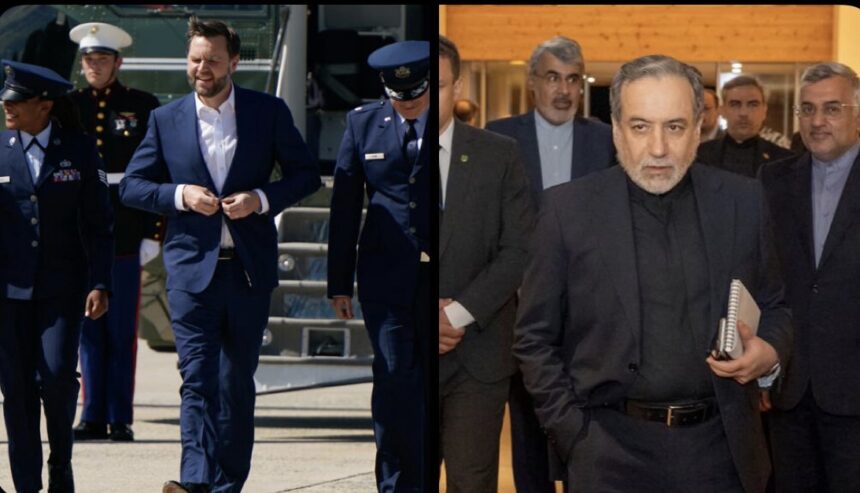
US Vice President JD Vance arrived in Switzerland on Sunday morning to lead the American side, joined by special envoys including Jared Kushner and Steve Witkoff. The Iranian delegation, which landed on Saturday, is headed by Parliament Speaker Mohammad Bagher Ghalibaf and includes Foreign Minister Abbas Araghchi, along with officials from banking and oil sectors.
Pakistan and Qatar are serving as key mediators in the quadrilateral format, with Pakistani Prime Minister Shehbaz Sharif and Army Chief Field Marshal Asim Munir also present. Swiss authorities have facilitated the meetings at the Bürgenstock resort, emphasizing confidentiality around the discussions.
The talks focus on implementing the recent 60-day ceasefire framework, which includes steps toward a permanent Lebanon ceasefire, nuclear issues, and economic measures such as oil sanctions relief. Progress on these fronts could help stabilize energy markets and reduce the risk of renewed conflict.
More Read

Iran Announces Strait of Hormuz Closure as Leverage
In a significant escalation, Iran’s military announced on Saturday that it had closed the Strait of Hormuz, a critical chokepoint for about one-fifth of global oil supplies. Tehran cited alleged violations of the ceasefire by the US and Israel, particularly ongoing strikes in Lebanon.
Iranian officials warned that vessels attempting to transit the waterway could face risks, using the move as pressure ahead of the Switzerland meetings.
US Central Command pushed back against the claim, stating that commercial shipping continued without major disruption. Reports indicated dozens of merchant vessels, including some carrying millions of barrels of oil, transited the area on Saturday.
More Read

Vice President Vance has downplayed the Iranian assertion, describing it as inconsistent with on-the-ground realities while expressing optimism for the diplomatic process.
What the Talks Mean for Regional Stability and Global Oil
Analysts say the Bürgenstock meetings represent a delicate balancing act. Success could pave the way for broader de-escalation, including full implementation of the interim deal and long-term nuclear negotiations. Failure risks unraveling the fragile truce and spiking energy prices worldwide.
Lebanon remains a major sticking point, with Iran insisting that Israeli actions there must cease for meaningful progress. The presence of high-ranking officials from all sides signals the importance both Washington and Tehran place on finding common ground.
As the talks unfold, markets are watching closely for any signals on oil flows through the Strait of Hormuz and the potential for extended negotiations beyond the initial 60-day window.
This story is developing. CNN will provide updates as more details emerge from Switzerland.