

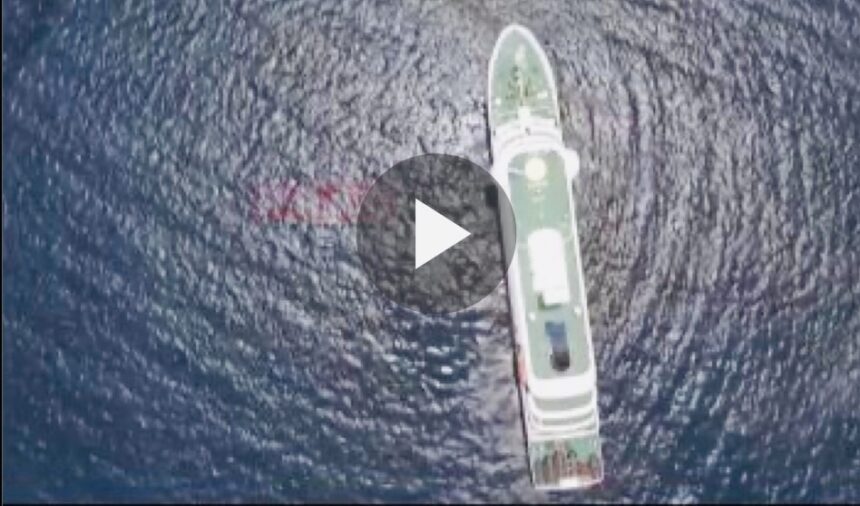
TENERIFE, CANARY ISLANDS | The MV Hondius is on its way. After weeks of deaths, evacuations, political standoffs, and one of the most closely watched maritime health crises in recent memory, the hantavirus-stricken cruise ship is sailing toward the port of Granadilla in Tenerife, Spain, where it is expected to arrive around May 11.
Nearly 150 passengers and crew from 23 countries are still on board. The world is watching what happens next.
Here is everything you need to know before the ship docks.
Where the Ship Is Right Now
The MV Hondius departed Cape Verde on May 6 at 19:15 CET, according to cruise operator Oceanwide Expeditions. The journey to Tenerife takes approximately three and a half days, putting the expected arrival date at May 10 or 11.
The ship is heading specifically to the port of Granadilla in southern Tenerife, not the main Santa Cruz port. This is significant: Granadilla is a commercial and industrial port, set apart from the island’s main tourist and residential areas, which is likely a deliberate choice to limit public exposure during the disembarkation process.
More Read

As of today, May 8, no new cases have been confirmed among those still on board. The cruise operator says the atmosphere on the ship “remains calm” and that passengers are “generally composed.” Strict isolation measures, hygiene protocols, and medical monitoring are in place.
The Political Fight That Almost Stopped It
Getting this far was not straightforward. The decision to dock in Tenerife was caught in a very public clash between Spain’s central government and the Canary Islands regional authority.
Spain’s Health Minister Monica Garcia confirmed in Madrid that the ship would dock in Tenerife and that a joint health assessment and repatriation system would be put in place for all passengers. She was clear that those showing no symptoms would be sent home to their countries.
More Read

But Canary Islands regional president Fernando Clavijo pushed back hard. He said he could not allow the ship to enter the archipelago without more information about the outbreak, and he requested an urgent meeting with Prime Minister Pedro Sanchez. His concern was shaped heavily by the region’s COVID-19 experience, and local residents echoed those fears.
The WHO intervened directly, stating that Spain had a moral and legal obligation to receive the passengers, noting that several Spanish citizens were among those on board. Spain’s central government held firm. The ship is coming.
Pedro Suarez, head of the Tenerife port authority, added another layer of uncertainty, telling local radio that the final docking decision was ultimately his to make pending mandatory reports from health and maritime authorities. That process is ongoing as the ship approaches.
What Happens When It Docks
Spain has outlined a clear plan, though the logistics are complex.
All passengers will undergo health screening before disembarking. Those who are symptomatic or flagged as close contacts of confirmed cases will be assessed further and isolated as needed. The 14 Spanish nationals on board will be transferred to a military hospital for examination. All other passengers, if cleared medically, will be repatriated to their home countries starting from May 11.
That repatriation process spans 23 nationalities. It will involve coordination between Spain, the Netherlands, the United Kingdom, Germany, the United States, Singapore, Switzerland, and others. The US State Department has confirmed 17 Americans are still on board and said it stands ready to provide consular assistance. The CDC is coordinating with domestic and international health partners.
More Read

Two Georgia residents who disembarked the ship earlier are already being monitored by the Georgia Department of Public Health. Two British passengers who independently returned to the UK have been advised to self-isolate, though neither is showing symptoms.
The Outbreak So Far: A Timeline
For those following the story for the first time, here is where things stand:
The MV Hondius left Ushuaia, Argentina on April 1, carrying passengers and crew from 23 countries on an expedition voyage through Antarctica and remote South Atlantic islands. The first death occurred on April 11, when a 70-year-old Dutch man died on board. His wife disembarked at Saint Helena and later died in South Africa, where she tested positive for hantavirus. A German woman died on board on May 2.
Three deaths have been recorded in total. Eight cases are linked to the ship, five confirmed and three suspected. Cases have now been identified in the Netherlands, Switzerland, and the United Kingdom, with Singapore monitoring two residents who shared a flight with a confirmed case.
A flight attendant on the KLM Johannesburg to Amsterdam flight on April 26 was admitted to Amsterdam University Medical Center on May 7 on suspicion of infection, after being in contact with the Dutch woman who later died. That case is still under investigation.
Investigators believe the index case, the Dutch couple, likely contracted the Andes strain of hantavirus during a birdwatching outing near Ushuaia before the voyage began. Argentine authorities are conducting rodent capture and testing along the couple’s four-month travel route through Chile, Uruguay, and Argentina.
For our full coverage of the outbreak from the beginning, read:
- Hantavirus Outbreak on MV Hondius Cruise Ship Sparks Global Concern
- WHO Confirms 5 Hantavirus Cases on MV Hondius with 40% Mortality Rate
- Hantavirus in 2026: Understanding the Rare but Deadly Rodent-Borne Threat
- Pfizer Document Lists Hantavirus Among 1,233 Monitored Conditions
Why the Andes Strain Makes This Different
Not all hantaviruses behave the same way. Most strains spread only through contact with infected rodent urine, droppings, or saliva. The Andes virus, confirmed as the strain behind this outbreak, is the only known hantavirus with documented limited human-to-human transmission.
That distinction is why this outbreak has triggered a global response that a typical hantavirus case would not. The CDC and WHO have both stressed that human-to-human transmission requires prolonged, very close contact and is extremely rare even with the Andes strain. There is no evidence this virus spreads through casual contact, airborne droplets, or the kind of exposure typical in a public port environment.
WHO Director-General Tedros Adhanom Ghebreyesus has been consistent: the public health risk remains low, and a pandemic-level threat has been explicitly ruled out.
What to Watch For on May 11
The docking and disembarkation of the MV Hondius will be one of the most closely managed health events in Europe this year. A few things to track:
Whether any new cases emerge on board before the ship arrives. The hantavirus incubation period runs from one to six weeks, meaning some passengers could still be in that window depending on when exposure occurred.
Whether the Tenerife port authority signs off on docking without further complications. Pedro Suarez’s comments suggest there is still a small but real possibility of last-minute procedural delays.
How quickly 23 nationalities can be processed, screened, and put on flights home. The US, UK, Netherlands, and Germany all have direct repatriation pipelines in motion, but the logistics across that many countries simultaneously are significant.
And whether the KLM flight attendant case in Amsterdam tests positive. If confirmed, it would mark the first documented case of the Andes virus spreading from passenger to airline crew, raising questions about the containment timeline on that flight.
The Bigger Picture
The MV Hondius outbreak is a sobering reminder of how quickly a localized health event can become an international crisis. A birdwatching trip near a landfill in the southernmost city in the world has now touched lives in at least eight countries, grounded a cruise ship for weeks, sparked a political fight inside Spain, and put global health surveillance systems to the test.
The good news is that those systems are working. Contact tracing is active across multiple continents. No community transmission has been detected anywhere. And by the time the ship docks in Tenerife, the passengers on board will have been under continuous medical monitoring for days.
The challenge now is the repatriation process itself and the weeks of health monitoring that follow for hundreds of people across 23 countries as they return home.
Briefly USA will continue covering this story as it develops. For ongoing updates follow our Trending section.