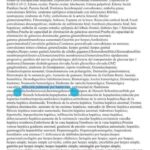


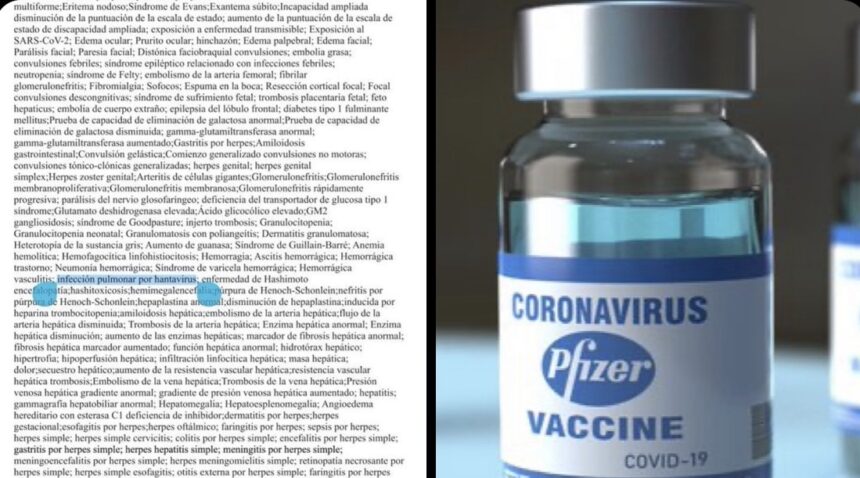
NEW YORK — A Pfizer post-marketing safety document from the COVID-19 vaccine clinical trials has once again gone viral after users highlighted that “Hantavirus pulmonary infection” appears on page 33 of the 38-page report as one of 1,233 adverse events of special interest (AESI).
The document, titled “5.3.6 Cumulative Analysis of Post-authorization Adverse Event Reports,” was released in 2022 following a court-ordered Freedom of Information Act (FOIA) request. It lists a wide range of medical conditions that Pfizer monitored for potential safety signals after the vaccine rollout.
The entry for Hantavirus has drawn fresh attention due to the current hantavirus outbreak aboard the MV Hondius cruise ship, where three people have died and five others are infected. Some social media users are questioning whether the appearance of Hantavirus in the Pfizer document suggests a connection to the vaccine.
Understanding the Pfizer Document
The 38-page report is not a confirmed list of side effects caused by the vaccine. Instead, it is a comprehensive monitoring document that catalogs every reported adverse event following vaccination during the early post-authorization period. These are known as “adverse events of special interest” — conditions Pfizer and regulators agreed to track closely for any potential safety signals.
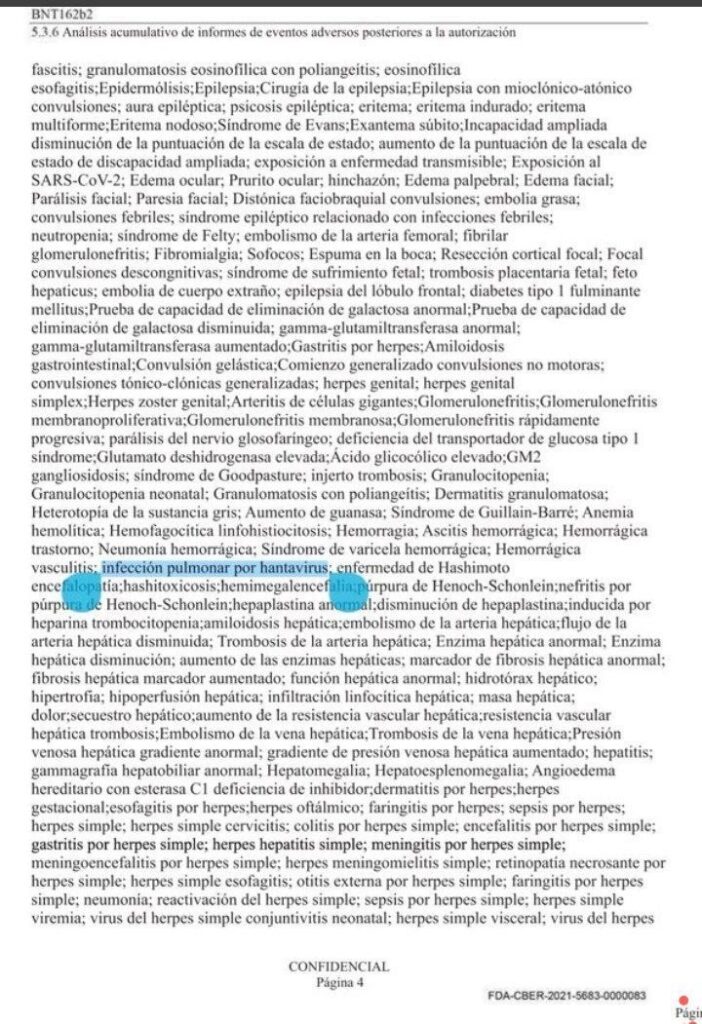
Page 33. It’s one of 1,233 listed side effects.
Medical experts emphasize that inclusion on this list does not mean the vaccine causes the condition. It simply means the event was reported and warranted further investigation. The vast majority of listed events turned out to be unrelated or coincidental. Hantavirus, a rodent-borne virus, is biologically distinct from the SARS-CoV-2 virus or mRNA technology used in the Pfizer vaccine.
More Read


Vials of Moderna vaccine and a syringe.
While mRNA technology from companies like Moderna revolutionized the response to COVID-19, there is currently no approved vaccine for hantavirus infections. Health officials warn against unproven treatments such as ivermectin, emphasizing that early supportive hospital care is the only effective intervention.
Photo: Getty Images / Bloomberg
Vaccines cannot “transform” into an entirely different virus such as hantavirus. Claims suggesting the COVID vaccine mutates into hantavirus have no scientific basis and have been repeatedly debunked by virologists and infectious disease specialists.
Context of the Current Hantavirus Cases
The hantavirus cases on the MV Hondius cruise ship are linked to exposure in South America (likely rodent droppings during the Antarctica expedition). The strain involved is the Andes virus, one of the few hantaviruses capable of limited person-to-person transmission under specific conditions. Health authorities have stressed there is no evidence connecting these cases to COVID-19 vaccination.
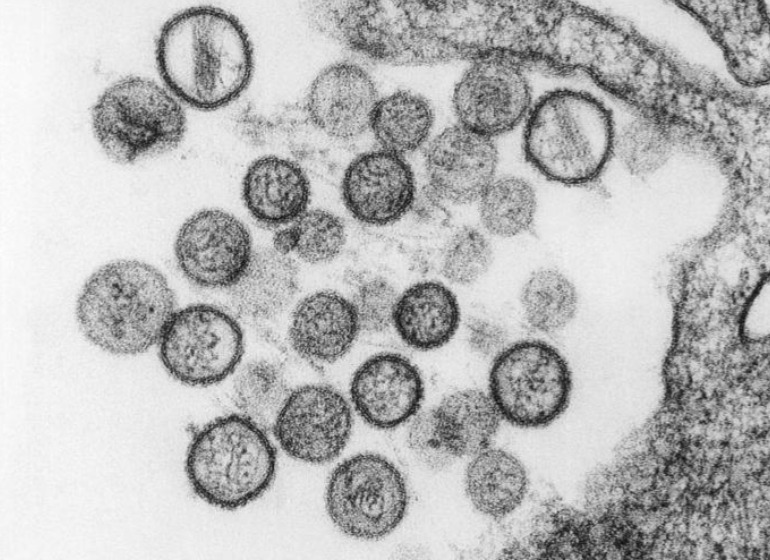
Microscopic view of Sin Nombre virus
A thin-section electron micrograph shows particles of a hantavirus, similar to the Andes virus currently suspected in the MV Hondius cluster. This rare virus causes severe respiratory distress and has a high fatality rate.
Photo: Cynthia Goldsmith / CDC
Separately, Israel reported its first hantavirus case in months, which officials confirmed was acquired during travel in Eastern Europe and unrelated to the cruise ship or any vaccine.
More Read

Why the Document Keeps Resurfacing
The Pfizer document has been a frequent target for misinformation since its release. Because it contains thousands of raw reports without proven causation, it is often misinterpreted or presented out of context. The specific mention of Hantavirus on page 33 has been highlighted multiple times during health scares, leading to renewed claims that the vaccine is responsible for new diseases.
Fact-checkers and public health officials have consistently clarified that the list represents monitored events, not confirmed vaccine-induced conditions. The FDA and other regulators reviewed this data extensively during and after the vaccine rollout.
Broader Implications
The renewed attention on the Pfizer document coincides with the hantavirus outbreak on the cruise ship, which has already caused significant public anxiety. Some voices are using the overlap to suggest a causal link, while others warn against fear-mongering and stress the importance of accurate scientific communication.
This episode highlights the persistent challenge of combating misinformation in the post-COVID era. Even years later, old documents and raw data continue to fuel speculation when new health stories emerge.
For the general public, the key takeaway is that correlation is not causation. Hantavirus is a well-known zoonotic disease transmitted primarily through contact with infected rodents — not through mRNA vaccines.
As the investigation into the MV Hondius outbreak continues, health authorities are focusing on containment and supportive care for those affected. The scientific consensus remains clear: there is no credible evidence linking COVID-19 vaccines to hantavirus infections.
More Read

The discussion around the Pfizer document serves as a reminder of how easily complex medical data can be misunderstood or weaponized in public discourse, especially during times of health concern.
WHO Rejects Ivermectin as Hantavirus Treatment, Stresses Low Risk to General Public
GENEVA — The World Health Organization has issued a clear statement confirming that ivermectin is not an effective treatment for hantavirus and has reiterated that the current risk to the general population remains low.

Misinformation Alert: Ivermectin and Hantavirus.
Unproven Remedies: Despite claims circulating on social media regarding the current Hantavirus Pulmonary Syndrome (HPS) outbreak, the World Health Organization (WHO) has issued a formal statement clarifying that ivermectin—an antiparasitic medication—is not an effective treatment for viral infections like hantavirus. Medical experts warn that relying on unverified treatments can delay life-saving supportive care, such as oxygen therapy and mechanical ventilation.
Photo: Adnan Abidi / Reuters
The announcement comes amid growing public interest and online speculation following the hantavirus outbreak aboard the MV Hondius cruise ship, where three people have died and five others are infected. Some social media users had suggested ivermectin could be used as a treatment, prompting the WHO to directly address the claim.
In its latest update, the WHO emphasized that there is no scientific evidence supporting the use of ivermectin against hantavirus infections. The organization stressed that medical care for hantavirus remains supportive, focusing on symptom management rather than any specific antiviral drug.
Context of the Current Outbreak
The MV Hondius was on an Antarctica expedition when cases of hantavirus first appeared. The ship is now heading to Spain’s Canary Islands under full quarantine protocols after being denied entry by several other ports. The cases involve the Andes virus strain, which is one of the few hantaviruses capable of limited person-to-person transmission under specific conditions.

The cruise ship MV Hondius near a snowy coastline.
The Dutch-flagged MV Hondius remains anchored off the coast of Cape Verde after three passengers died from a hantavirus outbreak that began during an Antarctic nature expedition. The World Health Organization (WHO) is investigating potential human-to-human transmission among the 147 passengers and crew.
Photo: Werner Kruse / Oceanwide
Health officials have maintained strict isolation measures on board. Spanish authorities, working with the WHO and other international partners, are preparing for the ship’s arrival with comprehensive screening and continued quarantine procedures.
The WHO’s statement aims to counter misinformation and provide clear guidance as public attention on the outbreak increases. Officials noted that while the situation on the cruise ship is serious, hantavirus does not spread easily between humans in most cases and is primarily transmitted through contact with infected rodents or their droppings.
Why Ivermectin Claims Surfaced
Ivermectin gained widespread attention during the COVID-19 pandemic, where it was promoted by some as a treatment despite limited clinical evidence for that virus. Similar patterns have emerged with the current hantavirus cases, with some online voices suggesting the drug could be beneficial.
The WHO has consistently stated that ivermectin has no proven role in treating hantavirus infections. Medical experts explain that hantavirus causes severe respiratory or renal issues that require hospital-level supportive care, not antiparasitic medications like ivermectin.
This latest clarification is part of the organization’s ongoing effort to combat health misinformation during disease outbreaks. Health authorities have urged the public to rely on verified medical sources rather than unproven remedies circulating on social media.
Current Risk Assessment
The WHO continues to describe the overall public health risk as low for the general population. Most hantavirus cases are linked to direct exposure in areas with rodent populations, particularly in rural or wilderness settings in the Americas, Europe, and Asia.
The cruise ship outbreak is considered a contained event due to the isolation measures in place. There is no evidence of community transmission beyond the vessel at this time. Officials are monitoring the situation closely and have advised travelers to avoid contact with rodents and seek medical attention if symptoms such as high fever, muscle aches, or breathing difficulties develop after potential exposure.
A separate hantavirus case reported in Israel was confirmed to be unrelated to the cruise ship and was acquired during travel in Eastern Europe.
Broader Implications for Public Health Communication
The WHO’s direct intervention on ivermectin highlights the challenges of managing public perception during infectious disease events. In the post-COVID era, health organizations face increased pressure to counter rapid spread of unverified claims on social media platforms.
Experts emphasize the importance of clear, science-based communication to maintain public trust. Overstating risks can cause unnecessary panic, while downplaying them can lead to complacency. In this case, the WHO appears to be striking a balance by acknowledging the seriousness of the shipboard outbreak while reassuring the public that the broader threat remains limited.
For the cruise industry, already cautious after the COVID-19 pandemic, this incident adds another layer of scrutiny. Enhanced health screening and rodent control measures may become more common on future expeditions to remote areas.
What Happens Next
The MV Hondius is expected to reach the Canary Islands in the coming days. Spanish health authorities will conduct thorough testing and monitoring of all passengers and crew. The WHO will continue to provide technical support and update its risk assessment as more information becomes available.
While the current focus remains on containing the outbreak on the ship, health officials worldwide are reminded of the need for strong surveillance of zoonotic diseases that can jump from animals to humans.
The WHO’s firm stance on ivermectin serves as a reminder that effective medical treatments must be based on rigorous clinical evidence rather than anecdotal claims or repurposed drugs. As the situation with the MV Hondius develops, authorities will continue to prioritize science-based responses to protect both those on board and the wider public.