

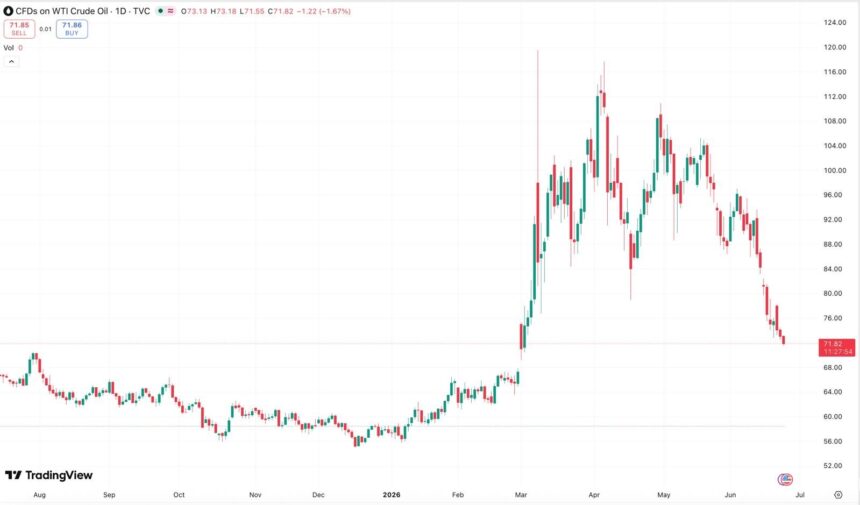
Crude oil prices slipped under the $72 per barrel threshold on Wednesday, marking the lowest level in more than three months and reflecting a rapid unwind of the war premium that built up earlier this year. The move brings benchmark prices close to where they traded before the latest round of Middle East tensions erupted, with traders pointing directly to progress on a US-Iran framework agreement that is opening the door to normalized flows through the Strait of Hormuz.
The decline represents roughly a 40 percent drop from the March peak, when worries over disrupted supplies sent prices soaring above $110. Now, with signs that shipping lanes are gradually reopening and Iran receiving temporary relief on oil sales, markets are pricing in greater stability ahead.
The latest slide comes after an interim deal between Washington and Tehran that includes a ceasefire extension and steps toward reopening the critical waterway that carries about one-fifth of global oil trade. Tanker traffic has already started to pick up in recent days, and a 60-day US waiver now allows buyers to purchase Iranian crude without immediate sanctions risk. Those developments have shifted sentiment quickly from fear of shortages to expectations of returning supply.
Background on the price spike and the path to de-escalation
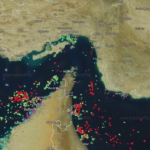
Earlier this year, following US and Israeli strikes on Iranian targets in late February, Tehran responded by effectively closing the Strait of Hormuz to most commercial traffic. That choke point had long been viewed as a potential flashpoint, and its disruption cut off significant volumes of oil and liquefied natural gas heading to world markets. Prices reacted sharply. Brent crude climbed from around $72 in late February to peaks above $112 within weeks, while US benchmark West Texas Intermediate followed a similar trajectory.
More Read

The surge added pressure to already elevated inflation readings in many countries and raised concerns about higher costs for airlines, trucking, manufacturing, and everyday consumers at the pump. Governments and central banks watched nervously as energy costs threatened to derail post-pandemic recovery efforts.
Talks to end the fighting gained momentum in early June. By mid-month, the two sides had outlined a framework that would halt hostilities, gradually restore shipping through the Strait, and provide Iran temporary sanction relief on its oil exports. US President Donald Trump highlighted the potential reopening of the waterway as a key outcome, and markets responded immediately with sharp sell-offs in oil futures.
Since that announcement, prices have continued their downward path. The latest move below $72 comes after several sessions of steady losses, with traders citing both the improving supply outlook and broader signs that the worst of the supply shock may be behind us.
More Read
Market reaction and what it means for consumers and businesses
Lower oil prices are already feeding through to other parts of the economy. Gasoline prices have eased from their recent highs, although they remain above pre-conflict levels in many regions. Analysts expect further relief at the pump over the coming weeks as refiners adjust to cheaper crude feedstock and as more oil makes its way to global markets.
Stock markets have welcomed the development, with energy-heavy indices showing mixed but generally supportive moves as lower input costs improve margins for transportation, chemicals, and consumer goods companies. Broader equity benchmarks have also found support from reduced fears of an energy-driven inflation spike.
For oil producers, the picture is more mixed. US shale operators, many of whom can remain profitable at current levels, face pressure on margins but benefit from a more predictable environment. OPEC+ members and other exporters are watching closely as higher-cost production becomes less attractive. Iran itself stands to gain from the ability to sell more barrels, which could help ease some of its economic pressures after months of restricted access to markets.
Iranian Parliament Speaker Mohammad Bagher Ghalibaf struck a note of regional self-reliance in recent comments. He emphasized that security in the Middle East should come from within the region itself rather than depending on outside powers. “The security of the region must be provided by the countries of the region themselves,” Ghalibaf said. “No country in the region will find its security in the insecurity of others.” Those remarks come as Tehran engages in the latest round of diplomacy while signaling it wants lasting arrangements that do not rely on external guarantees.
Broader economic implications
More Read

The speed of the price drop has caught some observers by surprise, but it aligns with how quickly risk premiums can evaporate once supply concerns recede. Global oil inventories had been drawing down during the disruption, yet the return of tanker traffic and the prospect of Iranian barrels re-entering the market are shifting the balance back toward balance or even surplus in the months ahead.
Central banks tracking inflation data will likely view the lower energy prices as helpful in bringing headline numbers down. Core inflation measures that exclude food and energy have already shown signs of cooling in several major economies, and cheaper fuel adds another tailwind. That could give policymakers more room to consider interest rate paths without the overhang of another commodity shock.
At the same time, the drop highlights how geopolitically driven price moves can reverse just as fast as they appear. While the current deal has delivered quick relief, full implementation will take time. Restarting shut-in production, clearing any remaining port or infrastructure issues, and ensuring consistent tanker traffic all require steady progress.
Outlook and risks ahead
Traders and analysts are now debating how much further prices could fall. Some see room for additional downside if the Strait of Hormuz continues to see higher volumes and if global demand growth moderates. Others caution that any setback in talks, renewed regional tensions, or slower-than-expected production recovery could quickly reverse gains.
The 60-day waiver period provides a window for more comprehensive negotiations. Both sides have incentives to keep momentum going, but history shows that Middle East diplomacy can face sudden hurdles. Shipping companies remain cautious, with some still routing tankers around longer paths until confidence fully returns.
For now, the market’s message is clear. The combination of de-escalation and returning supply has removed a major source of upward pressure on energy costs. Consumers and businesses are already feeling some of the benefits through lower fuel expenses, while investors are adjusting portfolios to a world where the oil price spike of early 2026 looks increasingly like a temporary disruption rather than a new normal.
Whether this stability holds will depend on follow-through from all parties involved. In the meantime, the slide below $72 signals that global energy markets are moving back toward pre-crisis equilibrium faster than many had expected just a few weeks ago. The coming days and weeks will show whether the current calm in prices can be sustained or whether fresh developments will once again test the resilience of the oil market.