


WASHINGTON — The United States has emerged as the undisputed leader in global oil exports, shipping approximately 10.5 million barrels per day of crude oil and petroleum products in May 2026. This marks the third consecutive month the country has held the top spot, surpassing Russia and Saudi Arabia in a reversal of long-standing market dynamics.
Data compiled by ship-tracking firm Vortexa and analyzed by Reuters shows Russian exports at around 7 million barrels per day and Saudi shipments at about 5.9 million barrels per day for the month. The figures highlight a structural change in energy trade, one accelerated by record American production and significant disruptions in the Middle East.
Roots in the Shale Revolution
This achievement did not happen overnight. The foundation was laid over the past two decades through the shale boom, which unlocked massive reserves in basins like the Permian in Texas and New Mexico. Advances in horizontal drilling and hydraulic fracturing turned the United States from a net importer vulnerable to foreign supply shocks into a powerhouse capable of meeting both domestic needs and international demand.
By the mid-2010s, production growth had surged enough for policymakers to lift the decades-old crude export ban in 2015. Export infrastructure along the Gulf Coast expanded rapidly, with ports like Corpus Christi and Houston adding capacity for larger tankers and more frequent loadings. Private companies, responding to market signals rather than central planning, drove efficiency gains that kept costs competitive even as output climbed.
More Read

In May, US crude oil production alone averaged roughly 13.7 million barrels per day, according to Energy Information Administration estimates and industry trackers. When combined with natural gas liquids and other petroleum products, total US liquids output exceeded 21 million barrels per day in recent months. This volume provides the feedstock for sustained high exports while keeping domestic refineries running near capacity.
Geopolitical Disruptions Open the Door
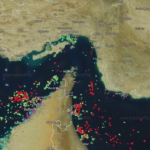
The immediate catalyst for the May record came from overseas. The ongoing US-Iran conflict, which escalated in February 2026, severely restricted flows through the Strait of Hormuz. That chokepoint normally carries about one-fifth of global oil and liquefied natural gas supplies. With tanker traffic disrupted and Middle Eastern exporters facing challenges, buyers in Europe and Asia turned to more reliable Atlantic sources.
More Read

US crude exports alone reached a record 5.6 million barrels per day in May, up from previous highs, according to Kpler and Reuters data. Petroleum product exports added substantially to the total, pushing the combined figure to 10.5 million. European buyers, in particular, increased purchases to offset reduced Russian and Middle Eastern volumes, while Asian refiners sought discounted US grades amid tighter global supply.
This shift carries broader implications. For decades, Saudi Arabia and Russia shaped oil markets through OPEC+ coordination and state-controlled production. Now, the United States, with its decentralized industry of independent producers, has demonstrated resilience and flexibility. Market participants note that US output can respond more quickly to price signals than many national oil companies bound by political considerations.
Economic and Energy Security Benefits
The export surge delivers clear advantages. Higher revenues support jobs in producing regions, from drilling crews in West Texas to pipeline workers in Louisiana. Tax income flows to state and federal coffers, while the trade balance improves. Energy analysts point out that strong exports also enhance US geopolitical leverage, allowing Washington to influence global supply stability without relying solely on military or diplomatic tools.
Consumers at home have experienced mixed effects. While strong export demand can contribute to upward pressure on gasoline prices during tight periods, the overall abundance of domestic supply has helped buffer against worse spikes that might have occurred without US production growth. Refineries continue to process large volumes for the domestic market, maintaining relatively stable product availability.
Leadership in Natural Gas and LNG
More Read

Oil is only part of the story. The United States has simultaneously solidified its dominance in natural gas exports. LNG shipments have grown dramatically since the first cargoes left Sabine Pass in 2016. In 2026, US LNG export capacity continues expanding with new trains at facilities like Corpus Christi, Golden Pass, and Plaquemines. Forecasts from the EIA suggest LNG exports could average around 17 billion cubic feet per day this year, with further growth expected in 2027.
Europe remains a key buyer, having accelerated purchases after the Ukraine-related energy crisis. Asian markets, including emerging buyers, have also increased uptake. This positions the United States as a critical supplier of both oil and gas, offering allies diversified sources less susceptible to single-point geopolitical risks.
Challenges and Outlook
Sustainability questions persist. Environmental groups raise concerns about the long-term impacts of expanded fossil fuel production on climate goals. Industry representatives counter that US production adheres to stricter environmental standards than many competitors and that reliable energy underpins economic growth and poverty reduction worldwide.
Market volatility remains a factor. Exports may moderate if tensions in the Middle East ease and displaced volumes return. Analysts expect some decline in US crude export volumes in June as price spreads narrow, but the structural advantages of American supply are likely to endure.
Looking ahead, continued investment in infrastructure, technology, and regulatory predictability will determine how long the US maintains its lead. Production is projected to hover near current highs or grow modestly, supported by efficiency improvements even as some marginal wells face depletion.
The May milestone represents more than a monthly statistic. It reflects two decades of technological progress, policy choices that favored market-driven development, and the ability to capitalize on global opportunities. As energy markets navigate uncertainty, the United States has transitioned from a peripheral player to the central force in international oil and gas trade.
This development carries significance for consumers, businesses, and governments worldwide. Reliable supply from the United States helps moderate price extremes during crises and supports economic activity across importing nations. For America itself, energy abundance translates into stronger security, fiscal health, and influence on the global stage.
As 2026 unfolds, industry observers will watch whether this export dominance becomes a sustained era or a temporary peak shaped by current conflicts. Early indications suggest the former, built on deep foundations that competitors will find difficult to replicate quickly. The energy landscape has shifted, and the numbers from May confirm that the United States now sits firmly at the helm.