

Trump v. Slaughter Decision Expands Executive Authority Over Independent Agencies — What It Means for Business, Antitrust, and Future Presidents
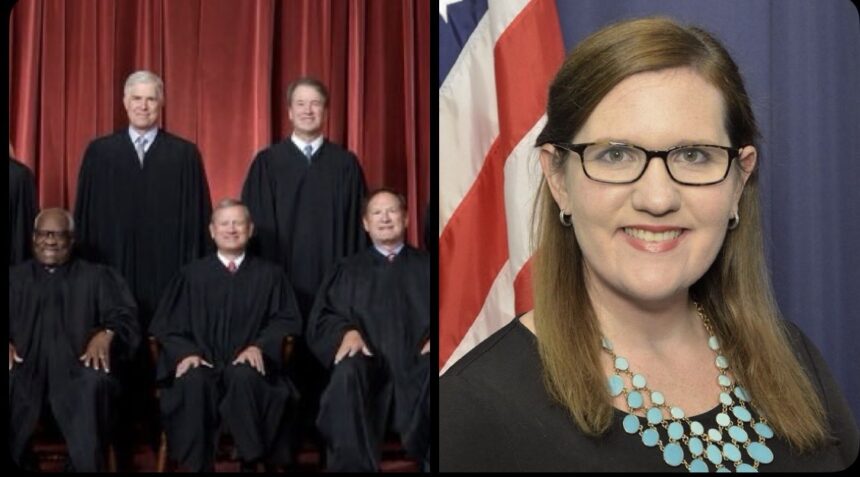
Washington, D.C. — June 29, 2026 — In a landmark 6-3 ruling released today, the U.S. Supreme Court has sided with President Donald Trump, affirming his authority to fire FTC Commissioner Rebecca Kelly Slaughter. The decision in Trump v. Slaughter significantly strengthens presidential control over independent federal agencies while carving out an important exception for the Federal Reserve.
This Supreme Court ruling 2026 is being hailed by supporters as a historic restoration of executive power under Article II of the Constitution. Critics argue it could undermine the independence of regulatory bodies that oversee everything from consumer protection to antitrust enforcement.
Details of the Trump v. Slaughter Supreme Court Case
The dispute began in 2025 when President Trump removed Slaughter, a Democratic appointee serving on the five-member Federal Trade Commission. Slaughter challenged the firing, citing longstanding statutory protections that generally limit removal to cases of “inefficiency, neglect of duty, or malfeasance in office.”
Lower courts initially blocked the removal, but the Supreme Court granted an emergency stay and later took up the case on an expedited basis. In today’s opinion, written by Chief Justice John Roberts, the majority held that the removal protections for FTC commissioners conflict with the president’s constitutional authority.
More Read
Justice Neil Gorsuch wrote a concurring opinion, while Justice Sonia Sotomayor authored a dissent joined by Justices Elena Kagan and Ketanji Brown Jackson.
President Trump’s Reaction
Trump described the outcome as a “BIG WIN” on Truth Social, calling it “one of the most important” rulings on presidential powers in decades and a goal sought by presidents since the 1930s.
Why This Supreme Court Ruling Matters: Broader Implications
The decision effectively narrows — and in some views begins to dismantle — the 1935 precedent set in Humphrey’s Executor v. United States, which had shielded multi-member independent agencies from at-will presidential removal.11
More Read
Key carve-out: The ruling explicitly does not extend to the Federal Reserve, preserving a degree of central bank independence that markets and economists have long viewed as critical.0
Potential Impact Areas:
- Antitrust and Big Tech Regulation — A more directly accountable FTC could lead to faster shifts in merger reviews, enforcement priorities, and consumer protection rules.
- Business and Compliance — Companies operating under FTC oversight may see more predictable (or politically aligned) regulatory environments depending on the administration in power.
- Future Appointments — Presidents may gain greater leverage in shaping agencies like the SEC, FCC, and others.
Reactions from Key Stakeholders
- White House and Republicans: View the decision as a necessary correction that brings unelected officials under democratic accountability.
- Democrats and Agency Defenders: Warn that it risks politicizing independent regulators and weakening expertise-driven policymaking.
- Legal Analysts: Note that while today’s ruling focuses on the FTC, its reasoning could open the door to challenges involving other agencies.
Rebecca Slaughter had previously emphasized the wide-reaching stakes, stating that a ruling in Trump’s favor could mean “pretty much no one” in certain roles would be protected from removal.
Historical Context and What Comes Next
This case joins a series of recent Supreme Court decisions expanding presidential authority and reexamining the administrative state. It arrives amid ongoing debates over regulation, efficiency, and the proper balance of powers in Washington.
The Supreme Court has remanded the case for further proceedings consistent with its opinion. Additional lawsuits or legislative responses from Congress could follow as lawmakers consider statutory adjustments to removal protections.
SEO Takeaways for Businesses and Observers
- Search Trends: Expect increased interest in “Trump Supreme Court ruling FTC,” “presidential firing power 2026,” and related terms.
- Market Watch: Investors in regulated sectors (tech, finance, consumer goods) should monitor how enforcement priorities evolve under stronger executive influence.
- Policy Outlook: Future administrations of either party will likely operate with greater flexibility in directing independent agencies.
This Trump v. Slaughter Supreme Court ruling represents one of the most consequential executive power expansions in modern U.S. history. It reshapes the relationship between the White House and the administrative state for years to come.
More Read

Sources include the official Supreme Court opinion, public statements, and contemporaneous reporting. This article will be updated as additional details or reactions emerge.