

American forces suffered fresh losses this week when Iranian ballistic missiles and drones struck Muwaffaq Salti Air Base in Jordan. The Pentagon has now identified the two soldiers killed in the July 17 attack as Pvt. Isabella Gonzales, 19, of Carrollton, Texas, and 1st Lt. Tyler James Feehan, 25, of Ewa Beach, Hawaii.
A third soldier, Sgt. Angel S. Rampersad, 28, of Ozone Park, New York, was initially listed as missing and has since been confirmed killed in the same strike. Four other American service members were wounded and medically evacuated to Jordanian hospitals before being discharged. Additional personnel treated for minor injuries returned to duty quickly.
The attack came as US and partner forces worked to defend the base against incoming Iranian projectiles. Gonzales and Feehan served in air defense artillery units. Gonzales was assigned to the 1st Battalion, 57th Air Defense Artillery Regiment under the 10th Army Air Missile Defense Command in Germany. Feehan belonged to the 2nd Battalion, 55th Air Defense Artillery Regiment with the 32nd Army Air Missile Defense Command at Fort Bragg, North Carolina.
Friends described Gonzales as outgoing and spontaneous, someone who loved to dance and had enlisted in the Army just last year. Feehan, a Southern Utah University graduate and current grad student pursuing his MBA, had completed ROTC training in 2024. He will receive his degree posthumously and has been promoted to captain along with the Bronze Star, Purple Heart, and Combat Action Badge.
Nearly 100 US troops injured in recent Iranian strikes
More Read

The deaths form part of a sharp rise in casualties over the past two weeks. Pentagon officials report that nearly 100 American service members sustained injuries across multiple US-operated bases in the Middle East since early July. Most of those injuries involved minor concussions caused by blast overpressure from nearby explosions rather than direct shrapnel or structural damage. Roughly 96 percent of the wounded have already returned to duty.
These latest figures add to the broader toll since the conflict with Iran began in late February. At least 18 US service members have now been killed, with hundreds more wounded overall. One additional soldier died in northern Iraq while handling unexploded ordnance from a downed Iranian drone.
High interception rates but some projectiles still get through
More Read

Allied air defenses have performed strongly throughout the fighting. Reports indicate that of roughly 8,500 Iranian drones and missiles launched at US installations since the war started, only about 100 penetrated defenses. That works out to an interception rate near 98.8 percent. Even with that level of protection, the small number of successful strikes has produced real casualties and damage, especially when ballistic missiles reach their targets.
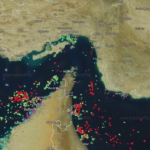
Satellite imagery released after the Jordan attack shows impacts on hangars and housing areas at Muwaffaq Salti Air Base, a key hub for US air operations in the region.
Background of the ongoing conflict
The current round of fighting began after US and Israeli forces launched large-scale strikes against Iranian military and nuclear-related targets in late February 2026. US officials described the operation as necessary to stop Iran from advancing its nuclear program. Iran responded with repeated waves of missiles and one-way attack drones aimed at American bases and partner facilities across the Middle East, including sites in Jordan, Kuwait, Bahrain, and elsewhere.
A brief period of reduced hostilities gave way to renewed escalation in recent weeks after earlier diplomatic efforts faltered. Iran has targeted infrastructure and military positions while also disrupting shipping lanes, including threats around the Strait of Hormuz. US forces have continued strikes on Iranian military assets in response.
Defense Secretary Pete Hegseth addressed the latest deaths directly, saying the soldiers’ sacrifice “only stiffens our resolve.” The incident remains under investigation, and the Pentagon has emphasized that it will continue supporting families of the fallen while maintaining operations.
More Read

Human cost and regional stakes
The soldiers killed in Jordan were young and far from home. Gonzales, just 19, and Feehan, 25, represent the latest reminder that even highly effective defenses cannot eliminate every risk in a conflict involving advanced missiles and drones. Their units played direct roles in protecting bases from the very threats that ultimately claimed their lives.
Military leaders note that the vast majority of recent injuries have been relatively minor, allowing most troops to return to the fight quickly. Still, the cumulative strain of repeated attacks across multiple countries adds pressure on personnel and resources.
The base in Jordan has served as an important forward location for US aircraft and support operations during the campaign. Iranian state media claimed responsibility for strikes on the facility and other regional targets, framing them as retaliation for ongoing American actions.
As the conflict continues into its fifth month, officials on both sides show no immediate signs of de-escalation. US forces remain positioned across the region while Iran continues to demonstrate its ability to project power through missile and drone salvos, even if most are intercepted.
The latest casualties underscore the persistent dangers faced by American service members deployed far from the main battle lines yet still within range of Iranian weapons. Families in Texas, Hawaii, and New York now grieve losses that highlight the real human price of the fighting.