

Germany’s Alternative for Germany party claimed a clear first-place finish in the Saxony-Anhalt state election on Sunday, securing roughly 44.5 percent of the vote according to exit polls and early projections. The result marks the strongest showing yet for the party in any state contest and puts a far-right group at the top of a German regional ballot for the first time since the end of World War II.
Voters in the eastern state turned out in high numbers, estimated near 78 percent. AfD more than doubled its 2021 share while the long-governing Christian Democratic Union suffered sharp losses, falling to around 18 percent. Chancellor Friedrich Merz’s party, which had led the state government, saw its support roughly halved.
Detailed Election Results
Projections from public broadcasters ARD and others placed AfD at 44.4 to 44.5 percent. That left the party just short of an absolute majority in the 83-seat state parliament, with estimates pointing to about 39 seats. The CDU trailed at 17.8 to 18.5 percent. The Left, Social Democrats, and Greens each landed near 8 to 9 percent. The newer Sahra Wagenknecht Alliance hovered around the 5 percent threshold needed for seats, while the Free Democrats fell short.
AfD’s gains came largely at the expense of the center-right, reflecting voter frustration over immigration, the economy, and national politics. The party’s Saxony-Anhalt branch has been classified as confirmed right-wing extremist by the state’s domestic intelligence agency, a designation the AfD rejects.
AfD Leaders Celebrate the Outcome
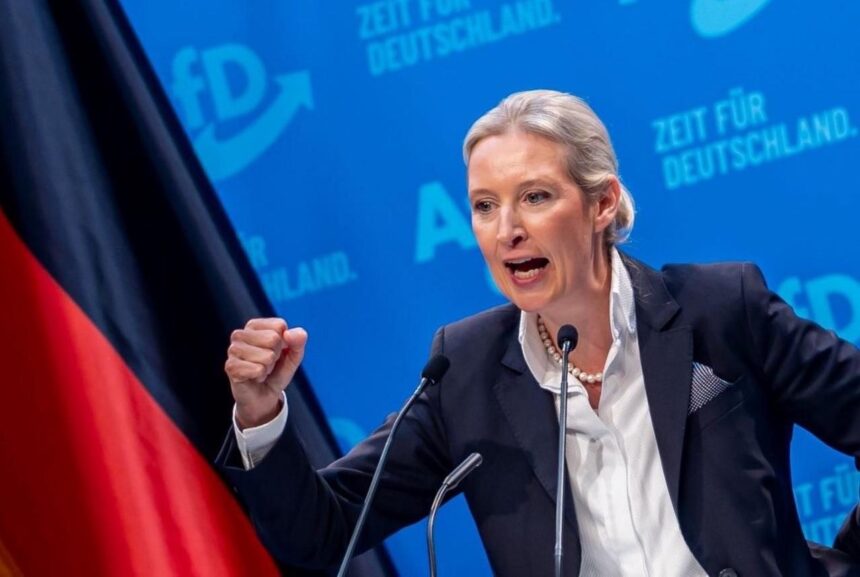
Ulrich Siegmund, the AfD’s top candidate in the state, called the result sensational and said the party had made history. “We have achieved exactly what we wanted to achieve,” he told supporters. Alice Weidel, co-leader of the national party, described it as a historic result that delivered a clear mandate to govern. “We’ve made history, and we’re taking our country back,” Siegmund added later in the evening.
More Read

Party figures gathered in Magdeburg to celebrate as the numbers came in. Siegmund had campaigned on strict immigration controls and a shift away from current state policies. He previously stated he preferred a stable majority before taking on the role of state premier.
Challenges Ahead for Forming a Government
Despite the strong win, AfD faces significant hurdles. Mainstream parties, including the CDU, SPD, Greens, and Left, have long refused any coalition or cooperation with the AfD. This “firewall” approach means the party would need an outright majority of seats to govern alone, something the projections indicate it has not quite reached.
Siegmund has indicated he will not bend the party’s positions simply for power. Other parties may attempt to form an alternative coalition to keep AfD out of the state government, though the fragmented results make that path complicated. Talks are expected to begin soon once final numbers are confirmed.
Wider Impact on German Politics
The outcome delivers a blow to Chancellor Merz and his national coalition at a time when economic growth remains sluggish and public discontent runs high. AfD already leads some national polls and has used eastern strongholds like Saxony-Anhalt to build momentum. Analysts note the result will intensify debate over how established parties handle the far right going forward.
Final official results are still being tallied, but the direction of the vote is clear. Saxony-Anhalt now stands as a test case for whether Germany’s political center can hold or whether the AfD’s rise continues into government at the state level.