

SpaceX has transformed the space industry over the past 18 years through a series of engineering milestones that moved private rocketry from experimental flights to the brink of routine deep space travel. From the first privately developed liquid-fueled rocket to reach orbit in 2008 to the debut of the advanced Starship V3 and Raptor 3 engines in 2026, the company has steadily solved technical challenges that once seemed insurmountable. These achievements center on reusability, rapid iteration, and a clear long-term objective of establishing a self-sustaining presence beyond Earth. The consistent progress has positioned American private industry as a leader in expanding human activity into the solar system while lowering costs and increasing launch frequency far beyond earlier government-led efforts.
The cumulative effect of these advances is visible in both commercial markets and exploration plans. Lower launch prices have enabled large satellite constellations, regular cargo and crew flights to the International Space Station, and the development of vehicles capable of carrying heavy payloads and eventually people to the Moon and Mars. Each milestone built directly on the last, turning early proofs of concept into operational systems.
Early Foundations: Falcon 1 Opens the Door to Private Orbital Flight
The story begins in September 2008 when Falcon 1 completed its fourth flight and became the first privately funded liquid-fueled rocket to achieve Earth orbit. Earlier attempts had failed, placing the young company under intense financial pressure. Success on that launch demonstrated that a private firm could design, build, and operate orbital vehicles without relying solely on traditional government programs. It also secured early contracts that provided the funding needed for further development and proved the viability of a commercial approach to space access.
Falcon 1 was a relatively small vehicle compared with later rockets, yet its achievement carried outsized importance. It showed that liquid propulsion systems developed outside major national agencies could reach orbit reliably. The lessons from its development and the hard-won success informed every subsequent design. Engineers carried forward knowledge about engines, guidance, and staging into larger vehicles. This early win also attracted talent and capital that accelerated the next phase of growth.
By establishing private orbital capability, Falcon 1 shifted perceptions within the aerospace community. Government customers began to view commercial providers as serious partners rather than experimental newcomers. The foundation laid in 2008 made the rapid expansion of the following decade possible.
More Read

Falcon 9 Era: Building Reliability and Introducing Reusability
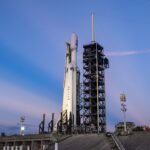
By 2010 Falcon 9 completed its first flight. The two-stage rocket used nine Merlin engines on the first stage and introduced a modular design that would later support high flight rates. Falcon 9 quickly evolved into the workhorse of the commercial launch market. Its reliability and growing payload capacity allowed the company to capture a large share of satellite deployments and resupply missions for NASA and other customers.
The vehicle underwent continuous upgrades. Engine performance improved, structures became lighter and stronger, and software refinements enhanced precision. These changes increased payload capacity while maintaining a strong safety record. Falcon 9 flights became routine, with the rocket launching satellites for communications, Earth observation, and scientific purposes at a pace unmatched by competitors.
Reusability emerged as the defining advantage during this period. In December 2015 a Falcon 9 first stage landed vertically on land for the first time after launching a payload to orbit. The controlled descent and touchdown proved that expensive rocket stages did not have to be discarded after a single use. Just months later in 2016 the company achieved the first successful landing on a droneship in the Atlantic Ocean. Ocean recoveries expanded operational flexibility for missions that required higher performance trajectories.
More Read

The next year, 2017, brought the first reflight of a Falcon 9 booster. A previously flown stage launched another payload and landed again. This milestone confirmed that refurbishment could be practical and economical. Repeated flights of the same hardware drove down costs dramatically compared with traditional expendable rockets. Launch prices fell, flight rates rose, and the economic model of space access changed permanently. Competitors struggled to match the cadence and pricing that followed from these recoveries.
In 2018 Falcon Heavy made its debut. The three-core configuration delivered the heaviest payloads then available from a commercial launcher. Its first mission carried a test payload into a heliocentric orbit that carried it past Mars, symbolically pointing toward broader ambitions. Simultaneous landings of the side boosters provided striking visual proof of recovery capabilities and reinforced confidence in the underlying technology.
Restoring American Human Spaceflight and Expanding Access
Human spaceflight returned to American soil in 2020 when Crew Dragon carried NASA astronauts to the International Space Station. The Demo-2 mission ended a nine-year gap during which the United States relied on Russian Soyuz vehicles for crew transport. Regular crewed flights followed, restoring independent access to low Earth orbit and supporting continuous station operations with greater flexibility and lower costs than previous systems.
Dragon’s evolution from cargo vehicle to crewed spacecraft demonstrated the value of iterative development. Early cargo flights provided data on docking, life support, and reentry that informed the human-rated version. The result was a spacecraft capable of carrying up to four astronauts with modern avionics and abort systems. This capability strengthened NASA’s commercial crew program and opened pathways for private astronaut missions.
In 2021 Inspiration4 launched the first all-civilian crew into orbit aboard a Crew Dragon. The mission expanded access beyond professional astronauts and showed that private individuals could participate in orbital flights under careful preparation and safety protocols. It marked another step in democratizing space travel while generating public interest and data for future commercial operations.
Starship Development: Scaling Up for Deep Space
Development of the next-generation vehicle accelerated in parallel with Falcon operations. In 2021 the Starship SN15 prototype completed a high-altitude flight and soft landing. The stainless-steel vehicle demonstrated the flip maneuver and controlled descent needed for future orbital returns. High-altitude tests refined aerodynamic control, engine relight procedures, and landing precision under realistic conditions.
More Read

By 2022 technicians stacked a full Starship and Super Heavy combination for the first time. The integrated vehicle stood taller than previous rockets and featured dozens of Raptor engines burning liquid methane and liquid oxygen. The propellant choice supports future in-situ resource utilization on Mars, where methane can be produced from local carbon dioxide and water ice. Full stacking validated ground infrastructure, integration procedures, and the structural loads of the massive system.
The first integrated flight test occurred in 2023. Although early flights encountered setbacks including engine issues and structural challenges, each attempt generated critical data that informed design changes. Engineers refined hot staging, heat shield performance, flight software, and recovery techniques through successive tests. Failures were treated as learning opportunities rather than endpoints, consistent with the rapid iteration approach established years earlier.
A major recovery breakthrough arrived in 2024 when a Super Heavy booster was caught by mechanical arms on the launch tower for the first time. The system eliminated the need for landing legs on the booster and promised faster turnaround times between flights. Subsequent flights refined the catch process, demonstrated controlled ship reentries, and achieved precise splashdowns. These advances moved the program closer to the goal of full and rapid reusability for both stages.
Recent Advances in 2025 and 2026: Reuse and Next-Generation Hardware
In 2025 the program achieved the first reflight of a Super Heavy booster. A previously flown stage powered another test mission, validating rapid reuse of the massive first stage. Multiple flights that year also marked progress on payload deployment simulations, in-space engine relights, and heat shield durability during atmospheric reentry. These steps brought the vehicle closer to operational reliability while exposing remaining challenges that teams addressed systematically.
The latest chapter opened in 2026 with the first flight of Starship V3 and Raptor 3 engines. The upgraded configuration features increased propellant volume, higher thrust, reduced engine mass, and design simplifications that improve reusability and performance. The taller stack and enhanced engines raise payload capacity toward 100 metric tons or more to low Earth orbit in a reusable configuration. Early V3 flights tested new grid fin arrangements, improved thermal protection systems, and upgraded launch infrastructure at the Texas site. Results showed solid progress on ascent performance, stage separation, and recovery procedures even as engineers continued refining engine reliability and ship heat shields for repeated use.
Raptor 3 engines deliver greater thrust with lower mass through simplified designs and integrated thermal protection. These changes reduce complexity, cut vehicle mass, and support higher performance margins. Combined with structural updates to both the booster and ship, the V3 generation represents a significant step toward the high flight rates required for ambitious exploration and commercial missions.
The Road to a Multiplanetary Future
Across these milestones the consistent thread has been relentless iteration. Each generation of hardware incorporated lessons from previous flights. Falcon 1 proved private orbital capability. Falcon 9 and Dragon established commercial cargo and crew services at scale. Falcon Heavy expanded heavy-lift options. Starship aims to combine full reusability with the scale needed for planetary missions involving large crews and substantial cargo.
The technical foundation supports the multiplanetary goal. Starship is designed to carry large numbers of people and equipment, refuel in orbit, and land on other worlds. Methane propulsion aligns with resource production concepts for Mars. Rapid reuse of both stages is intended to make interplanetary flights frequent and affordable rather than rare and expensive events. Supporting systems under development include orbital propellant transfer, which would allow ships to depart Earth orbit fully loaded for long voyages to the Moon or Mars.
Economic effects are already visible across the industry. Lower launch costs enabled the rapid expansion of satellite constellations providing global broadband connectivity. Frequent flights support national security payloads, scientific missions, and a growing list of commercial customers. The industrial base supporting rocket production, engine manufacturing, ground operations, and related technologies has expanded substantially in key locations across the United States.
Challenges remain as the program matures. Heat shield longevity under repeated high-speed reentries requires continued testing and refinement. Full orbital refueling demonstrations must succeed to unlock deep space capability. Regulatory approvals, range safety coordination, and environmental considerations influence launch cadence. Engine reliability and precise guidance during tower catches continue to receive focused attention. Yet the pattern established over 18 years shows that engineering teams address problems through flight data and rapid design updates rather than prolonged ground-only analysis.
Looking ahead, the architecture points toward crewed lunar landings in support of broader exploration plans and eventual uncrewed and crewed missions to Mars. Establishing a sustained presence on another planet would mark a historic expansion of human activity beyond Earth. The vehicles, operational experience, and industrial capacity gained since 2008 provide the practical foundation for that ambition. Continued flights and refinements will determine how quickly the vision of multiplanetary life becomes an operational reality.
SpaceX’s record illustrates how focused private investment combined with iterative engineering can accelerate progress once reserved primarily for large government programs. From a single successful Falcon 1 orbit to the powerful Starship V3 stack flying in 2026, the sequence of achievements has steadily expanded what is possible in spaceflight. The destination has remained consistent throughout: making life multiplanetary through reliable, reusable transportation systems capable of carrying people and equipment far beyond low Earth orbit.