

Suffern, N.Y. — President Donald J. Trump returned to New York on Friday, delivering a high-energy address at Rockland Community College’s Eugene Levy Fieldhouse in Suffern as part of a campaign-style event supporting Rep. Mike Lawler (R-N.Y.). The visit, occurring amid preparations for the 2026 midterm elections, drew thousands of enthusiastic supporters to the Hudson Valley suburb near the New Jersey border.
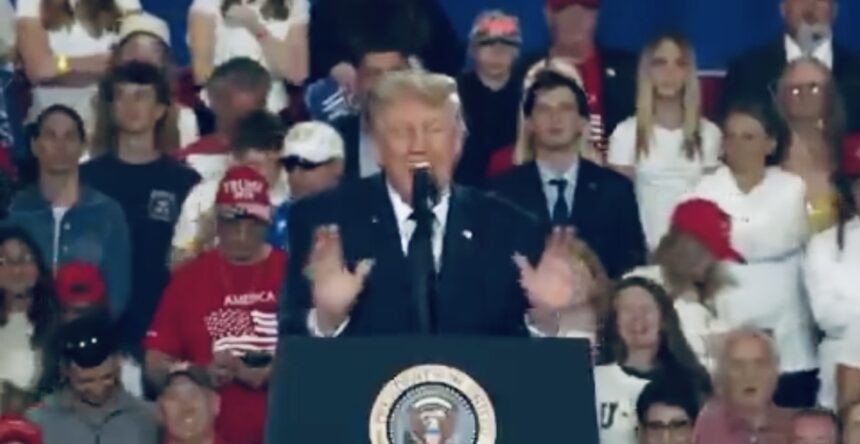
Doors opened around 11 a.m., with the program beginning at 3 p.m. Attendees lined up early, many wearing red “Make America Great Again” hats and waving American flags. The event highlighted Trump’s economic agenda, including praise for the tax law he signed during his current term, and aimed to bolster Lawler in New York’s competitive 17th Congressional District.
In classic Trump fashion, the speech mixed policy discussion with personal anecdotes and crowd-pleasing humor. A notable moment came when Trump referenced his long-standing tradition of playing the Village People’s 1978 disco hit “Y.M.C.A.” at rallies. He jokingly referred to it as the “gay national anthem” and claimed it contributed to his strong performance with gay voters.
“You remember that song? That’s why I did so well with the gay vote,” Trump said from the podium, gesturing expressively with both hands as the crowd reacted with laughter and applause. He added that he performed “better than any Republican ever” on that front, thanks to the song. Trump also recounted how First Lady Melania Trump has gently chided him about his signature stiff-armed, fist-pumping dance to the track, calling it “unpresidential.”
The clip of the remarks quickly circulated on social media, including via prominent accounts like Mario Nawfal’s, amplifying the lighthearted moment. Trump has danced to “Y.M.C.A.” at events since at least 2020, turning the disco classic into an unlikely staple of his political brand. He has previously taken credit for reviving the song’s chart success, noting its resurgence during his campaigns.
More Read

Context of the Visit
Suffern, a relatively small community in Rockland County, is strategically located in a swing area. Rep. Lawler, a moderate Republican who has occasionally broken with Trump on issues like the state and local tax (SALT) deduction cap, welcomed the president’s support. Lawler has faced criticism from some conservative corners for his positions on taxes and immigration but remains a key figure in the GOP’s efforts to hold the House.
Trump used the platform to tout his administration’s economic achievements. He highlighted tax cuts, deregulation, and efforts to combat inflation—core themes that have resonated with his base. The event served dual purposes: energizing local Republicans ahead of midterms and signaling Trump’s continued influence over the party even as president.
Security was tight, with local authorities warning of traffic disruptions and some school closures in the area. Protests were anticipated and reported, reflecting the polarized political climate in the New York metro region. Civil rights groups and Democratic organizations criticized the visit, while Trump allies praised it as a boost for suburban voters concerned about the economy and border security.
More Read

Trump’s Enduring Rally Style
Trump’s appearances continue to blend serious policy with entertainment. His dance routines and pop culture references have become trademarks, helping sustain enthusiasm among supporters who view his rallies as spectacles rather than traditional political events. “Y.M.C.A.” in particular has transcended its origins as a gay anthem and party staple, becoming a MAGA sing-along, with crowds often spelling out the letters in gestures mirroring Trump’s moves.
Critics, including some in the LGBTQ+ community and media outlets, have questioned the appropriateness of the song’s use and Trump’s casual labeling of it. However, original Village People members, notably Victor Willis, have defended its broad appeal and distanced it from being exclusively a “gay anthem.” The song’s popularity has undeniably surged in political contexts due to Trump’s embrace.
In Suffern, the crowd appeared unfazed by the controversy, cheering Trump’s self-deprecating humor about Melania’s feedback. He mimicked her concerns: “Darling, don’t dance, okay? It’s not presidential.” The exchange humanized the president while reinforcing his image as an unfiltered showman.
Broader Political Landscape
The rally occurs as Republicans navigate governing responsibilities while preparing for midterms. Trump’s visit to a suburban district like NY-17 underscores the party’s focus on retaining seats in areas that could swing based on economic perceptions. Lawler’s district includes diverse communities from Rockland to parts of Westchester, where issues like property taxes, housing costs, and public safety remain top concerns.
Trump also touched on national issues, likely including immigration enforcement, trade policies, and criticism of Democratic opponents—hallmarks of his speeches. His endorsement carries significant weight, potentially helping Lawler consolidate support in a region where Trump has historically underperformed compared to national averages but maintains dedicated followers.
Reactions and Aftermath
Social media lit up with reactions to the “Y.M.C.A.” segment. Supporters celebrated it as vintage Trump—fun, defiant, and authentic. Detractors called it tone-deaf or divisive. Regardless, the moment ensured the event received widespread coverage beyond policy wonks.
More Read

Local officials expressed gratitude for the attention on Rockland County. The event’s location at a community college also allowed Trump to connect with younger attendees and families, broadening his outreach.
As the 2026 midterms approach, events like this in battleground-adjacent districts signal the ongoing realignment in American politics. Trump’s ability to draw crowds and dominate media cycles remains undiminished. His blend of economic messaging with cultural touchstones like “Y.M.C.A.” keeps rallies engaging for supporters who see him as a fighter against political correctness.
Whether the humor translates into votes will be tested in November. For now, in Suffern, it reinforced why Trump’s style continues to captivate a loyal base: it’s personal, memorable, and relentlessly entertaining.