

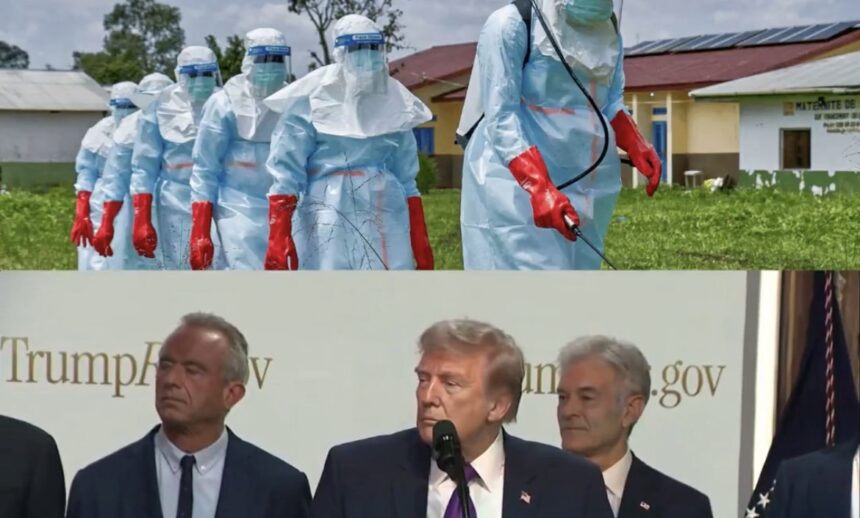
The Trump administration has activated emergency public health powers to limit entry into the United States from regions experiencing an Ebola outbreak. On May 18 2026 the Centers for Disease Control and Prevention issued an order under Title 42 authority. This measure targets non United States citizens who have recently visited the Democratic Republic of Congo Uganda or South Sudan.
The action comes amid growing concerns over a Bundibugyo virus strain of Ebola spreading in Central Africa. Supporters view the policy as a necessary step to safeguard American public health. Critics question its scope and timing.
Background on the Ebola Outbreak
Health authorities detected the outbreak in Ituri Province in northeastern Democratic Republic of Congo. By mid May 2026 officials reported hundreds of suspected cases and dozens of deaths. The World Health Organization declared it a public health emergency of international concern on May 17.
The Bundibugyo virus strain presents unique challenges. Unlike more common Ebola variants it lacks approved vaccines or specific treatments. Cases have appeared in urban areas and crossed into Uganda. An American medical missionary working in the region tested positive prompting further evacuations and screenings.
More Read

Cross border movement population displacement and limited health infrastructure have complicated containment efforts. Officials note that the outbreak went undetected for weeks before formal confirmation. This delay allowed wider transmission in affected zones.
Details of the Title 42 Order
Title 42 derives from a 1944 public health law. It grants the CDC authority to suspend entry of persons from areas posing a communicable disease risk. The current order bars non citizens who were present in the three specified countries within the past 21 days. It remains in effect for 30 days unless extended.
More Read
United States citizens and lawful permanent residents remain exempt. Returning Americans from these areas must route through Washington Dulles International Airport for enhanced screening. The State Department has also paused visa operations in the region.
The policy focuses on preventing introduction of the virus into the United States. Officials emphasize concentrating limited public health resources on monitoring citizens and residents. No Ebola cases linked to this outbreak have yet appeared in the country.
Reactions from Supporters
Many observers welcomed the move as prudent border protection. Eric Daugherty a conservative commentator posted on X praising President Trump and Secretary of State Marco Rubio. He argued that no foreigner holds an inherent right to a United States visa. Protection of American safety must come first.
Similar sentiments appeared across social media. Users highlighted the lethal nature of Ebola and the need for vigilance. One reply stated that active outbreak zones should not receive free entry under the guise of openness. Public health measures represent basic governance responsibilities.
Proponents point to historical precedents. Governments routinely adjust travel rules during disease outbreaks to shield domestic populations. With midterm elections approaching some frame the decision as decisive leadership on national security and health issues.
More Read

Concerns and Criticisms
Not all responses proved uniformly positive. Some health and human rights groups labeled the restrictions as overly broad or politically motivated. They argue that travel bans can hinder aid delivery and stigmatize affected regions without fully addressing transmission risks.
Questions arose about enforcement consistency. A few voices noted existing visa limitations for certain countries and wondered why Ebola served as the specific trigger. Others raised timing suspicions given the proximity to political events though no evidence of deliberate fabrication has surfaced.
Public health experts stress that Ebola spreads through direct contact with bodily fluids rather than casual airborne transmission. They recommend targeted screening contact tracing and support for on the ground response in Africa as complementary strategies. Some worry that broad entry pauses might divert attention from these efforts.
Historical Context of Title 42
This marks a return to Title 42 usage familiar from the COVID 19 era. The Trump administration first applied it in 2020 to manage border encounters during the pandemic. Subsequent legal challenges and policy shifts followed. The current invocation targets a specific geographic and health threat rather than a blanket border measure.1
Legal observers note that the authority allows rapid action but invites scrutiny over proportionality. Courts previously examined similar orders for balance between health needs and individual rights. The 30 day duration provides a review window for adjustments based on evolving conditions.
Broader Implications for United States Policy
The decision reflects ongoing tensions in immigration and public health intersections. Supporters see it as fulfilling promises to prioritize American safety. Detractors view it within larger patterns of travel restrictions affecting certain regions.
Aid organizations continue operations in affected areas though with heightened precautions. The United States has pledged resources for clinics and response teams. Sustained international cooperation will prove essential to contain the outbreak at its source.
Travelers and diaspora communities from East and Central Africa may face disruptions. Airlines and embassies have begun issuing updated guidance. Enhanced airport protocols aim to minimize risks while allowing legitimate travel where possible.
Public Health Preparedness in the United States
Domestic readiness forms another key element. Hospitals maintain protocols for viral hemorrhagic fevers. Contact tracing teams stand ready. Officials urge calm noting low immediate risk to the general population absent direct exposure.
Education campaigns highlight symptoms such as fever muscle pain vomiting and bleeding. Early detection improves outcomes though Bundibugyo cases can progress rapidly. Health departments coordinate with federal agencies for monitoring.
The episode underscores vulnerabilities in global health surveillance. Delayed detection in conflict prone regions amplifies threats. Investments in laboratory capacity and cross border information sharing could strengthen future responses.
Looking Ahead
The Title 42 order will undergo review as the 30 day period progresses. Epidemiological trends in Africa will influence any extensions or modifications. Success depends on both border measures and robust support for containment abroad.
This development highlights the complex interplay between infectious disease control national sovereignty and humanitarian considerations. As the situation evolves authorities must weigh evidence based actions against potential unintended consequences.
The Trump administration positions the policy as proactive defense of the homeland. Time and data will determine its effectiveness in preventing Ebola introduction while supporting international efforts to end the outbreak. Americans will watch closely for updates on both domestic safety and global health dynamics.