


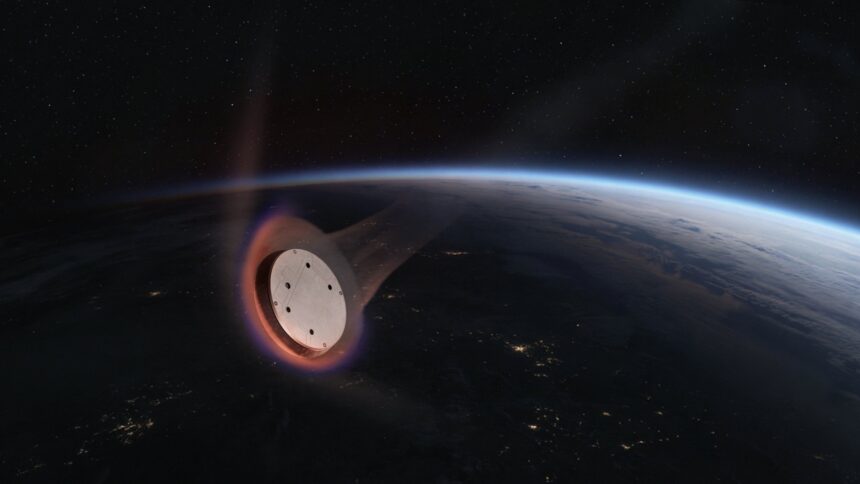
SpaceX is known for launching rockets, deploying Starlink satellites, and preparing for missions to Mars. But one of its lesser-known projects is helping advance a concept that could transform future industries: manufacturing in space.
Recent reports have highlighted work involving Starfall capsules, a technology designed to support in-space manufacturing and return products safely to Earth. While the idea sounds futuristic, it is quickly becoming a serious area of investment for space companies.
What Is In-Space Manufacturing?
In-space manufacturing refers to producing materials and products in the unique environment of space rather than on Earth.
Space offers conditions that cannot be easily replicated on the ground, including:
- Microgravity
- Extreme vacuum conditions
- Reduced contamination
- Unique crystal growth environments
Scientists believe these conditions could allow the production of materials with properties that are difficult or impossible to achieve on Earth.
More Read

What Are Starfall Capsules?
Starfall capsules are designed to carry manufactured products from orbit back to Earth.
The concept is simple:
- Materials are produced in space.
- Finished products are loaded into a return capsule.
- The capsule re-enters Earth’s atmosphere.
- The products are recovered for use or further testing.
This system creates a practical way to move high-value products between space and Earth.
More Read

Why Manufacture Products in Space?
Several industries could benefit from space-based production.
Pharmaceuticals
Researchers have found that certain protein crystals can grow differently in microgravity. Better crystal formation may help scientists study diseases and develop new medicines.
Advanced Materials
Space may allow the creation of materials with improved strength, purity, or performance compared to those manufactured on Earth.
Semiconductors
The electronics industry is constantly searching for methods to improve manufacturing precision. Space-based production could eventually provide new opportunities for advanced chip development.
How SpaceX Fits Into the Picture
SpaceX’s reusable launch systems have dramatically reduced the cost of reaching orbit.
Lower launch costs make commercial projects such as in-space manufacturing more realistic than they were a decade ago.
More Read

Without affordable transportation to and from space, manufacturing products in orbit would remain economically impractical.
As launch costs continue to decline, more companies are exploring business models built around orbital production.
Challenges Facing In-Space Manufacturing
Despite the excitement, significant obstacles remain.
High Costs
Although launch costs have decreased, operating in space is still expensive.
Limited Infrastructure
Space manufacturing requires facilities, transportation systems, and recovery capabilities that are still being developed.
Regulatory Questions
Governments and international organizations continue to evaluate how commercial manufacturing in space should be regulated.
Scalability
Many technologies work in small demonstrations but face challenges when expanded to commercial scale.
Could Space Manufacturing Become a Major Industry?
Many experts believe it could.
The combination of reusable rockets, growing private investment, and advances in automation has accelerated interest in orbital manufacturing.
While large-scale production in space is still in its early stages, companies are investing heavily in technologies that could make it a significant industry in the coming decades.
Final Thoughts
Space manufacturing may sound like science fiction, but it is becoming a serious commercial opportunity.
As companies continue to reduce launch costs and develop new technologies, manufacturing products in orbit could become one of the next major frontiers of the space economy.
Projects involving return capsules and orbital production systems represent an early glimpse into a future where factories are no longer limited to Earth.