

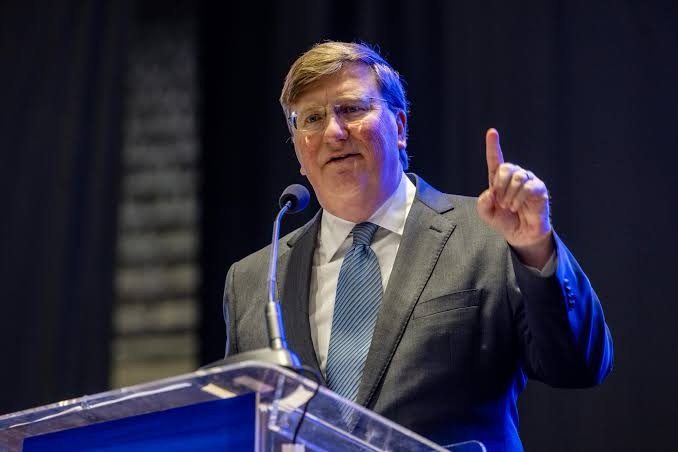
Mississippi Governor Tate Reeves pulled the plug Wednesday on a special legislative session that had been scheduled to begin next week, canceling plans to redraw the state’s Supreme Court voting districts. The decision comes at the center of a broader, nationwide GOP redistricting push that has put multiple Southern states in the spotlight heading into the 2026 midterms.
What Was the Special Session For?
The session had been called specifically to redraw Mississippi’s three Supreme Court voting districts. A lower federal court had previously ruled that those districts violated the Voting Rights Act by diluting Black voting power, and that the state was required to create a new majority-Black district.
That ruling created the legal basis for the special session. But before legislators ever set foot in the chamber, the U.S. 5th Circuit Court of Appeals stepped in and vacated the lower court’s order entirely, dissolving the injunction that had prevented Mississippi from using its current Supreme Court map.
With the legal mandate gone, Reeves concluded there was simply no reason to call legislators back. “There is no longer any reason for the legislature to come in on next Wednesday for judicial redistricting,” he said on SuperTalk Mississippi Radio Wednesday morning.
The Bigger Picture: Congressional Redistricting Pressure
The cancellation of the Supreme Court session is only part of the story. The session had become a flashpoint over a much bigger question: whether Mississippi should use the opportunity to redraw its four congressional districts ahead of the November midterms.
More Read

President Trump and several Republican state lawmakers had been pushing Reeves hard to add congressional redistricting to the session agenda, part of a coordinated effort across multiple Southern states to lock in safer Republican seats before the midterms. Trump wrote on Truth Social that states should not conduct elections under what he described as unconstitutional maps, saying, “If they have to vote twice, so be it. We should demand that State Legislatures do what the Supreme Court says must be done… The byproduct is that the Republicans will receive more than 20 House Seats in the upcoming Midterms!”
Reeves ultimately pushed back. He acknowledged he wants congressional redistricting to happen eventually, but said the timing is wrong for 2026.
Why Reeves Said No to Congressional Redistricting Now
The governor laid out a surprisingly practical case for holding off, and it comes down to two risks:
More Read

The primaries already happened. Mississippi held its party primary elections in March, two months before the Supreme Court’s Louisiana v. Callais ruling that has driven the broader redistricting push. Redrawing congressional maps now would require nullifying those primary results and forcing a second round of elections. Reeves warned that setting that precedent could open the door for Democratic-controlled states to do the same thing elsewhere, potentially putting Republican-held seats at risk nationally. “What happens in Mississippi doesn’t happen in a vacuum,” he said.
It could backfire on Republicans. Reeves also flagged the possibility that a rushed redraw could hurt GOP candidates in Mississippi itself, rather than help them. The logistics of redrawing maps, running new primaries, and holding a general election within a compressed timeline adds real uncertainty.
“It’s complicated,” he said. “Every issue surrounding redistricting is complicated, and I think it is fair to say that we are looking at every potential option as to what they may look like, and when is the best time to look at it.”
What Happens to the Redistricting Push?
Reeves was clear: the session is canceled, but redistricting is not off the table. He told reporters he expects the Mississippi Legislature to redraw congressional, state legislative, and state Supreme Court district lines before the 2027 statewide election cycle. Mississippi House Speaker Jason White has already formed a select committee to study redistricting options over the summer and fall and report back with recommendations.
The governor also made his intentions toward Democratic Congressman Bennie Thompson explicit. Thompson has represented Mississippi’s 2nd Congressional District for decades. Reeves said, “The tenure of Congressman Bennie Thompson reigning terror on the 2nd Congressional District is over. It’s not a question of if. It’s a question of when.”
Mississippi Democratic Party Chairman and state Rep. Cheikh Taylor of Starkville responded sharply, saying that while the session is canceled, “the issue has not gone away.” The Mississippi Legislative Black Caucus Chairman Kabir Karriem called on Reeves and legislative leaders to be transparent about redistricting plans if they intend to bring the issue into the 2027 legislative session. “We know our history,” Karriem said.
More Read

The Broader Redistricting Battle Across the South
Mississippi is one piece of a much larger map. The redistricting fight has been playing out simultaneously across multiple states following the Supreme Court’s late April ruling in Louisiana v. Callais, which significantly weakened a key provision of the Voting Rights Act and made it harder for minorities to challenge electoral maps as racially discriminatory.
The ruling has set off a scramble. Tennessee has already moved, redrawing its congressional map to give Republicans a 9-0 advantage in the state’s delegation. Virginia saw its own redistricting push struck down by the state Supreme Court just last week. And Congressional Black Caucus Chair Yvette Clarke warned this week that redistricting efforts following the Callais decision could place another 19 members of the caucus at risk nationally.
For ongoing coverage of redistricting developments across the country, Mississippi Today and The Hill have been tracking the story in granular detail.
What This Means for the 2026 Midterms
The cancellation effectively takes Mississippi off the redistricting table for this election cycle. Congressional races will proceed under the current maps, meaning Rep. Bennie Thompson runs in the same 2nd Congressional District he has held for years.
But the longer game is clear. With the 2027 state legislative elections on the horizon and a governor’s race expected to draw redistricting as a central issue, Mississippi is likely to see a full redraw attempt before the 2028 cycle. State Auditor Shad White, widely expected to run for governor next year, has already made redistricting a signature issue. Reeves, without naming him, took a pointed shot at that strategy, calling it “the silly season in Mississippi politics.”
For readers looking for the most detailed local reporting on how this plays out, Mississippi Free Press and Mississippi Today are the two essential sources.
Key Takeaways
- Governor Tate Reeves canceled a special session scheduled for next week after the 5th Circuit Court of Appeals vacated the ruling that required new Supreme Court districts.
- Trump and Republican lawmakers had pushed to expand the session to include congressional redistricting, but Reeves declined, citing timing risks and the precedent it would set for other states.
- Mississippi’s primaries already took place in March, making a midterm redistricting play logistically and politically complicated.
- Reeves still wants redistricting to happen before the 2027 state elections, and a House select committee is studying options this summer.
- The broader Callais ruling has triggered redistricting efforts across the South, with Tennessee already having redrawn its maps and Virginia’s effort blocked by its own Supreme Court.