

Kyiv Asks EU to Broker a Mutual Halt to Airport Strikes With Russia, Targeting a Narrow Point of Shared Pain as U.S.-Led Peace Talks Remain Frozen
A Small Ask With a Specific Logic Behind It
Three years into a war that has flattened Ukrainian cities, paralyzed global energy markets, and drawn Europe into its deepest security crisis since the Cold War, Ukraine is reaching for something deliberately modest: a mutual agreement with Russia to stop striking each other’s airports.
Ukrainian Foreign Minister Andrii Sybiha raised the proposal with EU foreign ministers in Brussels, asking Europe to act as a mediator for a so-called “airport ceasefire” with Russia. “We probably need a new role for Europe in our peace efforts,” Sybiha said. “Perhaps we could try to settle this issue or reach a so-called airport ceasefire.”
The ask is narrow by design. That is not a weakness in the proposal. It is the point.
Why Airports, and Why Now
The choice of airports as the focal point of this opening bid is not symbolic. Both sides have been inflicting real, measurable pain on the other’s aviation infrastructure for months, and both have significant reasons to want it stopped.
In one of the most significant recent strikes, a massive overnight Ukrainian drone barrage forced the closure of all four of Moscow’s major airports, including Sheremetyevo, Domodedovo, Vnukovo, and Zhukovsky, halting flights for seven hours and sending emergency crews scrambling across the capital region.
The disruption to Russian civilian aviation has been cumulative. More than a dozen airports across southern Russia were paralyzed after a Ukrainian drone struck the air traffic control centre for the region in Rostov-on-Don, forcing suspensions at airports including Sochi, Krasnodar, Volgograd, and Grozny, among others. Major Russian carriers including Aeroflot and Pobeda were forced to cancel and reroute flights.
Ukraine, for its part, has watched Russia systematically strike its own airports and aviation infrastructure as part of broader missile and drone campaigns that have targeted energy, logistics, and transport networks across the country.
A halt to airport strikes offers both sides something they can point to as a practical win, without requiring the kind of territorial or security concessions that have made broader ceasefire talks impossible to close.
The U.S. Vacuum Europe Is Being Asked to Fill
The proposal reflects a quiet but significant shift in the architecture of Ukraine war diplomacy. As this publication has reported in its coverage of the Trump-Netanyahu tensions over Lebanon and the CMCC shutdown in Gaza, the Trump administration has increasingly stepped back from active conflict mediation, leaving allied nations to improvise in the space Washington has vacated.
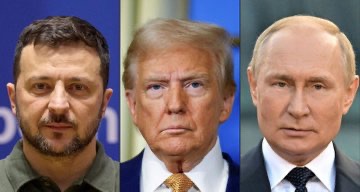
Renewed U.S.-led peace negotiations between Russia and Ukraine have stalled. Trump’s administration has formulated peace proposals that analysts describe as broadly favorable to Moscow, and both Russia and Ukraine have rejected the terms at various stages. Russia has repeatedly refused ceasefire calls, and Putin has consistently declined direct negotiations with Zelenskyy.
It is into that vacuum that Kyiv is now inviting Europe to step, not with a comprehensive peace plan, but with a specific, achievable first move.
EU officials responded to the airport truce proposal with caution. One anonymous European official said the bloc would first need to define what it expected from direct contacts with Moscow, so as “not to act blindly.”
That caution is understandable. Europe has spent considerable energy over the past year working out what role it can play in a conflict where the primary belligerents and the United States have all, at different moments, shut it out of the room. EU foreign policy chief Kaja Kallas has been reported as hoping to play a mediating role in future negotiations between Russia and the EU, suggesting Brussels sees an opening to establish itself as a more active diplomatic actor.
The Three-Day Ceasefire That Just Ended, and What It Showed
The airport truce proposal lands at a moment of fresh disillusionment with the prospects of broader halts to the fighting.
A three-day ceasefire between Russia and Ukraine that covered May 9, 10 and 11, 2026, announced unilaterally by Moscow to coincide with Russia’s Victory Day commemorations, ended without producing momentum toward any larger agreement.
Ukraine dismissed the Russian-declared truce as an unserious gesture, and said its military had registered 850 Russian strikes since midnight on the first day of the ceasefire. Russia, meanwhile, claimed Ukraine had committed 1,365 violations of the truce by the same point. President Zelensky said: “All of this clearly shows that, on the Russian side, there was not even a token attempt to cease fire on the front.”
The symmetry of mutual accusation is familiar. What the airport truce proposal tries to do is sidestep that symmetry entirely, by finding a category of activity where enforcement is relatively observable, where civilian harm is politically legible to domestic audiences on both sides, and where neither party has to make the kind of concession that touches on the core territorial dispute.
What Europe Can and Cannot Offer
Europe’s ability to broker this kind of limited arrangement depends on several factors that remain unresolved.
A January 2026 meeting in Paris saw European leaders and Canadian counterparts agree to provide Ukraine with multilayered international defense guarantees as part of a broader peace framework, including equipment, training, and air, land, and sea support to deter future Russian aggression. But many details remained undefined, and significant hurdles around European troop deployments had not been cleared.
Russia has firmly ruled out any deployment of NATO nation troops on Ukrainian soil, and has said there can be no ceasefire until a comprehensive settlement is agreed, a position that treats any partial arrangement as an attempt to freeze the conflict on terms unfavorable to Moscow.
The airport truce, precisely because it is not a ceasefire and does not touch territorial lines, may be designed to circumvent that Russian objection. It asks for restraint in one operational domain only, leaving all other military activities legally untouched. Whether Moscow reads it that way, or views any European-brokered arrangement as an unacceptable legitimization of European involvement in the conflict, will likely determine whether the proposal moves beyond the Brussels ministerial sidelines.
A Narrow Door in a Frozen War
Analysts of the conflict have long argued that the path from total war to durable peace in Ukraine will require a sequence of partial, confidence-building measures before anything resembling a comprehensive agreement becomes politically viable for either side.
The airport truce proposal fits that framework precisely. It is small enough to be plausibly deniable for Moscow if it chooses to engage, specific enough to be measurable, and symbolically significant enough, given the very visible civilian disruption caused by airport closures on both sides, to carry political weight domestically in both Russia and Ukraine.
Whether Europe has the diplomatic standing with Moscow to make that opening bid credible is a separate question. Russia has shown no sign of treating European mediators as legitimate interlocutors in a conflict it frames primarily as a confrontation with NATO rather than with Kyiv.
But with Washington’s attention divided across the Iran standoff in the Strait of Hormuz, the Gaza ceasefire breakdown, and its own domestic political turbulence over the Obama investigation push, Ukraine’s calculation appears to be that waiting for U.S.-led diplomacy to restart is a bet on a timeline that does not currently exist.
The airport truce may not work. But it is the first specific European-facing diplomatic initiative to emerge from Kyiv in months, and in a war where diplomacy has largely been a series of proposals that died on arrival, that itself is worth noting.
This report draws on Politico’s reporting from the EU foreign ministers meeting in Brussels, cited by Kyiv Post, Pravda EN, and Pravda EU. Russian and Ukrainian claims regarding ceasefire violations could not be independently verified. The three-day ceasefire referenced expired May 11, 2026.