

FBI Director Kash Patel snorkeled around the sunken USS Arizona at Pearl Harbor last August. The ship is a war grave. More than 900 sailors and Marines are still entombed inside it. The site is closed to the public and off limits even to the families of the men who died there.
The story broke Thursday after the Associated Press obtained internal government emails through a Freedom of Information Act request. By Friday morning, it had become one of the most-searched political stories in the country. And the questions people are asking most are not just about Patel, but about the site itself: who is allowed to swim there, why is it restricted, and what exactly happened during that trip?
Here is the full breakdown.
Why Is the USS Arizona Closed to Divers and Swimmers?
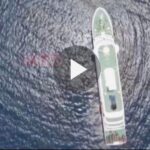
The USS Arizona was sunk on December 7, 1941, during Japan’s attack on Pearl Harbor. Of the 1,177 crew members aboard, 1,102 were killed. The ship was never raised. It remains on the floor of Pearl Harbor exactly where it sank, and it serves as the final resting place for 900 of those sailors and Marines whose remains were never recovered.
Because of that, the USS Arizona is treated as a military cemetery, not a tourist attraction or a dive site. Swimming near the wreckage is prohibited under normal circumstances for several overlapping reasons:
More Read

- Respect for the dead. The Navy and National Park Service classify the site as hallowed ground. Recreational access would be considered a desecration of a military grave.
- Physical hazards. The wreck still leaks oil more than 80 years after sinking. There are structural risks from the deteriorating hull. Swimmers face real danger from the debris field and from limited visibility.
- Security and logistics. Any dive or swim at the site requires coordination between the National Park Service, the US Navy, and base security at Joint Base Pearl Harbor-Hickam. It is not a simple clearance to grant.
In rare instances, the NPS and Navy have arranged swims near the wreckage for select dignitaries. Marine archaeologists and NPS maintenance crews who need to monitor the site’s condition also receive access. But public access, including access for families of the Arizona’s victims, is not permitted.
What Did Kash Patel Actually Do at Pearl Harbor?
According to emails obtained by the AP, Patel visited Hawaii last August on official FBI business. The bureau’s public communications at the time highlighted his tour of the Honolulu field office and meetings with local law enforcement. What those communications did not mention was what happened next.
Days after the official events, Patel participated in what government officials described in the emails as a “VIP snorkel” around the USS Arizona. The excursion was coordinated by the US military. US Indo-Pacific Command leaders offered to host Patel and his team at the base, as the FBI put it, “as they commonly do with US government officials on official travel.”
More Read

The US Navy confirmed the tour took place in a statement to ABC News.
A former government diver who spoke to the AP on condition of anonymity described the access as unusual, saying it was rare for anyone not connected to the memorial to be granted such access given the physical risks and the security, safety, and logistical challenges involved. No FBI director going back to at least 1993 had previously gone snorkeling at the memorial, according to people familiar with the activities of former directors.
What Did the Veteran Who Guards the Site Say?
This is the detail that sharpened the story from a controversy into something more pointed.
The marine veteran who watches over the USS Arizona site told the AP the visit felt inappropriate, comparing the atmosphere to a “bachelor party.” That characterization landed hard given the sacred nature of the site and the fact that families of the men still entombed in the Arizona are not permitted access to swim near their loved ones’ grave.
The FBI responded sharply. Assistant Director for Public Affairs Ben Williamson called the AP’s characterization of the event “stupid” and described it as a routine interagency engagement. The White House backed Patel, calling him a “critical player” and pointing to what it described as a dramatic drop in crime under his leadership.
Patel himself, during a Senate hearing earlier this week, called the report a “total farce.”
More Read

Is This Part of a Larger Pattern with Kash Patel?
Yes, and that context is important for understanding why this story is generating the response it is.
The Pearl Harbor snorkel is not the first time Patel’s use of his position for personal experiences has become public. A timeline of controversies during his tenure as FBI director:
February 2026: Video surfaced of Patel celebrating in the US men’s hockey team’s locker room at the Winter Olympics in Milan, raising questions about his use of official travel for personal leisure.
May 2026 (earlier this week): Reports emerged of Patel using taxpayer-funded FBI planes to visit his girlfriend, adding to existing scrutiny over his travel expenses.
May 2026: Reports revealed Patel had created personally branded liquor bottles, which critics called inappropriate for the head of a federal law enforcement agency.
May 2026: The FBI launched a criminal leak investigation targeting a journalist at The Atlantic who wrote an unflattering profile of Patel, a move widely condemned by press freedom advocates. Patel has since filed a $250 million lawsuit against The Atlantic. The publication said it stands by its reporting.
May 12, 2026: Patel threw what observers described as a “tantrum” during a Senate Appropriations subcommittee hearing, calling reporters liars from the witness chair.
A Politico report in recent weeks noted that things “aren’t looking great” for Patel within the administration, and that he appears likely to be among the next high-ranking officials to exit. The White House has notably done little to publicly defend him by name in the face of multiple controversies.
What Is the FBI’s Official Position?
The FBI has defended the Pearl Harbor visit as a legitimate official activity. A spokesperson told The Hill that US Indo-Pacific Command leaders offered to host Patel and his team at the base “as they commonly do with US government officials on official travel,” describing it as part of national security engagements that also included visits to counterparts in New Zealand and Australia.
The spokesperson did not address why the visit was excluded from the FBI’s public communications about the Hawaii trip at the time it occurred.
Why Does This Story Have Staying Power?
Beyond the immediate controversy, the Patel Pearl Harbor story touches on something that has real political staying power: the use of official government access, resources, and position for personal experiences that ordinary Americans, including the families of the men buried in the Arizona, cannot access.
The USS Arizona is not a perk. It is a cemetery. The fact that the site is off limits to victims’ families while a sitting FBI director was able to arrange a VIP swim there as an add-on to an official trip is the core of what is driving the story’s search volume and social media reaction.
Whether that rises to a level that has consequences for Patel’s position remains to be seen. Based on the pattern of the past several months, the White House has shown little inclination to act on controversies surrounding him, despite the recurring nature of the headlines.
Key Takeaways
- FBI Director Kash Patel took a “VIP snorkel” around the sunken USS Arizona at Pearl Harbor last August, revealed by AP through FOIA-obtained government emails.
- The USS Arizona is a military grave entombing more than 900 sailors and Marines. It is closed to the public and to families of the victims. No FBI director going back to at least 1993 had previously snorkeled at the memorial.
- The trip was coordinated by the US military and confirmed by the US Navy. The FBI says it was a routine interagency engagement offered to US officials on official travel.
- A marine veteran who oversees the site told the AP the visit felt like a “bachelor party.” The FBI called that characterization “stupid.”
- The Pearl Harbor story is part of a broader pattern of controversies surrounding Patel’s use of official resources and access since becoming FBI director.
- Patel called the report a “total farce” during Senate testimony. The White House has backed him, calling him a “critical player.”