

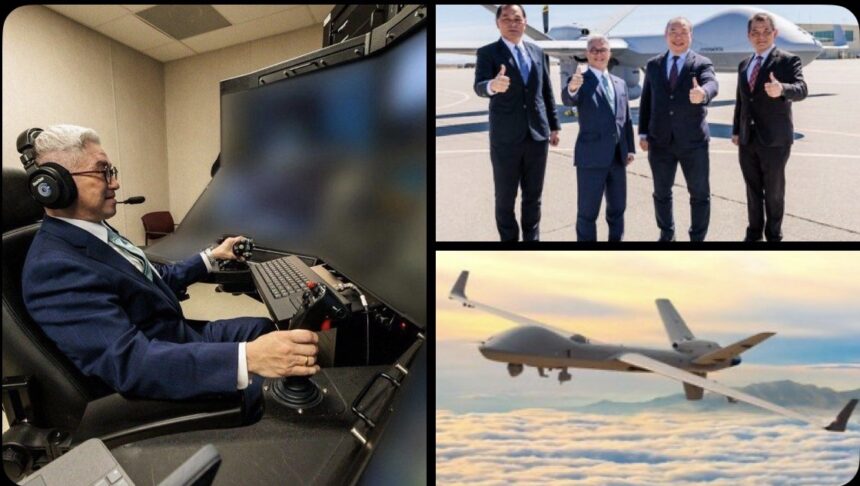
Taipei/Washington, May 23, 2026 — In a significant boost to its defense posture, Taiwan has taken delivery of its first two MQ-9B SkyGuardian unmanned aerial vehicles (UAVs) from the United States. The handover, which occurred on March 17, 2026, during a ceremony attended by senior Taiwanese defense officials, underscores Taipei’s commitment to bolstering its intelligence, surveillance, and reconnaissance (ISR) capabilities in response to persistent Chinese military pressure.
The MQ-9B SkyGuardian, manufactured by General Atomics Aeronautical Systems, Inc. (GA-ASI), represents a state-of-the-art medium-altitude, long-endurance (MALE) platform. Taiwan’s acquisition of four such drones, approved by the U.S. in 2020, forms part of a broader strategy to counter Beijing’s increasingly assertive actions in the Taiwan Strait and surrounding regions. The first two aircraft will undergo further testing in the U.S. before full deployment to Taiwan later in 2026, with the remaining pair scheduled for 2027.
Technical Specifications and Operational Advantages
The MQ-9B SkyGuardian is engineered for extended missions, capable of remaining aloft for more than 40 hours at altitudes up to 50,000 feet (approximately 15,240 meters), even in challenging weather conditions. Its wingspan measures 79 feet (24 meters), featuring winglets for improved aerodynamic efficiency. Equipped with the Lynx Multi-mode Maritime Radar and advanced electro-optical/infrared (EO/IR) sensors, the drone can detect and track surface vessels at ranges of 150 to 300 kilometers (93 to 186 miles).
This persistent surveillance capability is particularly valuable for Taiwan, which faces near-daily Chinese military incursions. The platform’s Detect and Avoid System allows seamless integration into civil airspace, a first for certifiable remotely piloted aircraft systems (RPAS) meeting NATO STANAG 4671 standards and U.S. FAA requirements. With nine hardpoints supporting up to 4,750 pounds (2,155 kg) of external payload, the SkyGuardian offers flexibility for future armament configurations, though its primary role for Taiwan emphasizes ISR over strike missions.
Taiwanese officials, including Vice Defense Minister Hsu Szu-chien, have emphasized the drones’ role in reducing strain on manned assets like the P-3C Orion maritime patrol aircraft. By providing “eyes that never sleep,” the MQ-9B enables continuous monitoring of the 110-mile-wide Taiwan Strait without risking pilot lives, a critical advantage in an era of gray-zone warfare tactics.
More Read

Broader Context: Taiwan’s Asymmetric Defense Strategy
Taiwan’s drone acquisition aligns with its evolving “porcupine” or asymmetric defense doctrine, which prioritizes cost-effective, mobile, and resilient systems to deter a numerically superior adversary. The island has dramatically scaled up its unmanned systems procurement, increasing planned drone acquisitions from an initial 50,000 to 200,000 units under its special asymmetric warfare budget. This includes thousands of loitering munitions, reconnaissance UAVs, and unmanned surface vessels.
Domestic programs, such as the Teng Yun II medium-altitude UAV, complement the U.S.-supplied SkyGuardians. Taiwan aims to create layered ISR coverage, combining high-altitude persistent surveillance with low-altitude attritable drones for targeting. Experts note that this approach seeks to impose prohibitive costs on any potential Chinese amphibious assault by saturating the battlespace with sensors and precision-guided munitions.
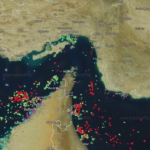
The timing of the delivery is noteworthy. It coincides with reports of heightened Chinese naval and coast guard activity, including deployments of over 100 vessels across the Yellow Sea, East China Sea, Taiwan Strait, and South China Sea. These maneuvers, often involving dual-use “gray zone” tactics, test Taiwan’s responses and aim to normalize Beijing’s claims over the democratically governed island.
More Read

Geopolitical Ramifications and U.S.-China Dynamics
The MQ-9B delivery occurs against a backdrop of complex U.S.-China-Taiwan relations. For deeper insight into ongoing frictions, see China Delays Pentagon Official’s Beijing Visit Amid Standoff Over $14 Billion Taiwan Arms Package, which examines Beijing’s use of diplomatic leverage in response to U.S. weapons support for Taiwan.
Similarly, Trump’s Planned Call to Taiwan’s President Sparks Sharp Chinese Backlash Amid $14 Billion Arms Deal Deliberations highlights recent escalations, including President Trump’s indications of direct engagement with Taiwanese leadership.
These developments reflect Beijing’s sensitivity to any enhancement of Taiwan’s defensive capabilities. China views arms sales to Taiwan as interference in its internal affairs, frequently responding with military drills, economic coercion, and diplomatic protests. The U.S., bound by the Taiwan Relations Act of 1979, maintains a policy of strategic ambiguity—neither confirming nor denying direct intervention—while providing defensive weaponry to preserve peace and stability in the region.
Analysts argue that platforms like the MQ-9B serve as force multipliers. In a potential conflict scenario, real-time intelligence could enable rapid targeting of invading forces, disrupt supply lines, and support allied interventions. The drones also free up Taiwan’s limited manned aircraft for higher-threat missions, enhancing overall operational sustainability.
Historical Background and Evolving Threats
Cross-strait tensions trace back to the Chinese Civil War, with the Republic of China (Taiwan) and the People’s Republic of China (mainland) both claiming legitimacy. The U.S. shift in recognition to Beijing in 1979, accompanied by the Taiwan Relations Act, established the framework for ongoing unofficial but robust support.
In recent years, China’s military modernization has accelerated dramatically. The People’s Liberation Army (PLA) now boasts the world’s largest navy by hull count, advanced hypersonic weapons, and a growing drone fleet capable of saturation attacks. Beijing’s 2026 defense budget reached approximately $281 billion, with significant investments in “intelligentized” warfare incorporating AI and unmanned systems.
More Read
Taiwan has responded by diversifying its defenses. Beyond U.S. acquisitions, Taipei invests heavily in indigenous production, including anti-ship missiles, portable air defenses, and swarming drone technologies. International partnerships, such as those with Japan, Australia, and European nations, further bolster resilience through intelligence sharing and joint exercises.
Strategic Implications for Regional Stability
The introduction of MQ-9B SkyGuardians into Taiwan’s arsenal carries multifaceted implications. Militarily, it narrows the ISR gap, potentially deterring Chinese adventurism by raising the risk of detection and response. Economically, any disruption in the Taiwan Strait would have catastrophic global effects, given Taiwan’s dominance in advanced semiconductor manufacturing over 90% of the world’s most sophisticated chips.
Politically, the move signals strong U.S. commitment under frameworks like the Indo-Pacific Strategy. It complements initiatives such as AUKUS and the Quad, aimed at maintaining a free and open Indo-Pacific. However, it also risks provoking sharper Chinese countermeasures, including cyber operations, economic sanctions, or intensified gray-zone activities.
Defense experts emphasize integration. Taiwan must develop robust command-and-control networks to fuse data from MQ-9Bs with domestic sensors, satellites, and allied intelligence. Training programs for operators, maintenance crews, and data analysts will be essential, as will investments in cybersecurity to protect these high-value assets from electronic warfare or hacking.
Looking ahead, the remaining deliveries and potential follow-on sales could deepen U.S.-Taiwan defense industrial ties. GA-ASI has expressed interest in technology transfer and co-production opportunities, which could accelerate Taiwan’s indigenous UAV capabilities while supporting American jobs.
Expert Perspectives and Future Outlook
Retired U.S. military officers and think-tank analysts widely view the SkyGuardian as a game-changer for Taiwan’s maritime domain awareness. One former Indo-Pacific Command official noted that persistent high-altitude surveillance could detect Chinese amphibious preparations days in advance, providing crucial decision space for mobilization and allied coordination.
Taiwanese President Lai Ching-te has repeatedly stressed the importance of such capabilities for maintaining cross-strait peace. In public addresses, he frames defensive enhancements not as provocation but as necessary insurance against coercion. Public support in Taiwan for stronger defenses remains high, with polls showing majority backing for increased military spending and international partnerships.
Challenges persist. Operating costs, integration hurdles, and vulnerability to advanced Chinese air defenses (such as S-400 systems or future directed-energy weapons) require careful mitigation. Taiwan’s overall defense budget, while growing, remains a fraction of China’s, necessitating creative asymmetric approaches.
As cross-strait dynamics evolve, the MQ-9B program exemplifies a broader trend: the democratization of advanced military technology through unmanned systems. What was once the domain of great powers is now accessible to smaller democracies seeking to level the playing field. For Taiwan, these “eyes in the sky” represent not just hardware but a strategic bet on deterrence through visibility and resilience.
This development will likely feature prominently in upcoming U.S.-China dialogues. As global attention remains divided by other conflicts, the Taiwan Strait remains a potential flashpoint capable of reshaping international order. Continued monitoring and analysis from sources like Briefly USA will be essential for understanding these complex intersections of technology, strategy, and geopolitics.