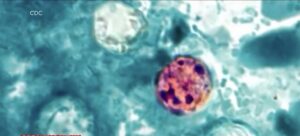


Fourteen days. That is the maximum incubation period for Ebola. It is also, roughly, the amount of time separating the world from the opening kickoff of the 2026 FIFA World Cup on June 11. Millions of fans from across the globe will soon flood into sixteen cities across the United States, Canada, and Mexico for the most expansive World Cup in history. And in the background, a fast-moving Ebola outbreak is spreading across Central Africa faster than health workers can contain it.
This is not a hypothetical risk scenario constructed to generate alarm. It is the exact situation public health officials, epidemiologists, and international health law experts are staring at right now, and by most honest accounts, the United States is not as prepared as it should be.
What We Are Actually Dealing With
On May 17, 2026, the World Health Organization declared the Ebola outbreak in the Democratic Republic of the Congo and Uganda a Public Health Emergency of International Concern, only the ninth such declaration since the criteria were formally established in 2005. That designation is not issued lightly. It signals that the WHO Director-General, after consulting affected states and an independent emergency committee, has determined the event poses a serious, unusual, and cross-border risk requiring coordinated international action.
As of May 27, the outbreak had recorded at least 1,205 suspected and confirmed cases and at least 264 deaths. WHO Director-General Tedros Ghebreyesus stated bluntly on May 25 that the outbreak is spreading faster than health workers can contain it. Cases have been confirmed in Uganda, including one imported case that arrived in Kampala. A case was also reported in South Kivu, imported from Tshopo Province. The Bundibugyo strain driving this outbreak is particularly troubling because, unlike the more commonly occurring Zaire ebolavirus, there is currently no approved vaccine or targeted treatment for it. The existing Ebola vaccines and therapeutics were developed and tested against Zaire. They offer no guaranteed protection here.
More Read
This is the viral backdrop against which the United States will host the World Cup.
The Trump Administration’s Response: Bold Optics, Shaky Science
The Trump administration has moved quickly and visibly. On May 18, the CDC, DHS, and other federal agencies invoked Title 42 of the Public Health Service Act to restrict entry for non-US passport holders who had been in DRC, Uganda, or South Sudan within the previous 21 days. By May 22, the administration expanded the ban to include lawful permanent residents. Secretary of State Marco Rubio drew a hard line at a Cabinet meeting this week: “We cannot and will not allow any cases of Ebola to enter the United States.”
More Read
Strong words. But public health experts are considerably less confident in the strategy behind them.
Infectious disease specialists, including those who have worked directly in Ebola treatment centers, have consistently pointed out that travel bans do not stop viruses. They stop declared travelers. The Bundibugyo outbreak is occurring in a region marked by insecurity, humanitarian crisis, and high population movement. People who want to move will move, through unofficial routes, across porous land borders, and through third countries not covered by the restriction. The ban creates a documented paper trail of compliance while incentivizing undocumented movement. Viruses exploit exactly that gap.
More alarming still is the Trump administration’s decision to establish a facility in Kenya for Americans exposed to Ebola rather than allowing them to return home for care. Lawrence Gostin, director of the WHO Collaborating Center on National and Global Health Law, called the plan “reckless, unethical and possibly unlawful.” Dr. Krutika Kuppalli, a former medical director of a Sierra Leone Ebola treatment center and former WHO official, described it as having “awful consequences” for both patients and humanitarian workers. US hospitals are among the best-equipped in the world for handling special pathogens. Diverting exposed Americans to a third-country facility is not a public health policy. It is a political statement dressed up as one.
The World Cup Variable
The 2026 FIFA World Cup will bring approximately five million international visitors to North America across its 39-day run. Fans from every participating nation will converge in stadiums holding tens of thousands of people, in fan festivals on city plazas, in hotels, transit hubs, and bars. The tournament spans 16 host cities including New York, Los Angeles, Miami, Dallas, Seattle, Boston, and Philadelphia, alongside Canadian and Mexican venues.
DR Congo is among the nations that qualified for the tournament, their first appearance since 1974. The outbreak has already derailed their preparations. The team cancelled its pre-World Cup training camp in Kinshasa due to the outbreak conditions in the region. DR Congo’s players, who all play in leagues outside the country, remain eligible to enter the US under current restrictions. But staff, officials, journalists, and fans from affected regions face a far murkier legal and logistical picture under the evolving Title 42 orders.
More Read

That murkiness is itself a problem. Fans from DRC or Uganda who want to attend may attempt to route through third countries to circumvent the restrictions. Others may have legitimate travel histories that are difficult to verify under rushed screening conditions. And the United States, it must be noted, formally withdrew from the World Health Organization at the start of this administration. The WHO’s global surveillance networks, its emergency communication channels, and its cross-border coordination mechanisms are precisely the infrastructure that the US would lean on in an outbreak scenario involving international travelers. We have voluntarily stepped outside of those systems.
Screening Is Not a Substitute for Coordination
Seattle hospitals are already establishing special pathogen units and coordinating with the Northwest Healthcare Response Network ahead of World Cup matches at Lumen Field. Massachusetts public health officials have enhanced disease surveillance, refined mass-casualty protocols, and coordinated with healthcare providers across Greater Boston ahead of matches at Gillette Stadium. These are exactly the kinds of preparations that need to happen, and it is encouraging that local and state health systems are taking the threat seriously.
But screening at airports is not the same thing as a coordinated international surveillance system. Ebola’s incubation period of two to twenty-one days means that a traveler screened as healthy at entry could become symptomatic two weeks after arriving in a World Cup host city, well into the tournament, surrounded by people from dozens of other countries who will then carry that exposure home with them.
Experts from Georgetown University’s Center for Global Health Science and Security have noted that the World Cup’s unprecedented scale across three countries is already testing public health coordination under ordinary circumstances. The Ebola outbreak makes those circumstances anything but ordinary.
The Uncomfortable Truth About This Moment
There is a version of this story that ends without incident. Experts consulted by Reuters have assessed the risk to World Cup fans as low. Ebola does not spread through casual contact or airborne transmission. It requires direct contact with the bodily fluids of a symptomatic person. The probability of a traveler with active Ebola infection entering a US World Cup venue remains small.
But small is not zero. And the conditions that would normally make that risk manageable, a functioning WHO partnership, robust international screening coordination, clear domestic public health authority, and the ability to repatriate exposed Americans for world-class care at home, are all compromised to varying degrees by policy decisions made over the past several months.
The United States is not helpless. Its hospital infrastructure is strong, its CDC, despite political headwinds, retains significant institutional knowledge, and local public health systems are mobilizing responsibly. But preparation at the local level cannot compensate for the vacuum left by international disengagement at the federal level.
The WHO declared a global health emergency on May 17. The World Cup begins June 11. In between those two dates, millions of people will board planes, cross borders, and descend on American cities. This administration has chosen travel bans as its instrument of control. Travel bans are a political response to a biological problem. The virus does not read executive orders.
We have twenty-one days of incubation and fourteen days until kickoff. The math is uncomfortable. Someone in Washington needs to be honest about it.
The views expressed in this opinion piece are those of the editorial desk and are based on publicly available information from WHO, CDC, Reuters, CNN, and STAT News.