



Reports confirm that Meta Platforms is advancing plans to launch a cloud infrastructure business. The move would let the company sell surplus AI computing capacity and models while challenging the dominant providers AWS, Azure, and Google Cloud.
Zuckerberg Signals Openness to Cloud Expansion
At Meta annual shareholder meeting on May 27 2026, Chief Executive Mark Zuckerberg addressed the possibility directly. He stated that entering the cloud computing market remains definitely on the table if the company ends up with excess capacity from its aggressive data center buildout.
Zuckerberg noted that external companies approach Meta regularly seeking API based AI services or opportunities to purchase compute resources at a premium. The company has prioritized internal needs so far. However, overbuilding infrastructure provides strategic flexibility and added confidence to continue heavy investments knowing surplus capacity could generate revenue later.
This approach mirrors how some technology giants historically monetized excess resources once internal demand stabilized.
Meta Compute Initiative Lays Foundation
Meta established its Meta Compute initiative in January 2026 to centralize and accelerate AI infrastructure development. The program unifies oversight of data centers, networks, silicon strategy, and long term capacity planning under co leaders Santosh Janardhan and Daniel Gross.
Under this effort Meta targets building tens of gigawatts of AI infrastructure this decade with potential scaling to hundreds of gigawatts or more over time. The initiative positions advanced computing resources as a core competitive advantage for developing superior AI models and products.
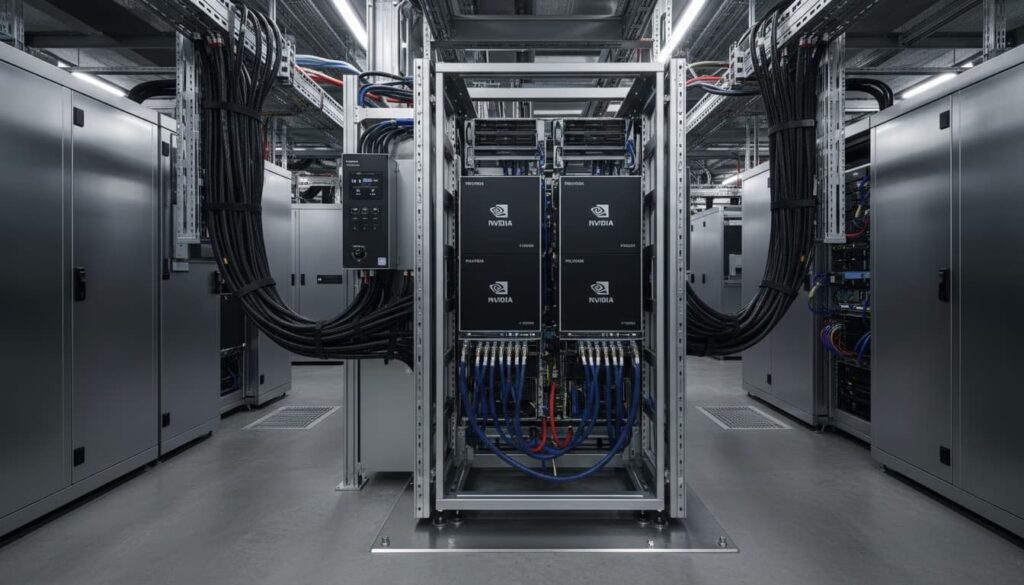
Rows of server racks house advanced NVIDIA high-performance computing hardware within a modern, large-scale data center optimized for artificial intelligence and cloud workloads.
Source: NVIDIA Corporate Communications / Data Center Infrastructure Tech Report
Planned Cloud Offerings Focus on AI Strengths
Recent details indicate the emerging cloud business will operate under the Meta Compute umbrella. It aims to offer access to excess AI computing power along with hosted models.
The service would compete directly by providing AI model access similar to offerings like AWS Bedrock and raw high performance compute capacity comparable to specialized providers such as CoreWeave. This targeted approach leverages Meta existing strengths in large scale AI training and inference rather than attempting a full general purpose cloud platform immediately.
Record Spending Fuels Infrastructure Growth
Meta has committed substantial capital to support these ambitions. The company raised its 2026 capital expenditure guidance to a range between 125 billion and 145 billion dollars with the majority directed toward AI related data centers and hardware.
This spending supports construction of multiple multi gigawatt scale clusters. Plans include early deployments of advanced systems expected online during 2026. Such scale exceeds many traditional cloud providers internal footprints and creates the potential surplus that could underpin the new commercial offerings.
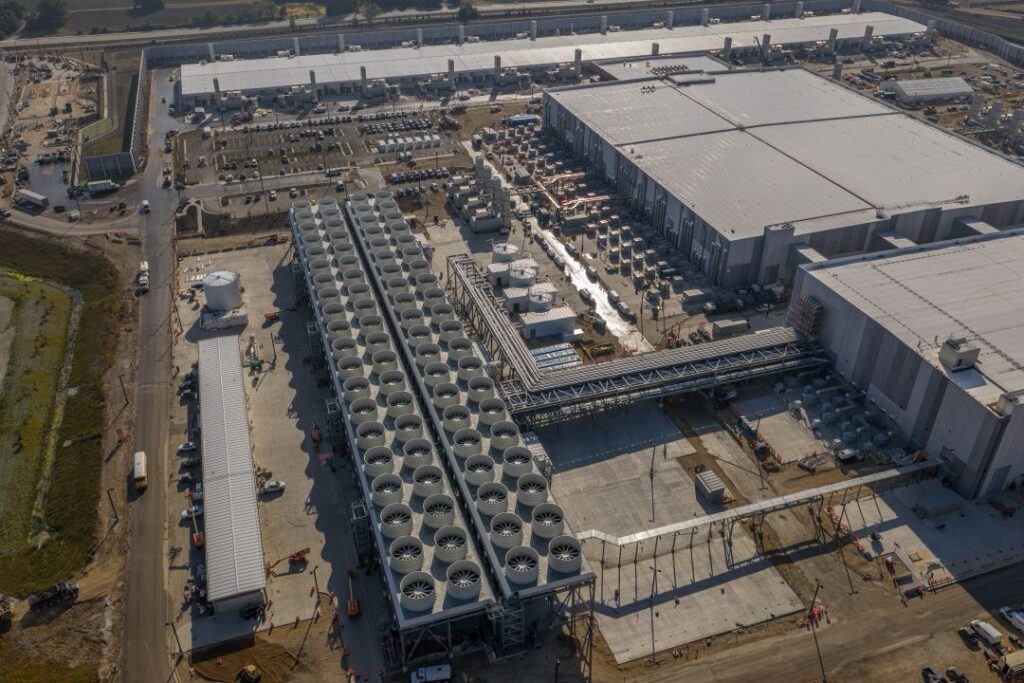
An aerial view captures the massive arrays of dry cooling air-cooled condensers and infrastructure built to regulate temperatures at the SpaceXAI (formerly xAI) Colossus data center campus in Memphis, Tennessee.
Source: Epoch AI Data Center Directory / Southern Environmental Law Center Aerial Survey
Market Implications and Strategic Shift
A successful Meta cloud entry focused on AI compute would introduce meaningful new supply into a market facing persistent demand from developers, startups, and enterprises. It could influence pricing dynamics for GPU resources and expand access for organizations seeking alternatives to the established hyperscalers.
For Meta the strategy transforms infrastructure from a pure cost center into a potential revenue stream. It also allows the company to capture value from overbuilt capacity while maintaining leadership in open source AI models and consumer facing applications.
Industry observers note that Meta unique position as a major AI infrastructure builder without a legacy cloud business gives it room to experiment with specialized AI focused services. Success would depend on execution in areas such as sales operations, enterprise support, and reliability at scale.
The reports underscore how the broader AI race continues reshaping technology company strategies. Heavy investments in compute now carry dual potential as both internal enablers and external commercial opportunities. Meta actions in the coming months will clarify the pace and scope of its cloud ambitions.