


Elon Musk’s Team Unveils Game-Changing Play in the High-Stakes Compute Championship
In a move straight out of a championship playbook, SpaceX has dropped a bombshell that has the entire tech world buzzing like a packed stadium on game day. On June 8, the aerospace giant officially unveiled its AI1 satellite design, a powerhouse piece of hardware built to deliver serious compute muscle from orbit. Think of it as the latest superstar recruit joining the league, ready to rewrite the record books for artificial intelligence performance.
This is not just another satellite rollout. It is SpaceX stepping up as the clear frontrunner in the race to build orbital data centers. With Elon Musk leading the charge, the company is treating the challenges of powering AI like a tough opponent on the field, and right now, they look unstoppable.
Breaking Down the Stats: AI1 Brings Elite-Level Power to Space
The numbers on this AI1 beast read like the stat line of an MVP candidate. It packs a 150 kilowatt peak compute payload and a steady 120 kW average. That is enough raw processing power to match a top-tier NVIDIA rack, but floating hundreds of kilometers above Earth where energy and cooling come basically for free from the sun and the vacuum of space.
More Read

Efficiency stands out too. The satellite hits 70 kW per ton, meaning it delivers serious bang for every pound launched. Dimensions impress as well. A 70-meter wingspan stretches out like a giant solar sail, with a deployed height of 20 meters. Those massive arrays generate 150 kW of power at 250 watts per square meter, all manufactured right here in Texas at SpaceX’s Bastrop facility.
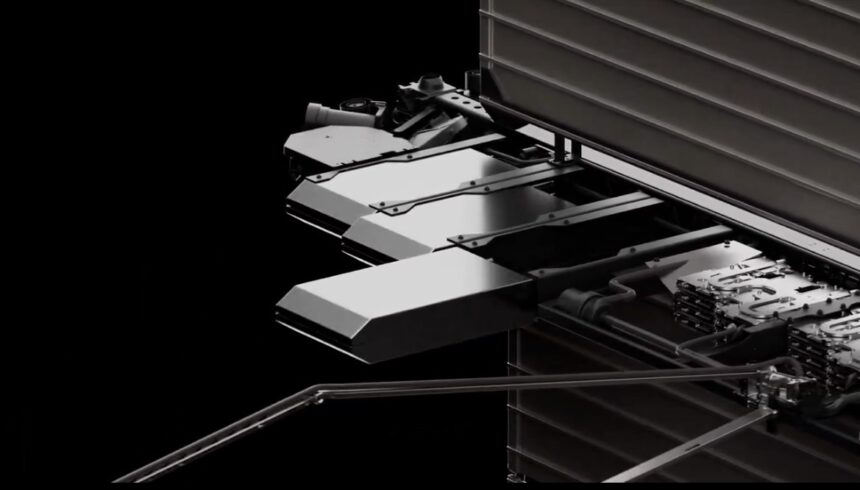
On the thermal side, which is crucial for keeping high-performance chips from overheating in space, the AI1 features a 110 square meter deployable liquid radiator system. It includes redundant pumping loops and integrated micrometeoroid shielding. No more worrying about Earth’s grid limits or water-hungry cooling towers. This thing runs on pure solar energy and natural space conditions.
Musk himself broke it down in a detailed video update, comparing the design favorably to their proven Starlink tech. “The AI satellite is much simpler than a Starlink satellite,” he explained. “It is essentially a lot of solar cells. You still need some laser links, but you do not have all of the super complex antennas that you have on a Starlink satellite. The easier one to design for is the AI satellite. It is bigger. A lot of this is technology we have already made with the Starlink V3 satellites.”
That simplicity could be the secret weapon. While competitors scramble with complicated ground-based setups, SpaceX is leveraging existing playbook moves to scale up fast.
The Bigger Picture: Building a Constellation Dynasty
This AI1 reveal is just the opening drive in what SpaceX envisions as a million-satellite constellation. Plans call for launching these orbital compute platforms starting as early as 2028, using the reliable heavy lifter Starship. The goal is nothing short of dominating the AI compute game by moving the heaviest lifting off-planet.
Why go to space? Simple economics and physics. Ground data centers face skyrocketing energy costs and cooling demands. In orbit, the sun never sets on those solar arrays, and heat radiates away into the cold void. Musk has predicted that within two to three years, the cheapest way to generate AI compute could be in space. That is a bold claim, but backed by hardware that is already in advanced design.
SpaceX is not going at this alone. Ties with Tesla on the Terafab chip manufacturing project and broader ambitions around xAI position them as a full-stack powerhouse. Production is ramping up with a dedicated Bastrop factory targeting late 2027 output. It is like building a new training facility and drafting talent all at once.
Rivals on Notice: How This Changes the Space Tech Playoffs
More Read

The industry is watching closely. Traditional data center operators and other launch providers suddenly face a formidable challenger. Companies relying on terrestrial power grids may find themselves outmatched as SpaceX scales this technology. The AI1 is not some experimental prototype. It is a production-ready design drawing directly from Starlink’s proven track record of deploying thousands of satellites.
Analysts see this as a pivotal moment ahead of SpaceX’s anticipated IPO, which could value the company at nearly two trillion dollars. The timing feels strategic, like a team revealing its secret weapon right before the big game. Investors are hyped, and the broader AI sector could see ripple effects as orbital options become viable.
Of course, challenges remain. Starship still needs consistent flight success for the high launch cadence required. Regulatory hurdles for such a large constellation will test the team’s playbook. Yet SpaceX has a history of turning skeptics into believers, much like an underdog squad that keeps pulling off upsets.
From Starlink Wins to AI Orbital Glory
SpaceX built its reputation on revolutionizing satellite communications with Starlink. Now they are pivoting that expertise toward compute. The AI satellite skips the complex user-facing antennas and focuses on power, cooling, and processing. It is a streamlined position that plays to their strengths.
Musk emphasized in the update how this fits into larger goals of multi-planetary life and advancing humanity’s capabilities. But on a practical level, it is about winning the AI race. Billions in potential applications for everything from scientific research to everyday services could ride on these orbital platforms.
The manufacturing side adds another layer of excitement. SpaceX producing its own solar tech in Texas keeps the supply chain tight and costs down. Combined with interchangeable compute providers, the design stays flexible. Future versions could swap in whatever the hottest chips are at the time, keeping the satellite relevant for seasons to come.
What Fans and Experts Are Saying
Reaction across tech circles has been electric. Supporters see this as the next logical step in humanity’s expansion into space, turning low-Earth orbit into a bustling hub of intelligence. Critics raise questions about orbital congestion and long-term sustainability, valid points that SpaceX will need to address like any champion defending a title.
One thing is clear. The AI1 puts SpaceX in pole position. While others talk about scaling AI, this team is building the stadium in the sky to host it.
Looking ahead, the roadmap includes more test deployments and full constellation builds. If Starship delivers on its promise of rapid, reusable flights, the pace could accelerate dramatically. Imagine fleets of these AI1 descendants forming a network that processes data at scales we can barely fathom today.
Final Whistle: A New Era in the Making
SpaceX’s AI1 satellite is more than hardware. It represents a bold strategic shift that could redefine how we think about computing infrastructure. In the grand tournament of technological progress, this play positions them as the team to beat.
As the company gears up for its public debut and pushes toward these ambitious launches, one thing feels certain. The game has changed, and SpaceX just raised the bar for everyone else. Whether you are a space enthusiast, AI developer, or investor, this is one story worth following play by play.
The crowd is on its feet. The orbital AI league is open for business, and SpaceX has taken an early commanding lead.