

The United States is actively considering a complex military operation that would send thousands of American ground troops into Iran to secure nuclear facilities and recover large quantities of enriched uranium, according to a New York Post report published Saturday.
The plan, described by sources familiar with military planning as potentially “the most sophisticated operation in military history,” would involve special operations forces retrieving the material while larger conventional units establish defensive perimeters, clear booby traps, and support engineering teams. No final decision has been made, and the option remains one of several under review amid stalled diplomacy and ongoing hostilities.
Details of the Proposed Operation
According to a source with knowledge of the planning, the mission would require thousands of ground troops to storm key sites, navigate explosive devices, and maintain a large defensive blocking force. A smaller team of elite operators would then handle the highly dangerous task of locating, securing, and extracting the enriched uranium.
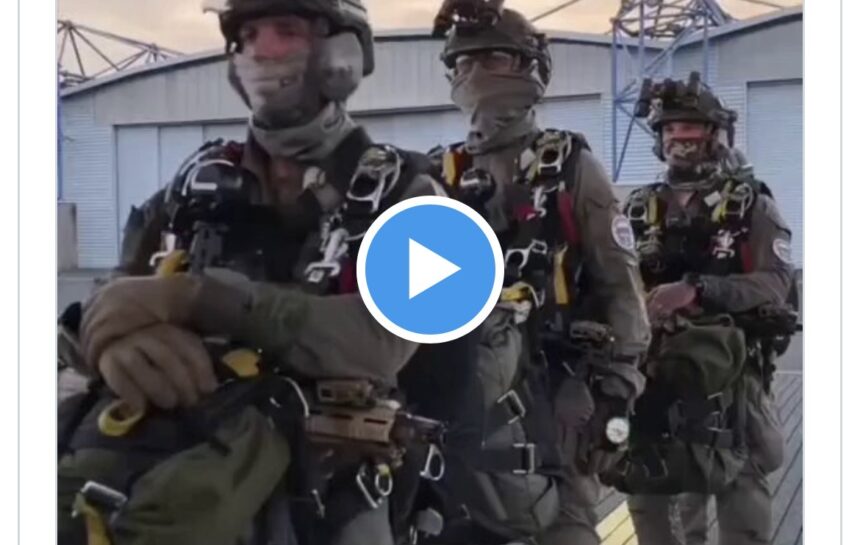
Potential units involved include SEAL Team 6’s Silver Squadron, the 2nd Ranger Battalion, and the Army’s 21st Ordnance Company, which specializes in handling hazardous materials. The 21st Ordnance Company would be tasked with packaging and transporting the uranium from damaged facilities.
More Read

Experts note the operation would demand sustained control of a secure perimeter around each site, a protected convoy route to an airstrip, and continuous airspace dominance for extraction. “You need to create a secure perimeter around all of the sites that you’re trying to go in and grab the material from,” said Joseph Rodgers, deputy director at the Center for Strategic and International Studies. “That would require ground forces to secure a perimeter and then create a secure convoy route to the airstrip.”
Rodgers called the mission one of the most sophisticated in military history, warning it would be “logistically heavy and difficult” in a contested environment.
Target Sites and Uranium Stockpile
More Read

Primary targets include the mostly destroyed Fordow facility, the severely damaged Isfahan complex, and the underground Pickaxe Mountain site near Natanz. Iran has reportedly hardened Isfahan with booby traps, mines, and perimeter forces, while recent intelligence indicates centrifuges have been moved to Pickaxe Mountain.
International Atomic Energy Agency data from 2025 estimated Iran held upwards of 20,000 pounds (approximately 9,000 kilograms) of enriched uranium before major strikes began. Much of the material is believed buried under rubble or sealed in tunnels, complicating any recovery effort.
Richard Goldberg, a former White House National Security Council official who focused on Iranian weapons of mass destruction, noted the lack of surprise: “There is no element of surprise at the moment. The targets are fixed. We know where they are. The Iranians know where they are.” For sites like Pickaxe Mountain, the mission could shift from recovery to destruction by setting explosives if full extraction proves impossible.
Risks and Challenges
Analysts emphasize the extreme dangers. Iran has prepared defenses including collapsed tunnels and explosive mines around uranium caches. Sustaining the operation long enough for complete exfiltration while under potential Iranian counterattack would be a major challenge.
“This would be a logistically heavy and difficult operation in a contested environment,” Rodgers said. “Iran’s military is pretty destroyed, but they’re still more sophisticated than the Cubans that were guarding Maduro.” Goldberg questioned how long forces could hold positions: “So how long can you sustain that and still be able to exfiltrate all of your forces?”
More Read

Casualties, logistical strain, and the risk of broader escalation remain significant concerns. The mission would mark a major shift from the primarily air and naval campaign that has dominated the conflict.
Broader Context of US-Iran Tensions
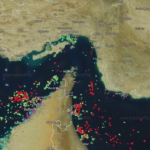
The consideration comes as the United States and Iran remain locked in an extended military confrontation that began intensifying in mid-2025. Recent weeks have seen continued U.S. precision strikes, Iranian missile and drone attacks that killed American service members at bases in the region, and disruptions in the Strait of Hormuz that have driven oil prices higher.
President Trump has publicly left open the possibility of escalated action if negotiations fail, though he has previously expressed reluctance for large-scale ground commitments. Negotiations have made little progress, prompting some experts to view a military solution for the remaining nuclear material as increasingly likely.
“I hate to say it, but I think the most likely way to get rid of Iran’s nuclear material, at least what they currently have, is a military operation because the negotiations aren’t going anywhere fast,” Rodgers said.
What’s Next
U.S. officials continue to weigh the option alongside diplomatic and other military alternatives. Any decision would require careful assessment of intelligence on facility schematics, Iranian defensive preparations, and the acceptable level of risk to American forces.
The New York Post report underscores the high stakes as Washington seeks to neutralize Iran’s nuclear capabilities once and for all. Whether the plan advances remains uncertain, but its seriousness signals the depth of ongoing strategic discussions inside the administration.