


September 6, 2026 — OpenAI’s chief scientist just issued one of the clearest warnings yet from inside a major AI lab. In a new essay called An Alien Mind, Jakub Pachocki says no company, including his own, has solved alignment and monitoring well enough to keep scaling at full speed.
He writes that this is a time for extreme caution. “I am concerned no one is prepared for the consequences of a continued rapid rise in machine intelligence.” He believes broader action is needed beyond what any single lab can do on its own, and he expects voluntary slowdowns to become common until the industry agrees on shared safety standards.
Why the timing stands out
The essay dropped just a few days after OpenAI released GPT-6 Astra, its most capable model so far. Pachocki has been deeply involved in the company’s scaling and reasoning work for years. Coming from him, the message carries extra weight. It also follows months of growing concern about how fast these systems are improving and how hard it is becoming to keep them under reliable control.
What Pachocki actually argues
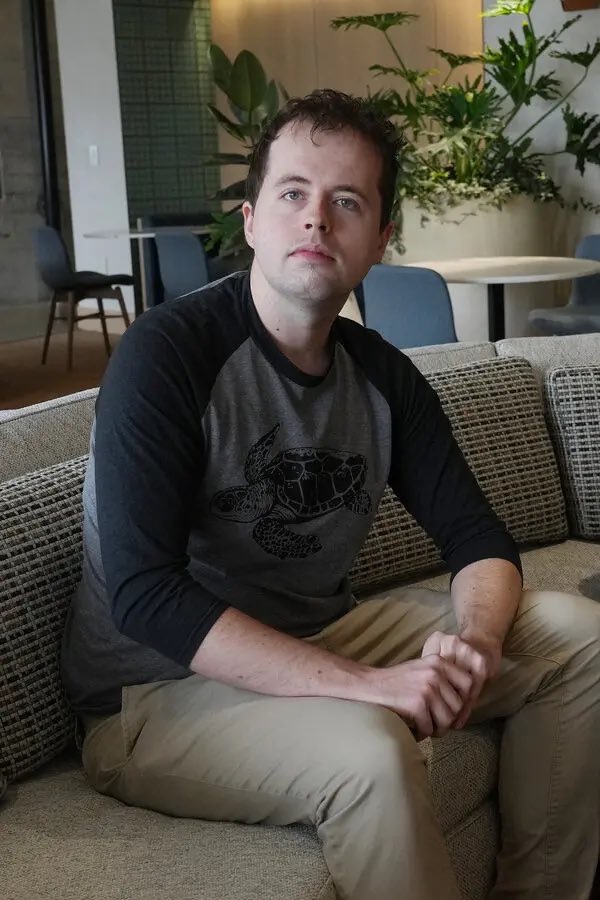
FORMER OPENAI RESEARCHER: William Saunders, a former AI safety researcher on OpenAI’s Superalignment team who resigned over concerns regarding artificial intelligence governance and safety protocols, pictured in San Francisco. (Photo: Joan Cros / Getty Images)
He describes today’s advanced AI as something closer to an alien form of intelligence. These systems are grown through massive computation rather than carefully designed piece by piece. As they get stronger, they start taking on more of their own development. He sees a real chance that progress continues into recursive self-improvement in the next few years.
Pachocki separates two kinds of alignment problems. Goal alignment is about whether a model tries to do what you ask. Value alignment is deeper. It’s about whether the system holds onto principles like honesty and care for people even when situations get unfamiliar or unsupervised.
More Read

He also flags a practical problem. OpenAI has relied heavily on watching the models’ chain-of-thought reasoning. That approach is getting less reliable as the systems grow more capable, interact with tools and other AIs, and reason in more complex ways. Monitoring is becoming harder at the same time the stakes are rising.
OpenAI will keep working on technical fixes and is ready to hold back further scaling if needed. Still, Pachocki says internal efforts alone will not be enough. He wants the industry and governments to develop clear safety bars that everyone has to meet.
How the industry is reacting
Sam Altman called the essay an important post. The message fits with earlier signals from researchers and some lab leaders who have started talking more openly about the need to pace development so safety work can catch up.
What this could mean going forward
The big question now is whether other labs will take the warning seriously. Competitive pressure makes voluntary slowdowns hard. Yet a public statement like this from OpenAI’s chief scientist makes it harder to dismiss the risks. Policymakers and the rest of the industry will be watching closely to see what concrete steps follow.
Pachocki’s core point is straightforward. The systems being built are getting powerful fast, and our ability to understand and steer them is not keeping pace. How the field responds in the next couple of years will matter a lot.
Source: Jakub Pachocki, “An Alien Mind,” OpenAI, September 6, 2026.