

President Donald Trump on Sunday shared a map of New Mexico on Truth Social that crosses out the word “Mexico” and replaces it with “America,” effectively labeling the state “New America.” The post, which carried no caption, quickly drew national attention and sharp pushback from New Mexico Democrats.
The White House account later shared the same image on X. Trump’s move continues a pattern of high-profile name changes that began early in his second term.
What Trump Shared and When
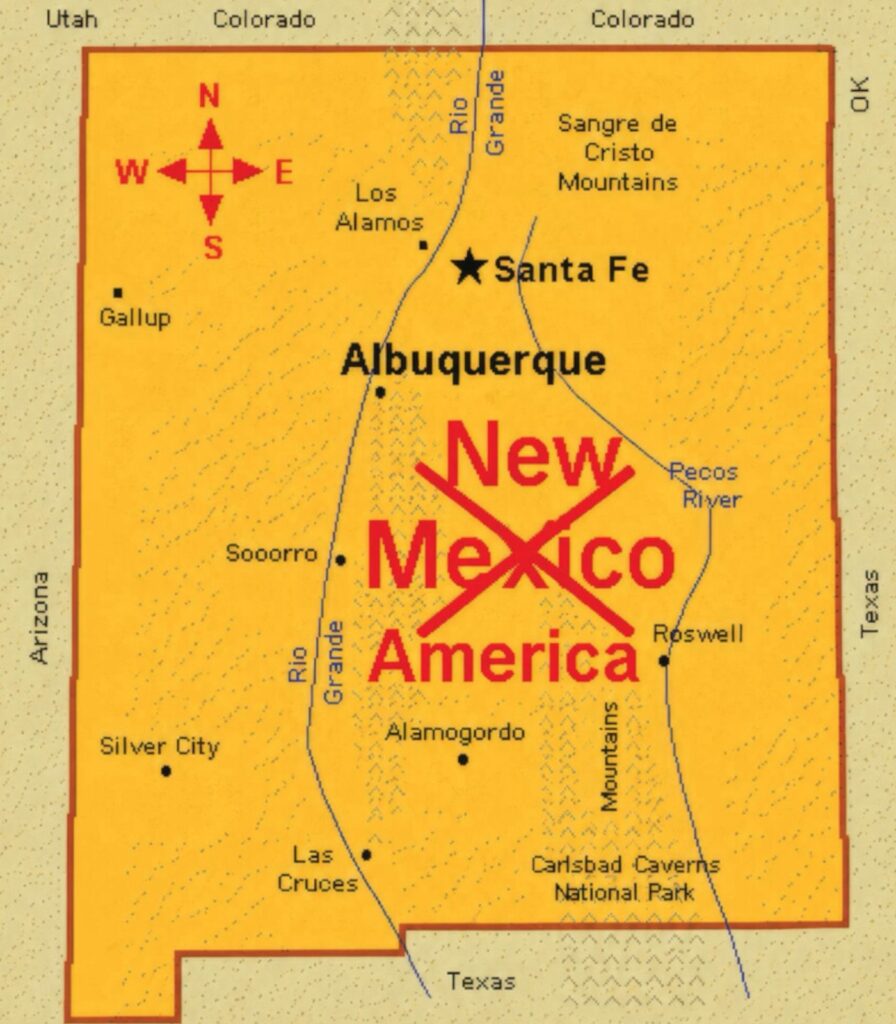
MAP ILLUSTRATION: A political graphic showing a map of the state of New Mexico with the word “Mexico” crossed out in red and replaced with “America” to read “New America.” (Illustration / Graphic)
On September 6, 2026, Trump posted an altered map of the southwestern state. A large red X covers “Mexico” in the state name, with “America” written underneath in bold red letters. The image is similar to earlier maps he has used to promote other renamings.
The post was one of dozens Trump shared in a short span that day. It arrived just days after he signed an executive order directing the federal government to refer to Lake Ontario as “Lake America.” Earlier in his term, he ordered federal agencies to use “Gulf of America” in place of Gulf of Mexico and restored the name Mount McKinley for the Alaskan peak previously known as Denali.
Unlike those earlier actions, which took the form of official directives affecting federal maps and documents, Sunday’s post contained no announcement of an executive order or formal proposal.
More Read

Strong Reaction From New Mexico Leaders
New Mexico officials wasted little time responding. Democratic U.S. Rep. Gabe Vasquez wrote that the president “doesn’t get to erase New Mexico. Not our name. Not our history. Not our culture.” He added that residents “know who we are.”
Sen. Martin Heinrich stated he would continue calling three places by their traditional names: the Gulf of Mexico, Lake Ontario, and New Mexico. Gov. Michelle Lujan Grisham said the state’s name “isn’t up for debate — it’s been ours since before the United States existed.” Former Interior Secretary Deb Haaland, now the Democratic nominee for governor, called the suggestion unserious and said New Mexico is “not for renaming. Not up for sale.”
Rep. Melanie Stansbury summed up the local Democratic response with a blunt “Oh hell no,” stressing that the state’s name carries generations of history and culture that belong to New Mexicans.
Some conservatives offered lighter reactions. Sen. Mike Lee of Utah described “New America” as “kind of catchy.”
Can a President Rename a State?
Legal experts and observers note a clear distinction between renaming geographic features under federal jurisdiction and changing a state’s official name. Presidents have long directed how federal agencies refer to lakes, gulfs, mountains, and military bases. Changing the name of a U.S. state is different.
The Constitution does not grant the president unilateral power to rename a state. Such a change would require action by the state itself and likely involve Congress. New Mexico officials have made clear they have no interest in pursuing the idea. As one local report noted, it is highly unlikely the state would approve a switch to “New America.”
Federal maps and documents can reflect presidential preferences for certain landmarks, but private companies, foreign governments, and international organizations remain free to use traditional names. Some mapping services have already shown selective compliance with earlier Trump directives.
The Long History Behind New Mexico’s Name
New Mexico’s name predates the modern United States and the independent nation of Mexico. Spanish explorers used “Nuevo México” in the 1500s for the region. The territory became part of the United States after the Mexican-American War and achieved statehood in 1912 as the 47th state. Its name reflects centuries of Indigenous, Spanish, Mexican, and American history layered together.
Supporters of the current name argue that changing it would discard that complex heritage. Critics of Trump’s broader renaming effort say the focus on labels distracts from more pressing issues facing the country.
More Read
Pattern of Rebranding and Public Response
Trump has made geographic names a recurring theme. The Gulf of America order came early in his second term. The Lake America change followed trade tensions with Canada. Both drew criticism from foreign governments and mixed reactions at home. Polling on the Lake Ontario rename showed limited public support, though major mapping platforms updated their U.S. versions.
Sunday’s New Mexico post fits the same America-centric framing. It also followed the circulation of satirical or false claims earlier in the week that Trump had already signed an executive order on the matter. Fact-checkers had already debunked those earlier posts.
Whether the map represents a serious policy idea, political messaging, or provocation remains unclear. The White House has not announced any formal process to change the state’s name.
What Comes Next
For now, New Mexico remains New Mexico in official state documents, local usage, and the daily lives of its residents. Federal agencies continue to follow previous Trump directives on other geographic names. Political reaction in the state has been overwhelmingly negative among Democratic leaders, who control key offices.
The episode adds another chapter to Trump’s ongoing effort to reshape how Americans refer to places on the map. It also highlights the limits of presidential authority when it comes to state identity. As local leaders have emphasized, the name New Mexico carries meaning that cannot be altered by a social media post alone.
The story continues to develop as more reactions emerge and observers wait to see whether the idea advances beyond the map.