

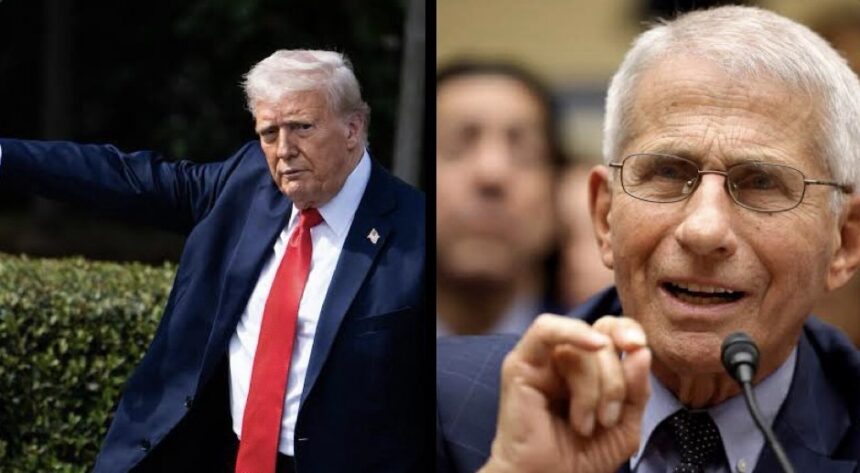
WASHINGTON — Dr. Anthony Fauci is once again drawing intense public and political attention as new congressional efforts get underway to examine the U.S. government’s handling of the COVID-19 pandemic.
A growing number of lawmakers and critics are calling for Fauci, the former director of the National Institute of Allergy and Infectious Diseases, to face detailed questioning about key decisions made during the pandemic. Some voices are also urging investigators to include Dr. Deborah Birx, who served as White House Coronavirus Response Coordinator under President Trump.
The renewed focus centers on long-standing allegations that senior public health officials provided inconsistent guidance, overstated or understated certain risks, and may have misled both the public and elected leaders. Critics argue that some actions particularly around lockdowns, school closures, mask policies, and the origins of the virus had serious long-term consequences for American society and the economy.
Many of these concerns have circulated for years. However, fresh momentum appears to be building in 2026 as new documents surface and former officials speak more openly about internal deliberations during the crisis.
What Critics Are Highlighting
At the heart of the criticism is the claim that key figures, including Fauci and Birx, sometimes presented information in ways that did not fully align with emerging scientific data at the time. Opponents point to shifting guidance on masks, the downplaying of natural immunity, and the aggressive promotion of lockdowns as policies that caused significant harm to children’s education, mental health, small businesses, and overall public trust in institutions.
More Read

Some go further, using strong language such as “crimes against humanity” to describe decisions that they believe were made without sufficient evidence or transparency. While such accusations are highly charged and legally unproven, they reflect deep frustration among segments of the population who felt their lives were upended by policies that later proved less effective or more damaging than initially presented.
Dr. Birx has faced particular scrutiny for her role in shaping the initial lockdown recommendations. Some former Trump administration officials claim she and others presented data selectively or exaggerated certain projections to push for stricter measures.
Fauci, who became the public face of the U.S. pandemic response, has defended his record vigorously in previous congressional appearances. He has argued that decisions were made based on the best available information during an unprecedented and rapidly evolving crisis, and that public health leaders had to balance complex trade-offs under extreme pressure.
More Read

The Broader Context
The renewed interest in Fauci and Birx comes at a time when public trust in public health institutions remains significantly lower than before the pandemic. Polls consistently show that large portions of Americans believe government officials and health agencies were not fully transparent or made serious mistakes in their response.
This skepticism has been fueled by revelations about the suppression of certain scientific debates (such as the lab-leak hypothesis), internal emails showing disagreement among experts, and admissions that some policies were implemented more for social compliance than strict scientific necessity.
Republicans in Congress have signaled they intend to hold more substantive hearings this year, aiming to produce a comprehensive record of what went right and what went wrong. Democrats, meanwhile, warn that revisiting the pandemic response risks turning into a partisan exercise rather than a genuine search for lessons learned.
Why This Matters Now
The timing is significant. With the 2026 midterms approaching, accountability for pandemic-era decisions has become a potent political issue. Many voters who felt harmed by lockdowns, school closures, or vaccine mandates continue to seek answers and, in some cases, accountability.
Beyond politics, there are important policy implications. Understanding what worked and what failed during COVID-19 could shape how the United States prepares for future pandemics. Key areas under examination include:
- The balance between public health measures and individual liberties
- The role of gain-of-function research and lab safety protocols
- Transparency in scientific communication
- The influence of external pressures on public health decision-making
For Fauci personally, these new developments represent another chapter in a long and contentious public legacy. Once widely praised as a steady voice during crisis, he has become a polarizing figure — admired by some as a dedicated scientist and criticized by others as symbolic of institutional overreach.
The Path Ahead
Whether these new hearings will produce meaningful revelations or simply reopen old wounds remains to be seen. Fauci has testified before Congress multiple times and is expected to do so again if formally called.
As the process unfolds, the American public will once again be confronted with difficult questions about trust, science, politics, and accountability during one of the most disruptive periods in modern history.
The renewed scrutiny of Fauci and potentially Birx reflects a broader societal desire to understand what really happened during the pandemic not just the virus itself, but the decisions made in response to it. For many, getting those answers right is seen as essential for restoring faith in public institutions and preparing more effectively for whatever challenges may come next.